

Audio By Carbonatix
Africa's greatest democratic threat may not be dictatorship, military intervention or constitutional crises. It may be the growing tendency of political parties to see national setbacks as political opportunities, in which one side quietly benefits as the other struggles, and in which citizens increasingly become spectators in a contest that rewards failure more than success.
When Democracy Becomes the Destination Instead of The Vehicle
There was a time when many Africans viewed democracy as the destination. Today, perhaps it is time to ask a more difficult question. What if democracy was never the destination? What if democracy was merely the vehicle? And what if we have become so preoccupied with driving the vehicle that we have forgotten where we intended to go?
The inconvenient truth is that democracy remains humanity's most acceptable system of governance. Despite its imperfections, democratic societies generally outperform dictatorships in protecting freedoms, encouraging innovation, attracting investment and enabling peaceful transfers of power. The problem is not democracy itself. The problem may be how we increasingly practise it.
Across many African nations, a troubling pattern has emerged. Political parties often behave less like competing custodians of national development and more like rival supporters at a football match where the objective is not necessarily to improve the team but to celebrate whenever the opposing side stumbles. Sometimes one gets the uncomfortable impression that certain political actors would rather inherit a struggling nation than contribute to the success of a government they did not elect.
NyansaKasa (Words of Wisdom)
"When political victory becomes more important than national progress, everyone eventually loses, including the winners."
Reflection: A nation cannot permanently advance if its political competitors benefit more from failure than from success.
The Aircraft We Are All Travelling In
The irony is almost laughable. Imagine two passengers travelling on the same aircraft. One secretly hopes the pilot performs poorly because a different pilot will eventually take over the cockpit. At first, the image provokes a smile. Then reality intervenes. Both passengers are travelling on the same aircraft, heading towards the same destination and exposed to the same risks. Africa increasingly resembles that aircraft.
Governments come and go. Political parties alternate in power. Yet citizens remain on board. Investors remain on board. Future generations remain on board. Most importantly, the consequences of today's decisions remain on board. When economic hardship increases, no political party suffers alone. When unemployment rises, no party card protects a graduate seeking work. When inflation climbs, food prices do not ask citizens how they voted. When a country's credit rating falls, investors do not distinguish between governing and opposition parties. Economic hardship does not carry party membership cards. Yet too often politics behaves as though national setbacks are victories waiting to be harvested during the next election.
When Opposition Becomes Obstruction
Opposition is essential to democracy. Without opposition, there is no accountability, scrutiny or transparency. Yet opposition and obstruction are not the same thing. A responsible opposition challenges policies while protecting national interests. An irresponsible opposition begins measuring success by the government's failures rather than by the nation's progress. The purpose of opposition is to improve governance, not to weaken the nation in order to strengthen electoral prospects.
NyansaKasa (Words of Wisdom)
"A nation is not a football match. The scoreboard matters less than the future."
Reflection: Elections determine who governs. They should never determine whether a nation succeeds.
What Successful Democracies Understand
Many successful democracies have learned this lesson. In the United Kingdom, governments change but strategic national priorities continue. In Germany, coalition politics often demands compromise rather than confrontation. In Singapore, national development goals have historically remained larger than political competition. No democracy is perfect. Political disagreements are inevitable and often healthy. Yet mature democracies generally recognise that political competition should strengthen nations rather than weaken them.
Unfortunately, many African democracies continue to struggle with this reality. Major projects are sometimes abandoned simply because they were initiated by previous administrations. Policies are occasionally opposed not because they are ineffective but because they originated from political rivals. Public discourse increasingly rewards outrage more than solutions. Too many national development agendas are imprisoned by electoral calendars. The result is predictable. Development slows, citizens become frustrated, investors become cautious and institutions become weaker.
The Dangerous Mismatch Between Elections and Development
One of Africa's greatest development challenges is that many transformative programmes require decades rather than years. Industrialisation takes time. Educational reform takes time. Infrastructure takes time. Institutional strengthening takes time. Yet politics often operates within four or five-year electoral cycles. Governments think about the next election. Nations should be thinking about the next generation.
South Korea did not become an industrial powerhouse within a single election cycle. Singapore did not become a global economic hub within one administration. Rwanda's transformation did not emerge overnight. Their progress was built on continuity, consistency and long-term thinking.
NyansaKasa (Words of Wisdom)
"The farmer who digs up seeds every week to check their progress will harvest disappointment."
Reflection: Some national transformations require patience, consistency and political maturity. Africa does not suffer from a shortage of ideas. It suffers from a shortage of continuity, consistency and collective patience.
When Citizens Become Spectators
Perhaps the greatest tragedy is that citizens sometimes become spectators rather than stakeholders. Political debates become entertainment. National challenges become campaign material. Economic hardships become opportunities for partisan point scoring. Meanwhile, unemployment remains. Poverty remains. Infrastructure gaps remain. The irony is profound. When a government fails, citizens suffer first. When inflation rises, citizens pay more. When investment declines, opportunities disappear. When institutions weaken, public confidence erodes. Yet political celebrations often continue as though the consequences belong exclusively to one side of the political divide.
NyansaKasa (Words of Wisdom)
"The fire that burns your neighbour's roof may be warming itself for your house."
Reflection: National problems rarely remain confined to political opponents.
History repeatedly demonstrates this lesson. Zimbabwe's economic struggles affected everyone. South Africa's electricity challenges affect everyone. Nigeria's inflation affects everyone. Kenya's debt concerns affect everyone. Ghana's economic difficulties affect everyone.
When Patriotism Loses to Partisanship
The inconvenient truth is that democracy cannot thrive where patriotism consistently loses to partisanship. Political parties are temporary custodians. Nations are permanent responsibilities. Governments are temporary. Citizenship is permanent. This does not mean governments should be exempt from criticism. Governments must be held accountable. Policies must be scrutinised. Leaders must be questioned. Public resources must be protected. However, criticism should aim to improve outcomes rather than merely create political advantage. Too often, some political actors appear more excited by being proven right than by helping their countries succeed. There is a difference between exposing problems and hoping for problems. The first strengthens democracy. The second weakens it.
NyansaKasa (Words of Wisdom)
"A critic who offers no solution may simply be rehearsing for someone else's failure."
Reflection: Democracy requires more builders than spectators.
What Must Change Before Democracy Can Deliver
The first requirement is civic education. Citizens must understand that democracy is not merely about voting every few years. Democracy is about participation, accountability, responsibility and shared nation-building. Equally important is the strengthening of institutions. Strong institutions create continuity regardless of which political party occupies office and ensure that development agendas survive electoral transitions. Africa must also develop more bipartisan approaches to national priorities. Education, industrialisation, infrastructure, healthcare, energy security and economic transformation should increasingly transcend partisan politics.
Some national objectives are simply too important to be abandoned every time power changes hands. Leadership maturity is equally essential. Weakening a nation to secure electoral advantage is not victory. It is merely changing drivers in a damaged vehicle. Most importantly, Africa must embrace generational thinking. The most successful nations build for decades. They invest for decades. They plan for decades.
The Hardest Democratic Truth of All
Perhaps the hardest democratic truth is this:
- Democracy itself is not enough.
- Regular elections are not enough.
- Political competition is not enough.
A nation can hold elections every four years and still struggle to develop if its political culture rewards failure more than progress. Democracy works best when competing political parties want to govern a stronger nation than the one they inherited. Not a weaker one. Not a divided one. Not a frustrated one. A stronger one.
NyansaKasa (Words of Wisdom)
"The true test of democracy is not whether power changes hands. It is whether the nation becomes stronger regardless of whose hands hold power."
Reflection: Political parties may win elections. Only nations can win the future.
What History Will Remember
History will not remember which party celebrated the loudest.
History will remember whether a generation of leaders and citizens chose patriotism over partisanship, continuity over disruption and national progress over political convenience. Because when political parties begin waiting for one another to fail, democracy stops being a vehicle for development. It becomes a spectator sport. And nations were never meant to be governed from the stands.
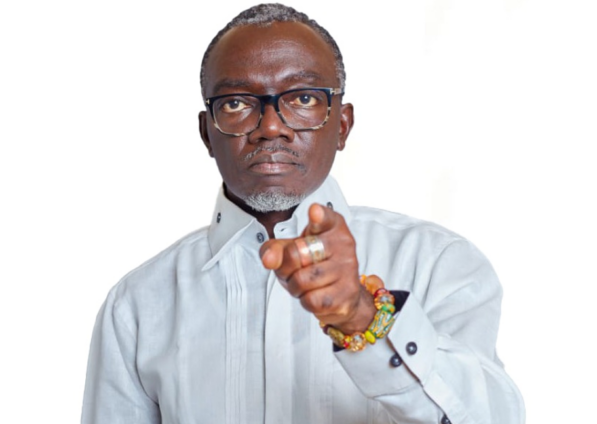
About Ing. Professor Douglas Boateng
Ing. Professor Douglas Boateng is a pioneering international industrial, manufacturing, and production systems engineer, governance strategist, and Pan-African thought leader whose work continues to shape boardroom thinking, supply chain transformation, and industrialisation across both the continent and globally. As Africa’s first appointed Professor Extraordinaire in Supply Chain Management, he has consistently championed the integration of procurement, value chain, industrialisation strategy, and governance into national and continental development agendas, aligning practice with purpose and long-term impact. An International Chartered Director and Chartered Engineer, he has received numerous lifetime achievement awards and authored several authoritative books. He is also the scribe of the globally acclaimed and widely followed daily NyansaKasa (Words of Wisdom), which continues to inspire reflection, accountability, and purposeful living among audiences worldwide. His work is driven by a simple yet powerful belief: Africa’s transformation will not come from rhetoric but from deliberate action, strong institutions, and leaders willing to build for future generations.
Latest Stories
-
GRA assures Tullow of collaboration to settle $393m tax liability without disrupting its petroleum operations
15 minutes -
South Korea demands apology from Pyongyang for landmine blasts that injured three
18 minutes -
Carlos Queiroz not the sort of coach Black Stars need – Nii Lante Vanderpuye
48 minutes -
AFCON 2027Q: ‘Our Black Stars team is gone’ – Former Sports Minister
1 hour -
Prof. Prempeh calls for public review of draft constitutional reform bills
1 hour -
AFCON 2027Q: ‘I have never seen a poor performance from Black Stars like against Gambia’ – Nii Lante Vanderpuye
1 hour -
Nigeria set to launch National Digital Address System 9 years after Ghana showed the way
2 hours -
Policy rate decision takes time to reflect in lower lending rates – BoG
2 hours -
Western Regional Minister applauds Karpowership’s role in Ghana’s power sector
2 hours -
Playback: Road safety crises: Where are we getting it wrong?
2 hours -
Enterprise Life celebrates 25 years of protecting families and building trust
3 hours -
ICC London rules in favor of Ghana against Tullow over $400m tax charge
3 hours -
We are disappointed in ICC’s ruling over our corporate income tax assessment in Ghana – Tullow Oil
3 hours -
Cost of building inflation for August 2026 increases to 4.6% – GSS
3 hours -
Today’s front pages: Wednesday, September 30, 2026
3 hours