

Audio By Carbonatix
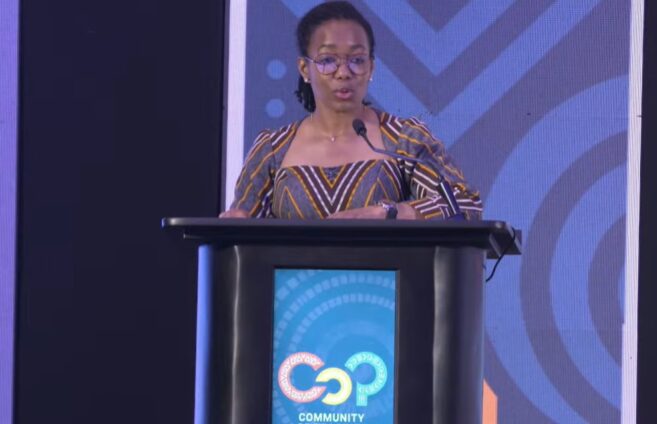
The Second Vice-President of the Pan-African Parliament, Dr Zanetor Agyeman-Rawlings, has called on African governments to complement reforms in political financing with deliberate investments in the economic empowerment of citizens, arguing that poverty remains one of the biggest drivers of money politics across the continent.
The MP for Klottey-Korley said strengthening legal and institutional frameworks alone would not be enough to safeguard democratic governance unless citizens were economically empowered to make independent political choices.
"So as we tackle the legal frameworks and governance, let us concurrently build the capacity of our citizens. Let's empower them economically so that our people will act from their hearts and minds rather than their stomachs," she said.
Dr Agyeman-Rawlings made the call at the opening of the High-Level Regional Convening on the Financialization of Politics in Africa held at the Kempinski Hotel Gold Coast City in Accra on Tuesday, July 14.
The three-day conference, on the theme "Advancing Reform, Transparency, Accountability and Democratic Integrity," brought together parliamentarians, anti-corruption agencies, electoral management bodies, policymakers, civil society organisations and governance experts to examine the growing influence of money in politics and chart reforms to strengthen democratic institutions across Africa.
The meeting was organised by the African Union Advisory Board Against Corruption (AUABC), the Ghana Centre for Democratic Development (CDD-Ghana), the Open Society Foundations and Transparency International.
The regional convening forms part of continental efforts to strengthen transparency and accountability in political financing amid growing concerns over the influence of money on elections and governance.
Discussions are expected to inform the African Union's proposed Model Law on Political Financing, which seeks to assist member states in developing legal frameworks to curb illicit political funding, strengthen oversight institutions and enhance democratic integrity across the continent.
Rising cost of politics
Dr Agyeman-Rawlings observed that the financial burden of seeking political office had risen sharply across Africa, creating barriers that increasingly excluded capable but less affluent citizens from participating in governance.
She said the cost of politics now extended far beyond campaign activities to include party primaries, nomination fees, transportation of delegates and widespread financial expectations placed on aspiring political leaders.
"Across our continent, the cost of entering and remaining in politics is increasing.
"Whether it's from the internal party primaries and nomination fees to campaigning in the general elections. Whether it's about transportation of delegates to venues. Whether it's about encouraging voters to participate.
"Whether it's about paying for school fees, medical bills, name it. It's all there."
According to her, such trends continue to distort democratic competition and deepen inequalities in political participation.
Corruption and national security
The Klottey Korle Member of Parliament linked the monetisation of politics to corruption and broader national security concerns.
She cited Ghana's 2020 National Security Strategy, which identifies corruption as a high-impact, high-probability threat to national security.
"There is a nexus between governance and security," she said.
Referring to the strategy document, she added:
"Corruption was ranked as a high-impact, high-probability threat to our national security."
She warned that unless African countries addressed governance weaknesses, poverty and unequal access to opportunities, democratic institutions would continue to face increasing pressure.
"Our democracies are at risk of unravelling given this trend of monetisation of our politics. This is unsustainable, and it undermines the aspirations of our citizens."
She stressed that reforms must go beyond regulating political finance to include poverty reduction, equitable resource distribution and stronger civic education.
"If we do not address the weak pillars of governance.
"If we do not embark on poverty alleviation.
"If we do not ensure equitable resource distribution.
"If we do not undertake a serious drive on civic education on what it means to be a citizen of the continent.
"I'm concerned that we might not actualise these aspirations."
Youth inclusion
Dr Agyeman-Rawlings described Africa's youthful population as the continent's greatest asset and urged governments to deliberately involve young people in governance and democratic reforms.
She said rebuilding public confidence in democratic institutions required creating opportunities for young people to participate meaningfully in political processes.
"The paradigm shift can only occur with deliberate inclusion of our youth who are our most powerful resource as a continent."
She urged stakeholders to harness digital platforms and social media to engage younger generations on issues of governance and democratic accountability.
"It is my prayer that as we leave this venue, the conversations that we have here will not remain in this room, that we will put them on different social media platforms to ensure that the youth who spend a lot of time learning a lot on social media will have access to the information that we are referring to here."
She also appealed for innovative approaches to civic engagement to ensure young Africans no longer felt excluded from national decision-making.
"Find creative ways of getting influencers to spread the word among the young people so that they don't constantly feel as if they're the ones who are always on the outside of the decision-making table."
Political finance reforms
Dr Agyeman-Rawlings welcomed ongoing efforts by the African Union Advisory Board Against Corruption, working with other African Union institutions and stakeholders, to develop a Model Law on Political Financing following the adoption of Resolution 11/7 under the United Nations Convention against Corruption (UNCAC).
She called on African countries to domesticate the proposed legislation to improve transparency and accountability in political financing.
"Let us work together to domesticate the model laws on political financing in our various jurisdictions in order to restore trust and democracy across the continent."
She concluded with a call for collective action to inspire a new generation of Africans to believe in democratic governance.
"And so I stand here appealing that even as we have these conversations here, we try to light a new flame that will set in place the hearts of the young people of this continent to aspire for more, to believe in more, and to have hope in the systems that we have come to trust as the best way forward for democracy."
READ ALSO: Political office viewed as investment when money determines political success — Bagbin
Latest Stories
-
Livestream: The Law examines lawful arrest in Ghana
2 minutes -
Mahama urges African governments to treat healthcare as an investment, not budget cost
37 minutes -
Bawumia congratulates John Boadu and new NPP executives, pledges support ahead of 2028
38 minutes -
‘No talent should be left out’ – Bawumia pledges inclusive NPP campaign for 2028
44 minutes -
Prof. Mike Oquaye recounts how he blocked Special Prosecutor’s attempt to arrest Bawku Central MP
1 hour -
Make health sovereignty a priority for Africa – Mahama
1 hour -
Dorimon Naa, Wa West DCE lead massive clean-up exercise; threaten sanctions against recalcitrant residents
1 hour -
Photos from Adom FM Y2K Jam
2 hours -
Praye Tiatia steals the show at Adom FM Y2K Jam [Watch]
2 hours -
Boakye Agyarko congratulates John Boadu, pledges support for NPP leadership
2 hours -
Antwi HiMight thrills fans with Antwi ne Antwi hits at Adom FM’s Y2K Jam [Video]
2 hours -
Amb. Edward Boateng congratulates Boadu, Kodua on election wins
2 hours -
John Boadu pledges to rebuild NPP from grassroots and restore ‘winning machinery’
3 hours -
Ashaiman Assembly deploys monitoring system to curb dumping in storm drain
3 hours -
John Boadu must rebuild, unite NPP for 2028 – Edward Boateng
3 hours