

Audio By Carbonatix
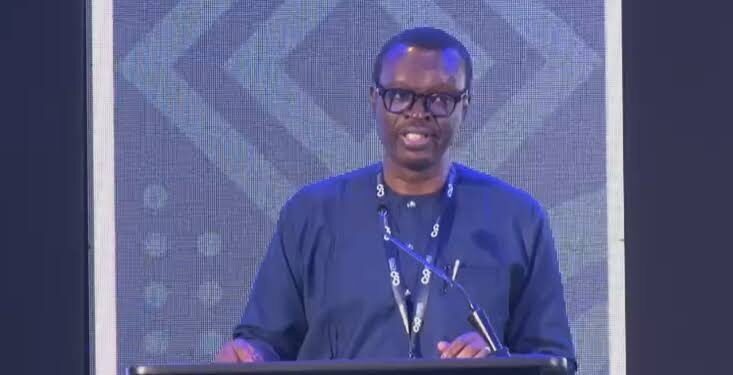
The Chairperson of the African Union Advisory Board Against Corruption (AUABC), Kwami Edem Senanu, has identified opaque political party financing as one of the biggest enablers of corruption, illicit financial flows and state capture across Africa, calling on governments to urgently enact and enforce laws to regulate political funding.
He warned that unless African countries strengthened transparency and accountability in political finance, elections would increasingly reflect the interests of hidden financiers rather than the will of citizens.
"Political party funding is one of the principal entry points for corruption, illicit financial flows and state capture on our continent. Opaque, unregulated or illicitly sourced party and campaign finance distorts electoral competitions."
Mr Senanu made the remarks at the opening of the High-Level Regional Convening on the Financialization of Politics in Africa, held at the Kempinski Hotel Gold Coast City in Accra on Tuesday.
The High-Level Regional Convening on the Financialization of Politics in Africa is taking place from July 14 to 16 in Accra. It follows the adoption of Resolution 11/7 at the 11th Conference of States Parties to the United Nations Convention Against Corruption (UNCAC) in Doha, which established the first internationally agreed standards on transparency in political financing.
The meeting is expected to contribute to the African Union's ongoing work on a Model Law on Political Financing, designed to help member states strengthen oversight of political party financing, reduce corruption risks and promote transparency, accountability and democratic integrity across the continent.
The three-day conference, on the theme "Advancing Reform, Transparency, Accountability and Democratic Integrity," brought together parliamentarians, anti-corruption agencies, electoral management bodies, policymakers, development partners, researchers and civil society organisations to discuss measures to improve transparency in political financing and strengthen democratic governance across Africa.
The event was jointly organised by the African Union Advisory Board Against Corruption (AUABC), the Ghana Centre for Democratic Development (CDD-Ghana), the Open Society Foundations and Transparency International.
Threat to democracy
Mr Senanu said the growing financialisation of politics had become one of the most significant threats to democratic governance on the continent.
According to him, undisclosed and illicit campaign financing undermines electoral integrity by giving undue advantage to wealthy interests and entrenching incumbency.
"It entrenches incumbency advantage and converts public office into a vehicle for private and partisan enrichment."
He explained that when political parties rely on undisclosed or illegally acquired funds, democratic competition no longer reflects the aspirations of voters.
"Whilst the sources of party funding are undisclosed, unregulated or drawn from corrupt or criminal proceeds, then political competition ceases to reflect the will of citizens. Instead, it reflects the interests of some undisclosed financiers, incumbent office holders or transnational illicit networks."
Laws must be implemented
The AUABC Chair noted that Africa already possesses a strong legal foundation for regulating political financing through the African Union Convention on Preventing and Combating Corruption (AUCPCC).
He said Article 10 of the Convention obliges State Parties to prohibit the use of illicitly acquired funds in financing political parties and to ensure transparency in political funding.
Mr Senanu disclosed that 50 of the African Union's 55 member states have signed the Convention, while 49 have ratified it, demonstrating widespread political commitment to combating corruption.
However, he stressed that ratification alone would not be enough unless countries enacted domestic legislation to give effect to the Convention.
"The commitments that have been demonstrated through the high level of ratifications... will have to be backed by focused efforts to legislate and implement political financing laws in our member states."
He described the Convention as a landmark African achievement that predated similar global initiatives on political finance transparency.
"I think it's a landmark and historic milestone for us to know that the continent had a document with this even before the international community got in there."
Beyond legislation
Mr Senanu called for stronger advocacy and broader reforms, including whistleblower protection laws and access to information legislation, to reinforce efforts to curb corruption.
He said African countries should also explore complementary measures beyond legislation to effectively address emerging threats associated with political financing.
"There's also an urgent need to brainstorm what these laws should cover, and to consider strategies beyond laws that may be necessary to deal with the threats that we are facing."
According to him, the African Union Advisory Board Against Corruption is collaborating with the African Union Commission on International Law, the Pan-African Parliament and other technical bodies to develop a Model Law on Political Financing that member states can adapt to their respective legal systems.
He emphasised, however, that the success of the initiative would ultimately depend on individual countries adopting, implementing and enforcing appropriate national legislation.
"Model laws are just that, model. It will take the processes in member states to produce those laws, take into consideration their own legal frameworks, and enforce them for us to begin to see results."
Strengthening partnerships
Mr Senanu said the Accra convening provided an opportunity for governments, oversight institutions, civil society organisations and development partners to deepen collaboration in addressing the influence of money in politics.
He expressed optimism that the discussions would generate practical recommendations capable of strengthening democratic integrity across the continent.
"Our board, the African Union Advisory Board Against Corruption, is keenly looking forward to forging and strengthening partnerships and collaborative efforts that will ensure that, as a continent, we achieve better results for all Africans."
READ ALSO: Political office viewed as investment when money determines political success — Bagbin
Latest Stories
-
Gold prices recover from two-month low as dollar rally stalls
31 minutes -
Hormuz transits at lowest in over two months after attacks, data shows
39 minutes -
Bezos says Blue Origin likely to pursue IPO in coming years
48 minutes -
Samsung flags $80 billion profit on AI boom, highest quarterly for any tech company
57 minutes -
Amazon makes fresh job cuts, mainly in retail division
1 hour -
Government plans emergency capacity expansion at Korle Bu, KATH, Tamale, 37 Military
2 hours -
‘Means more than just a trophy’ – Djokovic claims 102nd title of career
2 hours -
African Union launches continent’s first credit rating agency
2 hours -
Ghana, 3 others face large financing needs, debt servicing costs – World Bank warns
3 hours -
Eurobond repayment: Ghana faces US$6.4bn repayment burden between 2027 and 2030 – World Bank
3 hours -
Government to add 100 new ambulances to national fleet in 2027
4 hours -
Ex-Spurs player Vega set to run for FIFA president
4 hours -
Arteta signs new contract with champions Arsenal
4 hours -
Former Man City player Silva comes out of retirement
4 hours -
‘I have a screen in my office’ – Akandoh on real-time emergency bed tracking
4 hours