

Audio By Carbonatix
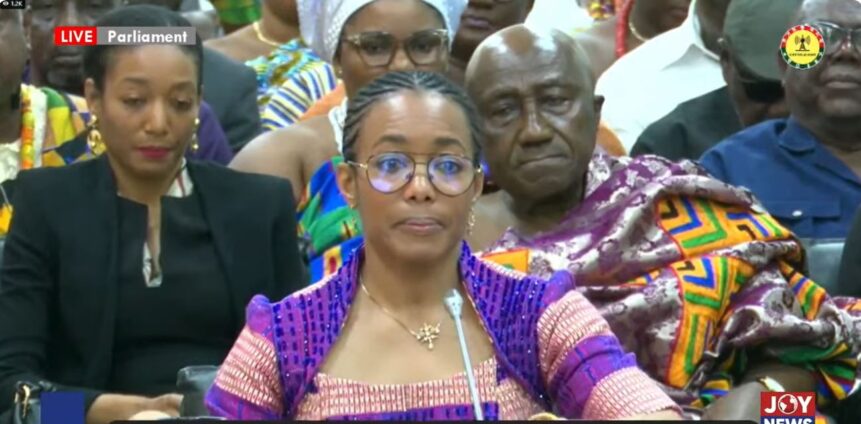
Minister-designate for Environment, Science and Technology, Dr Zanetor Agyeman-Rawlings, has called for the mandatory use of non-permeable bases at landfill sites to prevent contaminated liquid from seeping into the soil and groundwater.
She said the measure is necessary to address the growing environmental and public health risks associated with leachate from landfill sites across the country.
Leachate is the contaminated liquid generated when water passes through waste at landfill sites. If not properly contained, it can carry harmful chemicals and pollutants into surrounding soil and groundwater.
Dr Agyeman-Rawlings said the Environmental Protection Agency (EPA) has an important role to play in addressing hazardous waste and preventing toxic substances from contaminating water bodies, particularly groundwater.
“One of the things that ought to be done, and I would want to have greater insight into that, is landfills must have a non-permeable base before items are dumped on it, to prevent leaching into the soil and into the groundwater,” she said.
She described the measure as an “absolute necessity”, noting that similar safeguards are already used at collection points for e-waste.
“I do know that that is what's practiced at the collection point for the e-waste, but I believe it needs to be extended,” she added.
Beyond landfill management, the Minister-designate called for a comprehensive approach to waste management, including waste segregation at the household and community levels.
She said proper segregation would make it easier to recycle materials, produce compost from organic waste and reduce the volume of waste sent to landfill sites.
“We need to also create a culture of segregation of waste in order to be able to know what's going where,” she said.
Dr Agyeman-Rawlings also proposed exploring innovative waste-treatment technologies, including pyrolysis, which can convert plastic waste into products such as fuel and cooking gas.
She further advocated greater public education, stronger enforcement of environmental regulations and increased investment in recycling as part of efforts to address Ghana’s waste management challenges.
Latest Stories
-
I don’t know who facilitated my nomination – Supreme Court nominee Amoako Asante
20 seconds -
World Bank’s Ghana poverty findings vindicate our April 2026 wellbeing report – APL
8 minutes -
Tiwa Savage pushes back against criticism over female collaborations
9 minutes -
Treat private schools as partners, not pressure group – Bagbin
18 minutes -
Fire guts chop bar at South Odorkor, no casualties recorded
20 minutes -
Uganda declares end to Ebola outbreak after 42 days without a new case
22 minutes -
I’m the youngest but most experienced NPP chairman aspirant – Nana B
24 minutes -
Appointments Committte Chairman rejects Minority’s objection to rushed Supreme Court vetting
26 minutes -
‘You called it court packing under Akufo-Addo; what has changed?’ — Afenyo-Markin slams NDC gov’t over new SC justices
31 minutes -
Vetting of Supreme Court nominees proceeds despite Minority walkout
37 minutes -
Two teenagers, 13 and 14, among 33 UK nationals missing in Nepal floods
37 minutes -
Don’t let a data mismatch deny young Ghanaians the chance to serve
41 minutes -
‘Flimsy, hollow, baseless’ – Ahiafor dismisses Minority’s objection to judges’ vetting
41 minutes -
Paul Afoko is best placed to unite a divided NPP – Broadcast Journalist, Abdul Moomen
51 minutes -
Paul Afoko: Perhaps the unifier the NPP needs now
56 minutes