

Audio By Carbonatix
Rules exist for a reason. They are not suggestions. They are not optional. They are the agreement we make with each other to stay alive.
Rules are meant to protect us. That’s their only job.
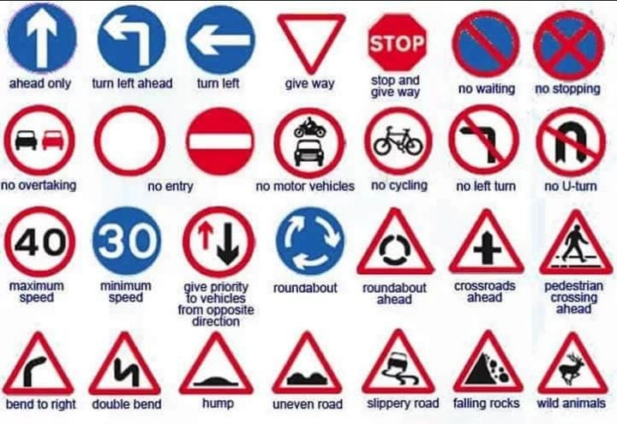
On the road, that agreement is written in signs. Stop. Give Way. 50 km/h. Zebra Crossing. Each one is there to prevent a crash, the traffic, and the deaths that we later blame on the passenger, the driver, or sometimes "bad luck."
But in Ghana, and especially in Accra, we have decided the rules of the road do not apply to us. Especially the road signs.
We see the sign and we ignore it. We see the paint and we drive over it. We’ve replaced discipline with convenience, and respect with "I’m in a hurry."
Without rules, the road becomes chaos. With rules, the road becomes a system — not just any system, but one that works.
A speed limit keeps a child safe near a school. A zebra crossing gives a pedestrian a chance to cross the road. A stop sign prevents two cars from meeting in the middle of a junction.
When Road Signs Become Decorations
In Ghana we have the rules. We have the signs. But somewhere along the way, we stopped treating them like protection and started treating them like 'signposts that are meant to be ignored.'
Now the signs stand in silence. Visibly mounted, yet clearly ignored. And in this silence, people are paying with their lives.
This is not a road safety problem. This is a discipline problem. And it starts with the signs we refuse to read.
Look around Accra. We have them. Zebra crossings painted bright white at Circle, Kaneshie, and Madina. Speed limit signs posted near Achimota School and St. Thomas Aquinas. Pedestrian crossings outside Makola. Stop signs at East Legon junctions. Curve warnings on the N1 towards Kasoa. "No U-Turn" signs all over Spintex.
And each one is ignored.
Drivers don’t look at them. Passengers don’t bother to remind drivers either. We would rather follow chaos than follow paint on the road.
Our Real Traffic Code
What do we actually watch for in Accra? Taxis, trotros, and motorbikes. That’s our real traffic code.
If a trotro stops in the middle of Ring Road to pick someone, everybody behind it brakes and swerves.
If a taxi decides to make a sudden U-turn at Accra Mall because a passenger said, "Left here," the whole Spintex stretch adjusts.
If a driver sees police at Tesano but no sign, he slows down. Yet if he sees a sign but no police at Awoshie, he speeds.
We have turned bad driving into our national road sign.
That’s embarrassing. And it’s deadly.
The Cost of Ignoring the Rules
Because when you ignore the zebra crossing at 37 Hospital, someone gets hit trying to get to work.
When you ignore the 50 km/h sign near Achimota, a kid doesn’t make it home.
When you ignore "No Parking" at Circle and block two lanes, you create the 2-hour traffic you’ll later rant about on TikTok and X.
When you ignore "Give Way" at the Tetteh Quarshie interchange, you cause traffic that backs up all the way to Adenta.
Some of these crashes are not accidents. They are choices. Choices made by drivers — some who were never properly educated, and others who were not.
We hand out licences at the DVLA, but we don’t teach responsibility. We paint signs with taxpayer money, but we don’t enforce them. Then we act surprised when there are accidents — some that could have been avoided.
A Sign Is Not a Suggestion
Let’s be honest. A sign is not a suggestion.
A 50 km/h sign at a school in Dzorwulu is not for "when there’s no police."
A zebra crossing at Kwame Nkrumah Circle is not for "only if the pedestrian runs fast enough."
A stop sign in East Legon is not optional because "I’m late for work."
We need to sit up, and that must be done now.
Until we do, accidents that are 100% preventable will persist.
Drivers must be given real driver education — not just how to parallel park, but what every sign means and why it exists.
Passengers and pedestrians must also be educated. Repeat offenders must face higher penalties.
Penalties should be enforced, not only for drivers but also for pedestrians involved. Road cameras should be monitored so culprits can be apprehended on time, and traffic police should be alert at all times.
And passengers should speak up instead of staying silent when their drivers disobey the road signs.
The Signs Are Already There
The signs are already there. They’re paid for. They’re painted. They’re standing in the Accra sun waiting for us to do the bare minimum and read them.
Ghana, we can do better.
Accra, start with the signs, for they lay in silence.
Latest Stories
-
Boat carrying nearly 270 people capsizes off northern Cyprus
28 minutes -
Survivalist dropped into Arctic Circle alone with just 10 tools for TV show
31 minutes -
Kasoa, Odupong Ofaakor chiefs call for removal of MCE over alleged incompetence, disrespect
1 hour -
Credit unions urged to embrace technology to deepen member value
1 hour -
The silent decay: Silent road signs
1 hour -
SIGA reports strong recovery in state enterprises
2 hours -
British woman killed in stabbing at German railway station
2 hours -
Niger says it regains control of airbase after soldiers mutiny
2 hours -
Africa’s Road to LA28 begins as Ghana’s Paralympic committee steps up preparations
3 hours -
Foods you must eat if you have irregular periods
3 hours -
Fire engulfs storeroom at Apaaso, Kintampo
3 hours -
Gas tanker accident triggers leak at Fiaso
3 hours -
BCI urges women to prioritise breast health to reduce cancer cases , deaths in Ghana
3 hours -
Christians must emulate St Augustine’s virtues — Bishop Kobina Louis
4 hours -
Trassaco, Action Chapel, Caprice and others to experience 8-hour power outage
4 hours