

Audio By Carbonatix
Principals of colleges of education are calling for a clear national policy on the use of Artificial Intelligence (AI) in teacher education, warning that students are increasingly adopting the technology faster than institutions can develop appropriate guidelines.
They are also urging the government to provide teachers with the digital resources, including laptops, needed to integrate AI effectively into teaching, learning and research.
National President of the Conference of Principals of Colleges of Education (PRINCOF), Professor Samuel Awinkene Atintono, said differing views among students and teachers over the appropriate use of AI made a policy framework necessary.
Speaking at the PRINCOF National Conference in Kumasi, he urged individual colleges to begin developing policy statements that could contribute to a broader national framework.
“Teachers are the ones who teach. The kids are already advanced in the use of AI, clearly, we need a policy.”
Professor Atintono said the Ghana Tertiary Education Commission (GTEC), which regulates tertiary institutions and colleges, could draw on these institutional policies in developing guidelines for the wider sector.
He said colleges should not wait entirely for a national directive before beginning discussions on responsible AI use.
National President of the Colleges of Education Teachers Association of Ghana (CETAG), Mr Maxwell Bunu, said teachers must have access to the necessary technology if AI is to become part of the teaching and learning process.
He called for the provision of laptops and other digital resources to enable teachers to use AI effectively in their work.
“If teachers are going to depend on AI, then they should be supplied with laptops to facilitate their work.”
Mr Bunu said that while successive governments had made efforts to provide students with digital devices for learning, teachers who facilitate the learning process should also have access to similar resources.
He stressed that AI had become an established part of education and that teachers needed the tools to engage with it effectively.
Artificial Intelligence Coordinator at the Kwame Nkrumah University of Science and Technology (KNUST), Professor Eric Appau Asante, cautioned institutions against allowing AI adoption to outpace the development of rules governing its use.
He said institutional policies should clearly define what constitutes acceptable AI use and how the technology should be incorporated into academic work.
“A policy vacuum is itself a policy. It simply delegates the decision to whoever is boldest.”
Professor Appau Asante identified five areas institutions should address: permitted use, disclosure, assessment redesign, data and privacy, and staff entitlement.
He also stressed that institutions must invest in AI if they expect it to become part of their educational systems.
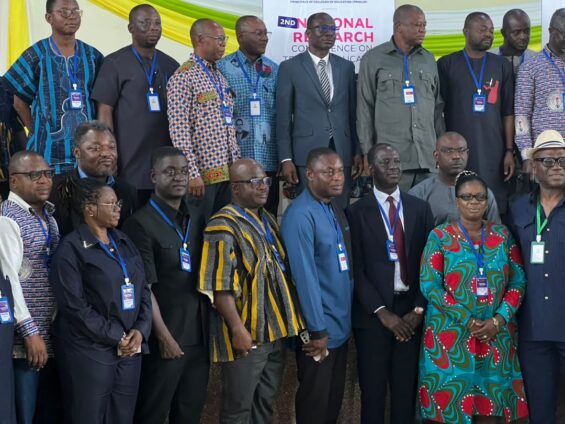
The calls were made at the National Conference of Principals of Colleges of Education (PRINCOF) in Kumasi.
The conference was held under the theme “Transforming Research-Based Teacher Education in Ghana in the Era of Artificial Intelligence.”
Participants discussed the growing influence of AI on teacher education, research, and academic assessment, as institutions grapple with how to harness its benefits while maintaining academic standards and responsible use.
Latest Stories
-
Belgian FA still wants Balogun ban answers
15 seconds -
This could be year I win Ballon d’Or, says Mbappe
7 minutes -
GEA and UNIDO celebrate enterprise excellence and productivity at 3rd National Kaizen Awards
12 minutes -
Over 300,000 candidates chose Category A schools despite 76,417 vacancies – Education Ministry
13 minutes -
Sarkodie urges SarkNation to reject toxic fan wars
14 minutes -
Ghana Jazz Orchestra cooks tasty fare at launch
33 minutes -
Jerry Aye: The life & times of Robert Mugabe
43 minutes -
Asiedu Nketiah says better government begins before Election Day
51 minutes -
Colleges of Education call for National AI Policy and digital resources for teachers
52 minutes -
AngloGold Ashanti empowers 22 Sanso women through apprenticeship to entrepreneurship programme
1 hour -
Gov’t advances National Data Exchange Hub under US$50m digital project – Sam George
1 hour -
Alex Asmah Foundation launched in Kumasi to support youth development across Ghana
1 hour -
School placement is absolutely free – Education Ministry
1 hour -
Burkina Faso FA Prez Oumarou Sawadogo takes over as WAFU B President
1 hour -
CSSPS self-placement portal opens for candidates unable to secure choices
1 hour