

Audio By Carbonatix
The quality of government is shaped long before political parties win elections, National Chairman of Ghana's National Democratic Congress (NDC), Johnson Asiedu Nketiah, has said.
According to Mr Asiedu Nketiah, elections determine which political organisation receives the mandate to govern, but victory alone does not create the competence, discipline and judgement required to manage a country effectively.
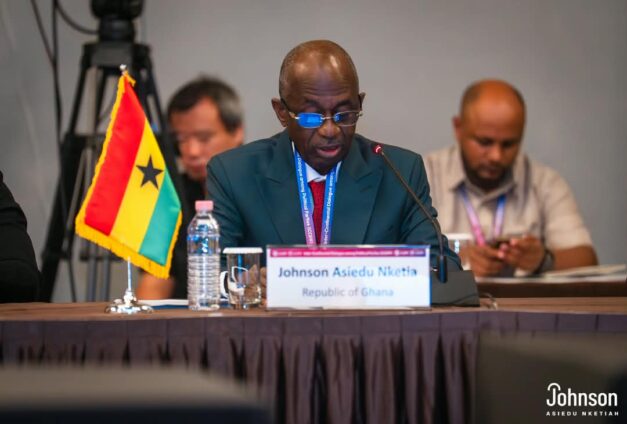
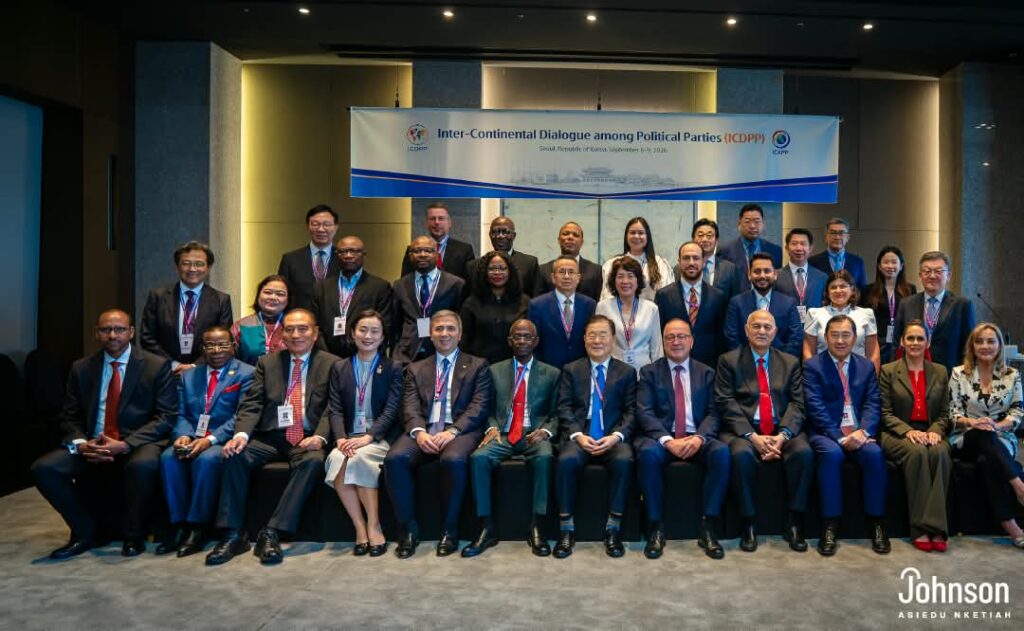
He made the observation at the inaugural Inter-Continental Dialogue on Political Parties in Seoul, South Korea, on September 7, 2026, where he spoke on behalf of political parties participating in the African Political Parties Initiative (APPI), established by the Africa Governance Centre (AGC).
The dialogue brought together political institutions from Africa, Asia, Latin America and the Caribbean, including APPI, the International Conference of Asian Political Parties (ICAPP) and the Permanent Conference of Political Parties of Latin America and the Caribbean (COPPPAL).
Preparing to govern
Mr Asiedu Nketiah argued that political parties must regard the period before an election as an important phase of preparation for government rather than merely a period for mobilising votes.
He said political parties spend years deciding whom to trust and promote, what qualities to reward, what conduct to tolerate and how seriously to approach policy development.
Those decisions, he noted, eventually influence the quality of people available to occupy public office when a party wins power.
He said ministers, legislators, advisers and other political appointees do not acquire their habits of judgement and approaches to authority overnight after taking office.
Rather, many of those qualities are developed through years of political engagement and institutional experience.
“ A country pays a heavy price when its political parties become highly effective at winning elections but insufficiently serious about preparing people to govern,” Mr Asiedu Nketiah told the gathering.
He said the internal culture of a political party was therefore a matter of wider public interest because the people a party promotes could eventually become responsible for managing public institutions.
Winning elections versus governing
Mr Asiedu Nketiah drew a distinction between the skills required to win elections and those needed to govern effectively.
He said campaigning rewards organisation, persuasion, speed, political instinct and the ability to maintain a coalition, while governing requires those qualities alongside sound judgement, competence and discipline.
Government, he noted, involves decisions on budgets, public institutions and policies whose consequences extend beyond the supporters of the governing party.
He therefore argued that political parties should not wait until they win power before identifying and preparing people with expertise in areas such as the economy, public administration, education, health, infrastructure and institutional reform.
The years spent in opposition, he said, provide an opportunity for parties to develop their members and prepare them for public responsibility without the immediate pressures that accompany political office.
Political culture and recruitment
Mr Asiedu Nketiah also challenged political parties to examine the kind of behaviour and qualities that their internal structures reward.
He said members take cues from who rises within an organisation, the conduct that attracts recognition, the value placed on loyalty and whether competence can coexist with political ambition.
Over time, he said, those signals become part of the culture of a political organisation and can eventually influence the way its members conduct themselves in government.
He warned that consistently rewarding visibility without substance, loyalty without sound judgement or aggression without restraint could result in those qualities being reproduced in public office.
Conversely, he said parties that create room for people who can think independently, listen, disagree responsibly and handle difficult assignments would strengthen the pool of leaders available to future governments.
Need for leadership depth
The NDC National Chairman further argued that leadership development should extend beyond identifying a single presidential or prime ministerial candidate.
Governments, he said, depend on a broader leadership structure comprising capable ministers, legislators, advisers and public officials who can exercise sound judgement when confronted with difficult or unexpected circumstances.
A political party could therefore have prominent leaders and a strong electoral organisation while lacking sufficient depth to govern effectively, he said.
He encouraged political organisations to develop a continuous pipeline of capable people rather than repeatedly relying on a small group whenever positions of responsibility become available.
According to him, the quality of political recruitment ultimately becomes a question of national capacity because public institutions depend on the judgement and competence of the people appointed to lead them.
Lessons from other political traditions
Mr Asiedu Nketiah said the Inter-Continental Dialogue could provide an opportunity for political parties from different regions to learn from one another about leadership development, candidate selection and policy preparation.
He acknowledged that political practices developed in one country could not simply be transplanted into another, but said exchanges among political parties could help organisations examine their own practices and identify weaknesses that may have become difficult to recognise because of familiarity.
He also commended the Africa Governance Centre for establishing APPI and providing a platform for African political parties to engage with political institutions from other regions.
He said the value of the dialogue should ultimately be measured not by the number of speeches delivered but by whether participating political organisations leave with a greater sense of responsibility and a stronger commitment to preparing people for public office.
Mr Asiedu Nketiah's central message was that political parties have a public responsibility even before voters entrust them with government.
A decision made within a party may appear insignificant at the time, he said, but years later it could influence who occupies a cabinet position, shapes a budget, formulates legislation or leads a public institution during a national crisis.
He therefore urged political parties to assess themselves by more than their ability to secure electoral victories.
An election, he said, determines who will govern, but cannot by itself determine whether those who win are prepared for the responsibilities of government.
Latest Stories
-
Amin Adam calls for review of fuel taxes as diesel prices remain above GH¢18
8 minutes -
World Vision Ghana, Ahafo districts sign MoU for universal WASH coverage
37 minutes -
When the gold engine stutters: What Ghana’s Cedi and reserves are telling us about the new economic architecture
55 minutes -
Two reportedly die after being trapped in mining pit at Juaboso
1 hour -
Petrosol cleans up Wa Municipal Hospital, to donate medical equipment
1 hour -
KiDi brings the hits to London in sold-out UK headline concert
2 hours -
The last goodbye of Ghanaian shot dead in the US
2 hours -
MCC opens door to Ghana again as MiDA revives development partnership
2 hours -
CSIR moves to turn scientific research into jobs, national growth
2 hours -
More patrons troop in as 3rd Republic Bank-JoyNews Habitat Fair clinic enters final day stretch
2 hours -
‘If NPP was ‘insensitive’ over fuel prices, NDC must accept same description now’ — Amin Adam
2 hours -
German, Russian foreign ministers hold rare talks amid rising tensions
2 hours -
Gov’t to develop policy for Ghanaian Sign Language in education
3 hours -
Accra Academy defend ODADEƐ ’90 5-a-side title
3 hours -
Ghana risks EU gas market access over methane emissions – Expert warns
3 hours