

Audio By Carbonatix
What historians and geopolitics conveniently forget is that by 1980, the great wave of African independence had already swept the continent. By the dawn of that decade, only a few African countries remained colonized.
Namibia under South African occupation, Western Sahara trapped in territorial limbo, and then apartheid South Africa.
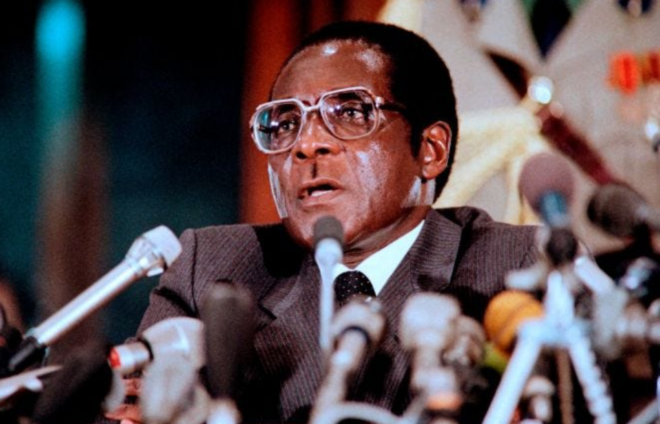
Rhodesia also stood among this last cluster of holdouts, and it was Robert Gabriel Mugabe, a schoolteacher turned revolutionary, who finally broke that wall, rising as Zimbabwe’s first majority-rule leader.
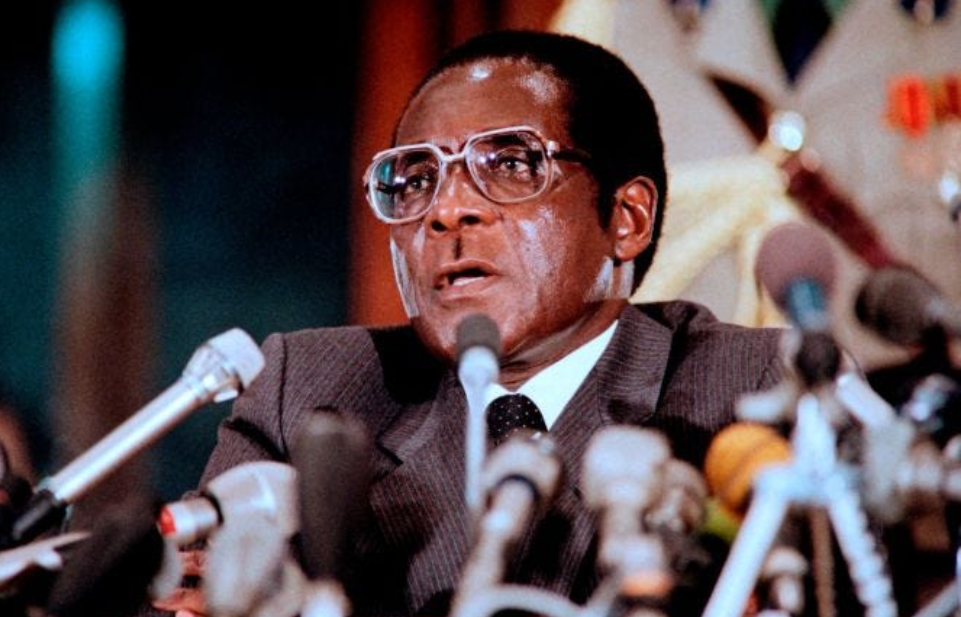
And yet, when Mugabe died in 2019 at the age of 95, he had long outlived his relevance in Zimbabwean politics.
His real death had happened two years earlier, when the generals who had kept him in power finally decided enough was enough. The formal announcement only drew the curtain on a man who had already exited the stage.
For nearly forty years, Mugabe was cheered, feared and revered in equal measure.
He was, indeed, the embodiment of Africa’s triumph over colonialism and subsequently, its tragedy under autocratic rule.
Birth & Early Life
Born in Kutama in 1924, his father abandoned the family, leaving young Robert to retreat into the world of books. It was within these pages that he discovered the power of ideas and, later, the justification for power itself.
He trained as a teacher, and education became central to his worldview. His years at Fort Hare University in South Africa alongside future leaders like Julius Nyerere and Kenneth Kaunda exposed him to Pan-Africanism.
That teacherly instinct never left him and so his ‘school of thought’ would remain staunchly Anti-western. As president too, Mugabe was notorious for his marathon lectures, often lasting hours.
Zimbabweans quipped that he could hold a crowd captive without firing a single bullet.
Naturally, his obsession with educating and education produced undeniable results. And so, by the 1990s, Zimbabwe boasted one of the highest literacy rates in Africa, a legacy that still outshines the ruins of his later years.
Prison Cell to State House
In the 1960s, Rhodesia’s white-minority regime under Ian Smith declared independence from Britain, vowing to resist majority rule “for a thousand years.” Mugabe, enraged by the growing injustice, threw himself into the nationalist struggle which got him locked up.
Incarcerated in 1964 after a demonstration, he spent a decade in prison, studying by correspondence and sharpening his political mind. Upon release, he slipped into exile and took leadership of the Zimbabwe African National Union (ZANU).
The Chimurenga, Zimbabwe’s own determined struggle for freedom, would later shake the very foundations of colonial rule.
Blood was spilled as a result of the insurrection and by the late 1970s, Ian Smith’s regime was increasingly under pressure to grant the country its independence.
The Lancaster House negotiations in London ultimately opened the door to majority rule, and in 1980, Robert Mugabe emerged victorious in Zimbabwe’s first democratic elections.

At 57, Mugabe was not just another figure stepping into power. He was a juggernaut whose life mirrored the sacrifices of the people he would eventually lead. Years of imprisonment had tested his resolve, but it was personal loss that deepened his connection to ordinary Zimbabweans.
In 1966, while he was detained, his young son, Nhamodzenyika, died, and Mugabe was denied leave to attend the funeral. That moment of grief became a quiet but powerful symbol of the cost of liberation. One that many families across the country understood all too well.
This shared experience of hardship, and of a father denied closure by the colonial government, transformed how people saw him. To many, Mugabe was a man of the people who would right the wrongs and was the hope of a new beginning.
As observers home and abroad watched on with furrowed brows, Mugabe struck a conciliatory tone in his early days. He appealed to both Black and White Zimbabweans to lay aside their grievances and work toward a shared, peaceful future.
“Let us turn our swords into ploughshares,” he declared.
In those early years, his message of reconciliation helped steady a nation emerging from war and fostered cautious optimism that Zimbabwe might chart an inclusive path forward.
And for a brief moment, the statesman was true to his word.
The Golden Years and the Facade
The early 1980s was Zimbabwe’s salad days.
Schools mushroomed across the country, universities expanded, and health care reached rural areas. Maternal and child mortality dropped, life expectancy rose, and an entire generation gained opportunities their parents could only dream of.
Economically too, Zimbabwe blossomed.
Its commercial farms, mines, and manufacturing sector made it the “breadbasket of Africa.” International donors poured in money, and Mugabe himself was feted in Western capitals.
But the splendor was short lived. By 1983, tensions with his rival Joshua Nkomo and his ZAPU party boiled over.
Mugabe unleashed the North Korean-trained Fifth Brigade in Matabeleland, where thousands of civilians were killed in what would later be remembered as the Gukurahundi massacres.
It was an early warning of how power would be used when challenged.
Then in 1987, he amended the constitution, abolished the office of Prime Minister and made himself Executive President.
In the early 90s, inevitable structural adjustment programmes demanded by the IMF struck hard leading to massive unemployment. Veterans of the liberation war, feeling neglected, pressed Mugabe for compensation. He caved, paying out unsustainable pensions that strained the economy.
By the late 1990s, the land issue exploded because White farmers still controlled much of the fertile land, a lingering consequence of colonial land policies Zimbabweans believed independence had failed to correct.

Interestingly, land redistribution itself enjoyed broad public support, even among many who opposed Mugabe politically.
Facing immense pressure and in a reckless attempt to ‘level the playing fields’, farms were forcibly seized, causing the production of maize and tobacco to collapse.
As the nation teetered on the edge of famine, Zimbabwe became dependent on food aid.
A flurry of Western sanctions, hyperinflation, and widespread corruption gutted the economy further. Inflation reached an absurd 79.6 billion percent and banknotes worth trillions became worthless overnight.
For context, you could literally become a billionaire and still not afford lunch.
Shops were soon empty, hospitals had no medicine, and millions fled across borders.
And yet, as the economy crumbled, there was a different spectacle happening in equal ‘fashion’. The first lady, affectionately nicknamed Gucci Grace, gained notoriety for international shopping sprees.
Grace Marufu first entered Robert Mugabe’s world not as a politician, but as a young typist working in the president’s office. Their relationship began while Mugabe was still married to his first Ghanaian wife, Sally, and after Sally’s death, Grace became First Lady in a lavish 1996 wedding.
From the quiet corridors of State House, she would eventually emerge as one of Zimbabwe’s most controversial political figures.
While the natives queued for butter bread and provisions, Grace appeared at public functions, draped in Fendi.
International observers promptly joked that Zimbabwe’s most stable import had now become designer handbags.
Beginning of the End
The 2008 elections was a turning point.
In the parliamentary vote, the opposition Movement for Democratic Change (MDC) edged out ZANU-PF, winning 99 seats to 97. The presidential race was even more damning for Mugabe with the EC announcing that opposition leader, Morgan Tsvangirai, had secured 47.9% of the vote to Mugabe’s 43.2%.
Even though it was not an outright win, it was an obvious rejection of Mugabe’s rule. ZANU-PF cried foul, accusing the MDC of rigging the election.

But Mugabe’s response was not through courts or ballots.
Instead, he unleashed his shock troops and party militias in a campaign of terror. Between March and June of 2008, hundreds were killed, tens of thousands were displaced, and an exodus began, with Zimbabwean professionals reduced to hairdressers, drivers and casual workers in South Africa and Malawi.
The violence drew international outrage and in the face of intimidation, Tsvangirai withdrew from the run-off.
Mugabe, left unopposed, was declared the winner with 85.5% of the vote and immediately sworn in again.
Later, under South African President Thabo Mbeki’s mediation, a power-sharing deal was struck in September 2008. Mugabe remained President, Tsvangirai became Prime Minister.
By 2009, the country’s economic implosion forced Mugabe into a rare concession abandoning the worthless Zimbabwean dollar. Yet even in these years of forced compromise, Mugabe’s missteps loomed large.
The brief stability after dollarization barely masked the country’s deeper rot. Inflation was tamed, but unemployment and cronyism flourished.
Abroad, the show was no less remarkable.
At UN summits, he famously dozed through sessions, snoring gently while world leaders debated global crises. Even as his health waned, Mugabe traveled in style on the presidential jet for European check-ups while people trekked to understocked clinics.
By 2016, Mugabe was visibly frail. Yet he refused to loosen his grip. In a last-ditch attempt to position his wife as his successor, and make her Vice president, the military, at last, drew the line.
The chalk had finally scratched the blackboard.
In a cruel twist of irony, it marked the ultimate lesson schoolteacher Mugabe could not rewrite. A full-circle, bittersweet marker that the party had done their homework.
So, in November 2017, tanks rolled into the capital and in a bloodless coup, Mugabe was placed under house arrest. Facing impeachment, he resigned after 37 years at the helm with Zimbabweans dancing in the streets of Harare and Bulawayo, celebrating the end of an era.

The Paradox of Robert
Mugabe’s life, in many ways, is the story of power itself.
Its promises, its seduction and its cost.
He’s a reminder that liberation does not guarantee freedom, and that the struggle against oppression can sometimes birth new forms of oppression.
Like many who free a nation, he gradually became convinced that only he could lead it. In many ways, the man rose higher than most.
But just like Icarus, Robert Mugabe flew too close to the sun.
To Baby Boomers, Mugabe was the much-awaited liberator who delivered dignity to a people long denied it.
To Pan-Africanists, he will remain the voice that could not be silenced at global forums.
To his critics, he was the tyrant who clung to power and the referral point for how to successfully rig an election.
What is certain is that Mugabe shaped Zimbabwe so completely that his presence is inescapable even in his absence. Rarely has a nation been so tightly bound to a single individual.
They say you either die a hero or live long enough to become the villain.
In the end, Mugabe wanted to be remembered as a giant.
And he will be.
But giants cast long shadows, and his still stretches across Zimbabwe, even to this day.
Latest Stories
-
Executive Women Network celebrates a decade of leadership, sets sights on next generation of impact
2 minutes -
“I’m happy to have scored” – Ernest Nuamah ends long Ligue 1 goal drought
5 minutes -
52-year-old spiritualist and farmer found dead at Assin Amoabeng
6 minutes -
Tensions rise at GNAT hall as parents seek solutions to CSSPS challenges
7 minutes -
Belgian FA still wants Balogun ban answers
13 minutes -
This could be year I win Ballon d’Or, says Mbappe
19 minutes -
GEA and UNIDO celebrate enterprise excellence and productivity at 3rd National Kaizen Awards
25 minutes -
Over 300,000 candidates chose Category A schools despite 76,417 vacancies – Education Ministry
26 minutes -
Sarkodie urges SarkNation to reject toxic fan wars
27 minutes -
Ghana Jazz Orchestra cooks tasty fare at launch
46 minutes -
Jerry Aye: The life & times of Robert Mugabe
55 minutes -
Asiedu Nketiah says better government begins before Election Day
1 hour -
Colleges of Education call for National AI Policy and digital resources for teachers
1 hour -
AngloGold Ashanti empowers 22 Sanso women through apprenticeship to entrepreneurship programme
1 hour -
Gov’t advances National Data Exchange Hub under US$50m digital project – Sam George
1 hour