

Audio By Carbonatix
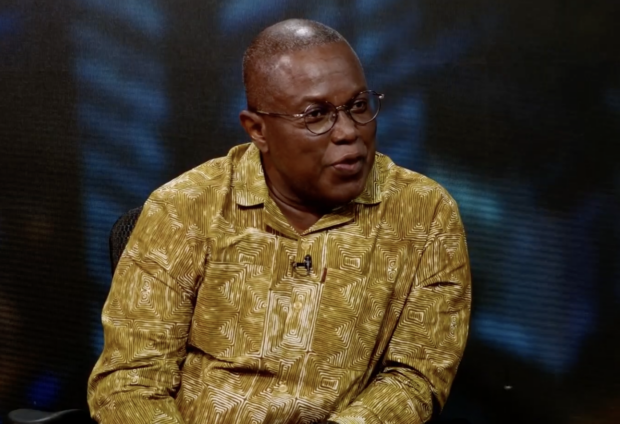
Chairman of the National Development Planning Committee (NDPC), Dr Nii Moi Thompson, has revealed that government’s flagship 24-Hour Economy Programme was drawn from Ghana’s 48-year Development Plan.
According to him, the 24-hour economy is one of the few key initiatives that emerged from the long-term development framework, although the plan itself was not legislated.
“Actually, the 24-hour economy came from the 48 Development Plan. It’s one of the few things that have actually come out of it,” he said on Joy News' PM Express on Wednesday.
Dr Thompson explained that the NDC adopted the 24-hour economy from the development plan despite the failure to legislate the broader framework.
“But the 48 Development Plan, as in its entirety, should have been legislated, but it wasn’t. But the government, the NDC, removed that from the 48 Development Plan. So the 24-hour economy actually came from the 48 development plan,” he said.
He said other initiatives, including the naming of the Ministry of Sports and Recreation, also originated from the plan.
“The name of the Ministry of Sports and Recreation came from the 48 development plan,” he said.
Dr Thompson said the Ghana Agency for Development Cooperation was another initiative linked to the plan and was currently being developed between the National Development Planning Committee and the Ministry of Foreign Affairs.
“We have something known as the Ghana Agency for Development Cooperation, which is currently being developed between NDPs and the Ministry of Foreign Affairs, to help form soft power for Ghana and Global Affairs,” he said.
Assessing the implementation of the 24-hour economy, Dr Thompson said those behind the programme had made progress, particularly in securing investments across different business categories.
“From the perspective of those who came up with the idea, I think they’ve done pretty well. You have to understand that they are operating across a spectrum of businesses, from small to large,” he said.
He noted that large businesses often require time before investments begin to deliver results.
“Usually, it takes the gestation period for big businesses take a while to get, and I think they put a lot of effort into it. They’ve lined up a lot of investments. It will take a while for those to catch on,” he said.
However, Dr Thompson said the programme must increasingly focus on small and medium-sized enterprises over the next two years.
“My expectation is that in the next two years, they will focus more on the SMEs also, so that you cover the whole spectrum,” he said.
He said job creation must also remain central to the programme, particularly because existing businesses account for a significant share of new jobs.
“From our understanding, there are efforts on the way to handle that aspect of it,” he said.
Dr Thompson added that the government must address not only unemployment but also underemployment and poor-quality jobs.
“The issue of dealing with the quality of existing jobs is one of those legs that I expect them to work on in the next two years,” he said.
Latest Stories
-
Messi agrees to buy second Spanish club
9 minutes -
Ruthless Raphinha inspires Barcelona to Feyenoord win
18 minutes -
Nii Moi Thompson says government must put SMEs at heart of 24-Hour Economy
37 minutes -
24-Hour Economy was not born with Mahama’s second term, says Nii Moi Thompson
58 minutes -
Apple’s new boss starts with big gamble on costly first folding iPhone
1 hour -
24-Hour Economy was born from Ghana’s 48-year development plan – Nii Moi Thompson
1 hour -
Motorcycle number plates: The growing practice of concealment
2 hours -
Two accused of land guard activities weep in court
2 hours -
Gauff saves match points to set up Rybakina semi-final
2 hours -
Police record seven major breakthroughs in crime fight
2 hours -
Okraku credits Black Princesses technical team for Korea Win
2 hours -
Police arrest suspects over Buipe, highway robberies and weapons trading
2 hours -
U20 Women’s World Cup: Bjorkgren hails Black Princesses’ win over Korea
2 hours -
Man found dead in suspected suicide at Assin-Amoabeng
2 hours -
ODRO’S Foundation supports persons living with disabilities in Cape Coast
3 hours