

Audio By Carbonatix
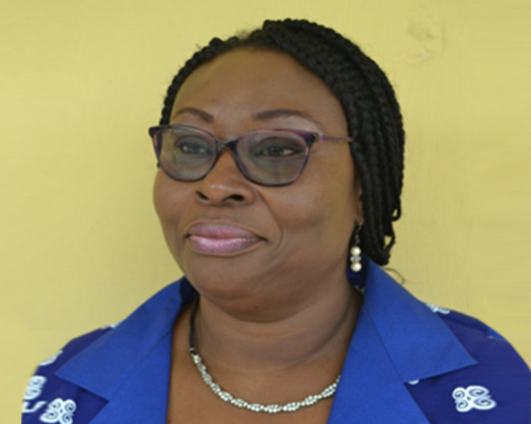
Executive Director of the ARK Foundation, Dr Angela Dwamena Aboagye, says Ghana has become less effective at protecting children despite having laws, policies and systems intended to safeguard their rights and welfare.
She believes the country has lost the deliberate and coordinated approach that once placed child protection high on the agenda at the district and community levels.
Speaking on the Joy FM Super Morning Show on Monday, September 14, Dr Dwamena Aboagye was discussing Ghana's child protection system following the release of the latest JoyNews-SOS Children's Villages Ghana documentary, Hands That Hurt, Hands That Heal.
The documentary highlights gaps in Ghana's child protection system and examines issues including child abuse, exploitation, survival, and access to education.
When asked whether Ghana is now worse off than it was in the past when it comes to child protection, Dr Dwamena acknowledged that Ghana has strengthened its legal and policy framework over the years, including amendments to existing laws and the introduction of various policies and standard operating procedures.
“I think so. Despite all the laws we have, so many policies, SOPs, name them, we have amended our laws," she said.
However, she said the existence of laws and policies has not translated into sufficient support and protection for children at the community level.
“When it comes to the direct resources that children should have in terms of support, when it comes to their protection, I think even though I don't have the raw data, I think children are in a worse position than we used to have,” she said.
*Dr Dwamena Aboagye said child protection cannot be addressed effectively through isolated interventions because children's welfare involves several interconnected areas.
She pointed to the findings of the Hands That Hurt, Hands That Heal documentary, which covers more than just child exploitation.
“Look at your documentary. It's not only looking at exploitation, but it's also looking at abuse; it's looking at survival; it's looking at children's education,” she said.
“There are so many aspects of it. You can't be unintentional about children.”
She believes this lack of deliberate attention is one of the major weaknesses in Ghana's current child protection system.
“Which is where I think Ghana is,” she added.
She said the Children's Act had provided a policy direction for child protection to be decentralised to the district level, with the Department of Social Welfare and Community Development expected to play a key role.
“When it comes to the Children's Act, there was an understanding or policy direction to decentralise child protection to the district, led by the Department of Social Welfare and Community Development at the district,” she said.
Dr Dwamena Aboagye recalled a period when the Ghana National Commission on Children was more active at the district level and worked with assemblies and communities to raise awareness about child protection.
She said the commission's work included sensitising assembly members, communities and other stakeholders about the needs of children.
She said that the approach did not always depend on having large amounts of money, but on making child protection a priority.
“They didn't have a lot of resources. It's not always about the money,” she said.
“It's about the fact that people become sensitised to the issues, and when they do that, they apply even the little they have and the few institutions they have to work. That is what we are not doing in Ghana.”
According to her, when local authorities and communities understand the challenges facing children and make them a priority, they can use even limited resources more effectively.
She cited the Bongo District as an example of how such an approach once worked.
Dr Dwamena Aboagye also expressed concern about the number of responsibilities placed under the Ministry of Gender, Children and Social Protection.
She said the ministry is responsible for a wide range of issues, including women's affairs, gender equality, child survival and protection, social protection, disability and mental health-related concerns.
“The Ministry of Gender, Social Protection and Children and Social Protection, it has more than 13 departments,” she said.
“I mean, I believe for whoever leads that ministry, because these are all critical issues. You're not looking only at women, you're looking at gender equality, you're looking at children, you're looking at child survival, protection, development, participation.”
She said the ministry must also deal with social protection, people with mental health issues, persons with disabilities and other areas.
“When that happens, I believe that somebody is bound to fall through the cracks,” she said.
Latest Stories
-
‘Who approved Laboma structures?’ Victoria Bright calls for review of permitting system
2 minutes -
“The Darkest Chapter”: Latif Abubakar’s 21st production brings President Mahama’s UN reckoning to the National Theatre stage
5 minutes -
Teacher, three others investigated over alleged kidnapping of suspected MoMo fraudster in Kumasi
6 minutes -
Afenyo-Markin mourns Bernice Offei, describes her songs as ‘sermons set to music’
6 minutes -
Don’t just learn AI tools, use them to improve productivity – ALX Enterprise
14 minutes -
Free rabies vaccination campaign targets 25,000 dogs and cats nationwide
20 minutes -
Ghana needs a system to track child protection funding to where risks are highest – ARK Foundation
22 minutes -
AI may not replace humans, but workers who fail to adapt could lose jobs – ALX Enterprise
24 minutes -
Gideon Boako: Bretton Woods is fraying; Ghana has built a bridge
25 minutes -
Ghana’s child protection system failing children despite laws and policies – ARK Foundation
26 minutes -
‘Future of Black Queens is safe for many years’ – Black Princesses boss Charles Sampson
30 minutes -
Titus Glover questions Laboma Beach demolition, proposes widening Kpeshie Lagoon outlet
30 minutes -
NACOC arrests 3 suspects linked to Dutch fugitive drug kingpin
51 minutes -
Workers must complement AI skills with professional expertise to remain relevant – ALX Enterprise
1 hour -
Companies that delay AI adoption risk losing market opportunities – ALX Enterprise
1 hour