

Audio By Carbonatix
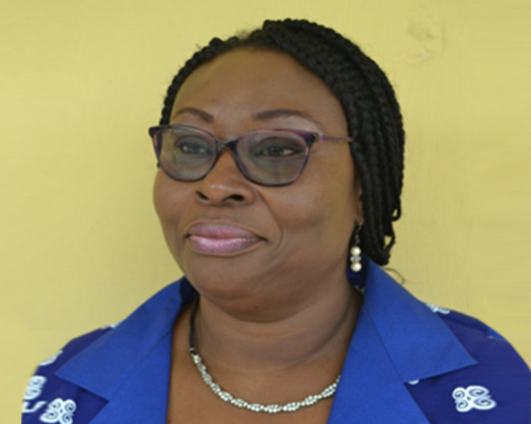
Executive Director of the ARK Foundation, Dr Angela Dwamena Aboagye, says Ghana has become less effective at protecting children despite having laws, policies and systems intended to safeguard their rights and welfare.
She believes the country has lost the deliberate and coordinated approach that once placed child protection high on the agenda at the district and community levels.
Speaking on the Joy FM Super Morning Show on Monday, September 14, Dr Dwamena Aboagye was discussing Ghana's child protection system following the release of the latest JoyNews-SOS Children's Villages Ghana documentary, Hands That Hurt, Hands That Heal.
The documentary highlights gaps in Ghana's child protection system and examines issues including child abuse, exploitation, survival, and access to education.
When asked whether Ghana is now worse off than it was in the past when it comes to child protection, Dr Dwamena acknowledged that Ghana has strengthened its legal and policy framework over the years, including amendments to existing laws and the introduction of various policies and standard operating procedures.
“I think so. Despite all the laws we have, so many policies, SOPs, name them, we have amended our laws," she said.
However, she said the existence of laws and policies has not translated into sufficient support and protection for children at the community level.
“When it comes to the direct resources that children should have in terms of support, when it comes to their protection, I think even though I don't have the raw data, I think children are in a worse position than we used to have,” she said.
*Dr Dwamena Aboagye said child protection cannot be addressed effectively through isolated interventions because children's welfare involves several interconnected areas.
She pointed to the findings of the Hands That Hurt, Hands That Heal documentary, which covers more than just child exploitation.
“Look at your documentary. It's not only looking at exploitation, but it's also looking at abuse; it's looking at survival; it's looking at children's education,” she said.
“There are so many aspects of it. You can't be unintentional about children.”
She believes this lack of deliberate attention is one of the major weaknesses in Ghana's current child protection system.
“Which is where I think Ghana is,” she added.
She said the Children's Act had provided a policy direction for child protection to be decentralised to the district level, with the Department of Social Welfare and Community Development expected to play a key role.
“When it comes to the Children's Act, there was an understanding or policy direction to decentralise child protection to the district, led by the Department of Social Welfare and Community Development at the district,” she said.
Dr Dwamena Aboagye recalled a period when the Ghana National Commission on Children was more active at the district level and worked with assemblies and communities to raise awareness about child protection.
She said the commission's work included sensitising assembly members, communities and other stakeholders about the needs of children.
She said that the approach did not always depend on having large amounts of money, but on making child protection a priority.
“They didn't have a lot of resources. It's not always about the money,” she said.
“It's about the fact that people become sensitised to the issues, and when they do that, they apply even the little they have and the few institutions they have to work. That is what we are not doing in Ghana.”
According to her, when local authorities and communities understand the challenges facing children and make them a priority, they can use even limited resources more effectively.
She cited the Bongo District as an example of how such an approach once worked.
Dr Dwamena Aboagye also expressed concern about the number of responsibilities placed under the Ministry of Gender, Children and Social Protection.
She said the ministry is responsible for a wide range of issues, including women's affairs, gender equality, child survival and protection, social protection, disability and mental health-related concerns.
“The Ministry of Gender, Social Protection and Children and Social Protection, it has more than 13 departments,” she said.
“I mean, I believe for whoever leads that ministry, because these are all critical issues. You're not looking only at women, you're looking at gender equality, you're looking at children, you're looking at child survival, protection, development, participation.”
She said the ministry must also deal with social protection, people with mental health issues, persons with disabilities and other areas.
“When that happens, I believe that somebody is bound to fall through the cracks,” she said.
Latest Stories
-
Hawa Koomson pledges experienced and mature leadership of NPP women’s wing
44 minutes -
Young woman found dead at Kasoa Peace Town
1 hour -
Playback: The Law examined lawful arrest in Ghana
2 hours -
Mahama urges African governments to treat healthcare as an investment, not budget cost
2 hours -
Bawumia congratulates John Boadu and new NPP executives, pledges support ahead of 2028
2 hours -
‘No talent should be left out’ – Bawumia pledges inclusive NPP campaign for 2028
2 hours -
Prof. Mike Oquaye recounts how he blocked the Special Prosecutor’s attempt to arrest Bawku Central MP
3 hours -
Make health sovereignty a priority for Africa – Mahama
3 hours -
Dorimon Naa, Wa West DCE lead massive clean-up exercise; threaten sanctions against recalcitrant residents
3 hours -
Photos from Adom FM Y2K Jam
3 hours -
Praye Tiatia steals the show at Adom FM Y2K Jam [Watch]
3 hours -
Boakye Agyarko congratulates John Boadu, pledges support for NPP leadership
4 hours -
Antwi HiMight thrills fans with Antwi ne Antwi hits at Adom FM’s Y2K Jam [Video]
4 hours -
Amb. Edward Boateng congratulates Boadu, Kodua on election wins
4 hours -
John Boadu pledges to rebuild NPP from grassroots and restore ‘winning machinery’
4 hours