

Audio By Carbonatix
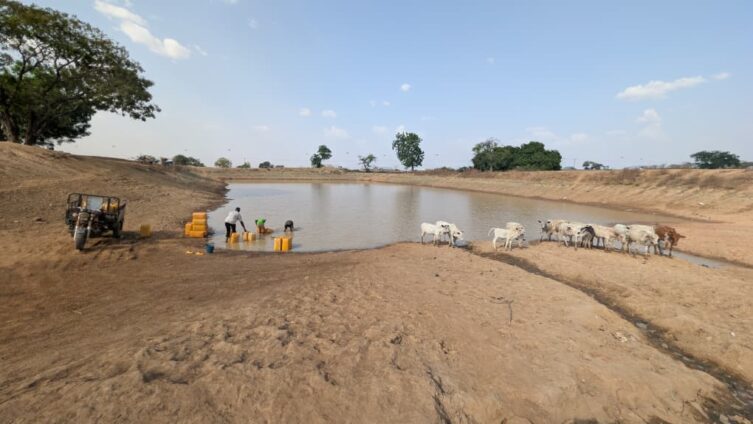
More than a year after a JoyNews investigation by Mahmud Mohammed-Nurudeen exposed serious contamination in Nanton Zuo’s main water source, residents are still relying on the same dam.
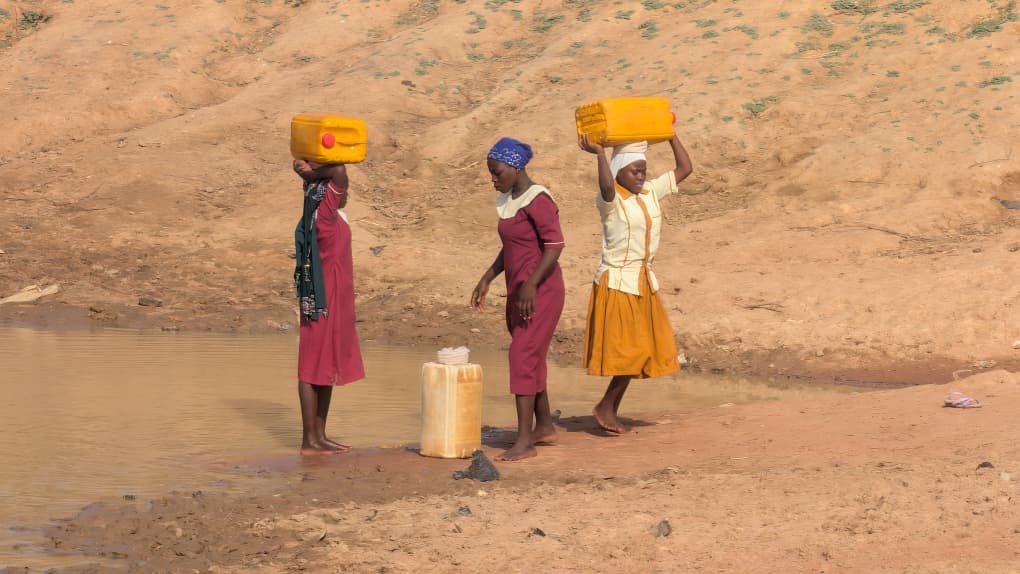
Before school, some children walk to the dam with containers, fetch water and carry it home for their families.
Residents use the water for drinking, cooking, washing and other household needs. Attempts to find alternatives have not solved the problem.
Some boreholes have failed, while residents say water from a newer borehole is too salty for some uses. Although pipes were connected to the community years ago, residents say they still do not have a reliable supply.
The latest proposal is to rehabilitate the dam. But can the dam be made safe enough for Nanton Zuo to depend on?
The warning that began with a sample
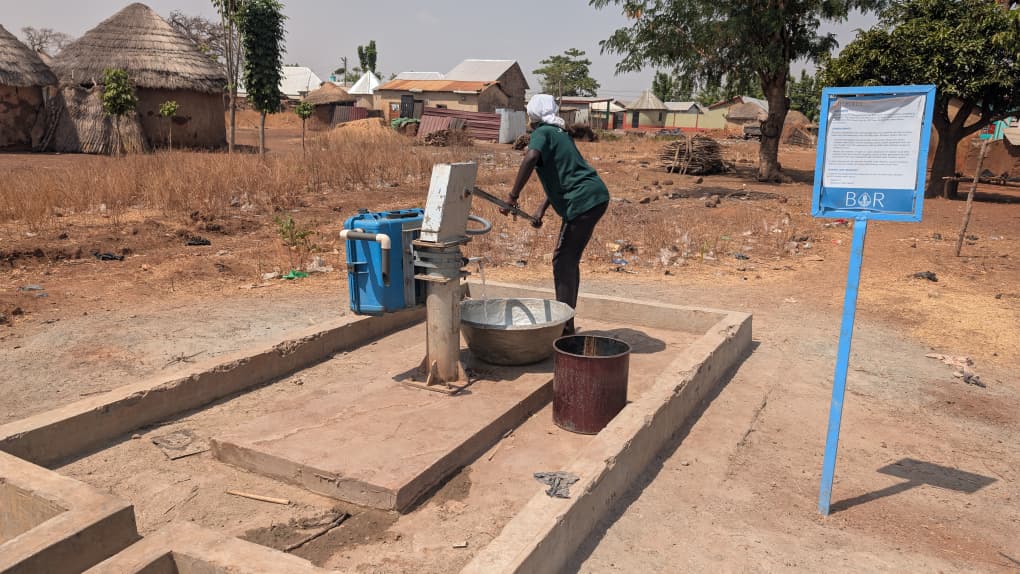
As part of the investigation, JoyNews collected a sample of water from the Nanton Zuo dam and submitted it to the Ghana Water Company’s Regional Quality Assurance Department in the Northern Region for testing. The investigation was published on 10 April 2025.
The findings were alarming. The physical and chemical parameters did not meet Ghana’s regulatory requirements. The microbial contamination was so high that it could not be counted.
The laboratory result was recorded as “TNT” — too numerous to count. Sulemana Alhassan, then the Northern Regional Water Quality Assurance Manager, explained the significance of the analysis.
“The best thing is to analyze it and turn this water into data, and that is exactly what we have done,” Alhassan said in the JoyNews investigation.
He said the water failed the regulatory test. “The physical and chemical parameters do not meet regulatory requirements. Ghana has set standards, and any analyzed sample must conform. This water fails the test,” Alhassan said.
The microbial findings were even more disturbing. “We couldn't even count them. That is why we put ‘TNT’ — Too numerous to count,” Alhassan said.
He warned that prolonged consumption of untreated water could cause harm. “Continuous consumption of untreated water like this will eventually cause harm,” Alhassan said.
More than a year later, the warning has not translated into a dependable alternative for the community. The same dam remains in use.
The source they cannot abandon
Memunatu says the condition of the dam becomes worse when it rains. “When it rains, dirt and human waste enter the dam,” Memunatu said.
She says discarded nappies and other waste can also be carried towards the water source. The dam is also used by cattle, goats and dogs. Yet residents continue to collect water there.
“We have no alternative,” Memunatu said.
Mohamed Feruza says residents continue to seek medical treatment and believes the water is contributing to some of the problems they face. “The water is affecting us,” Feruza said.
The original JoyNews investigation also sought expert interpretation of the laboratory results. Consultant urologist Dr Akis Afoko reviewed the report and said the water contained high levels of Salmonella and E. coli. He warned about the risks associated with heavy bacterial contamination.
“Heavy bacterial contamination, as shown in the report, makes this water extremely unsafe,” Dr Afoko said.
Dr Afoko also described serious illnesses he had encountered among patients from the community, including severe diarrhoea and complications associated with typhoid.
He raised concerns about kidney stones and unusually young patients with kidney and bladder cancers.
The search for another source
For years, residents and organisations have searched for groundwater. According to the November 2025 JoyNews follow-up, residents said more than 15 boreholes had been attempted over the years, with repeated failures.
Abdullah estimates that about 20 boreholes have been attempted in the area since he was a child.
“They drill and there is no water,” Abdullah said.
The latest borehole is different. It produces water. But residents say the water is not good for use,
Yakubu Suraiya says it does not work properly with soap. “The water does not lather with soap,” Suraiya said.
Memunatu describes it as salty. “The water is very salty,” she said. She says tea prepared with the water is difficult to drink and that food prepared with it can become watery the following day.
Together, however, the two sources tell the same story. Nanton Zuo is struggling not merely to find water, but to find water that people can depend on.
Why the boreholes keep failing
A water resources development engineer, Fadlu Rahman Mashod, says the problem may lie beneath the surface.
In the November 2025 JoyNews follow-up, Mashod explained that the geology around Nanton Zuo makes groundwater development difficult.
“There is very little groundwater. Most of the time, when you drill, you won’t find water. The rocks here are mudstone and shale. These rocks do not allow water to enter or be stored inside them. It is not only Nanton Zuo. The whole area has this problem,” Mashod said.
He said finding groundwater would require complex studies, advanced technology and deeper drilling — and even that would not guarantee success.
Green Gold has worked with the community for about six years and helped mobilise support for boreholes through the Grants Force Foundation.
But the repeated difficulties have changed the approach. Executive Director, Clement Matomasen says attention is now turning back to the dam.
“The approach now is to rehabilitate the dam,” Matomasen said.
The proposed work includes dredging accumulated sediment, protecting the banks, fencing the area to keep animals out and reducing the amount of waste entering the water.
Matomasen estimates that the existing system holds about two million litres, while the proposed rehabilitation could increase capacity to about six million litres.
The objective is to retain more water during the dry season. But more water is not necessarily safer water.
The proposed rehabilitation could address some of the physical weaknesses of the dam. Dredging could remove accumulated sediment. Fencing could reduce livestock access. Bank protection could reduce erosion. Better control of the surrounding area could reduce pollution. But none of those measures, by themselves, removes microbial contamination.
That is why the 2025 laboratory findings remain important. If the dam is to become a dependable drinking-water source, rehabilitation must be accompanied by appropriate treatment and regular testing.
GWCL’s Alhassan explained during the original investigation that conventional treatment could remove suspended matter and dangerous microorganisms, followed by pH adjustment and laboratory testing to establish whether the treated water is safe.
“If possible, we do PH adjustments and then, after that, you now test the water to see if the treatment process is… optimum,” Alhassan said.
He also said a borehole could require less treatment if a clean underground water table could be found.
“You can drill the borehole and then maybe that one may not require so much treatment if you are lucky and the water table is good,” Alhassan said.
Rehabilitation cannot simply mean increasing the volume of water. It has to mean producing water that can safely be used.
More people, more pressure
Nanton Zuo has grown. So has the demand on its water. Dokurugu Abukari says population growth has increased pressure on the dam.
“The population has increased and the pressure on the dam has increased,” Abukari said.
The pressure is not limited to Nanton Zuo. Feruza says neighbouring communities collect water when their own sources dry up.
Matomasen says people from other communities, including some from Tamale, also come to the dam.
A source already struggling to meet the needs of one community is therefore serving a wider population. And the burden is felt most directly by households.
Matomasen says the dam is about 700 metres from the community. Children sometimes make the journey before school.
“Sometimes the children fetch water before they go to school,” Matomasen said.
The November 2025 JoyNews follow-up also documented the burden on women and girls, particularly during the dry season, when water collection can consume hours of their day.
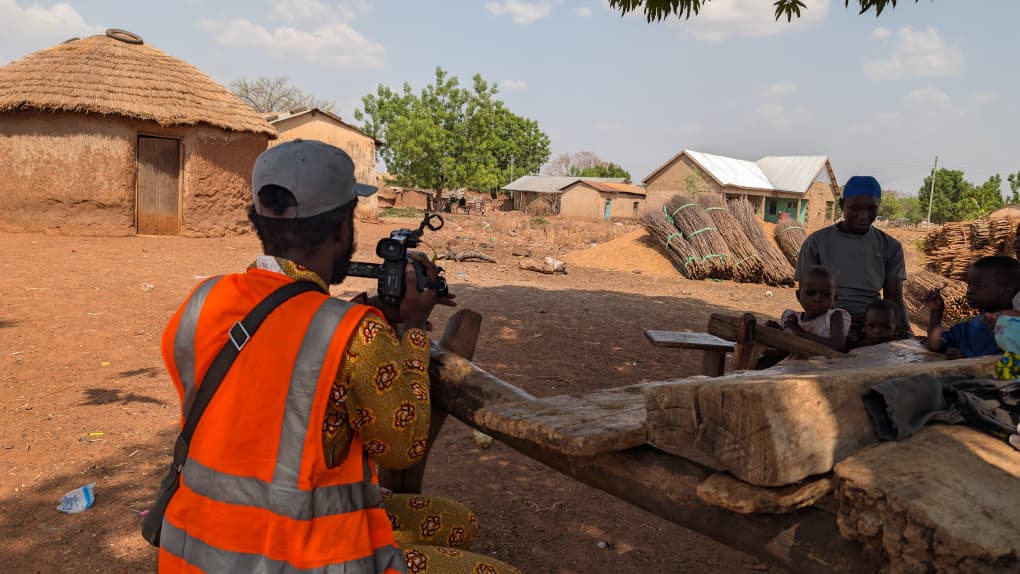
Perhaps the most striking part of the story is that Nanton Zuo already has a piped water network. The pipes were connected many years ago. Residents say they remain without a dependable supply.
Abdullah says the infrastructure has not translated into water.
“More than five years now, the pipes have been connected, but no water is flowing,” Abdullah said.
The promise beyond the dam
There is also a bigger plan for the future. The Tamale Water Project, announced in 2020, has been identified as a possible long-term source of water for Nanton Zuo and other communities.
A JoyNews follow-up in November 2025 reported that the project was designed to produce 135,000 cubic metres of treated water each day and serve hundreds of thousands of people by 2040. The report said the engineering designs and a Value for Money Audit had been completed, but construction had not started at the time.
The follow-up also reported that the 2026 Budget made provision for construction to begin in 2026. But for the people of Nanton Zuo, a project that is yet to deliver water cannot solve a problem they are facing today.
Feruza Mohammed put the community's concern simply during the November 2025 investigation.
“We know the dam can’t help us now, but only a major project like this can secure our future. It must not become another broken promise,” Feruza said.
For now, that future remains unclear. Nanton Zuo has spent years looking for another source of water. The boreholes have not provided a reliable answer.
The newest borehole produces water residents describe as salty. Pipes have been connected to homes, but residents say they remain dry.
The larger water project is still to deliver water to the community. So the people of Nanton Zuo are once again looking towards the dam.
It is not because the problems with the dam have gone away. It is because the alternatives have not provided enough water to meet the community's needs.
This is the difficult reality facing Nanton Zuo. The community is being pushed back towards a water source it has spent years trying to move away from.
The dam remains important because, for now, there is no other dependable source available at the scale the community needs.
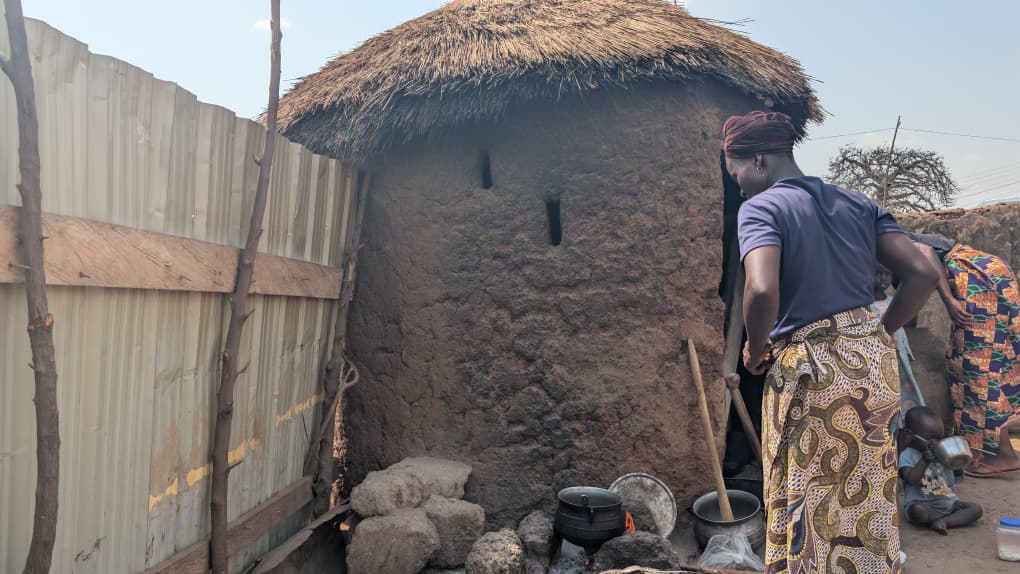
But the water testing carried out for this investigation raises another question: if the dam is to remain the community's main source, can it be made safe enough for people to depend on?
Rehabilitating the dam, therefore, cannot only be about increasing the amount of water it can hold. It must also address the quality of that water, the condition of the catchment, pollution risks and how the water is treated before it reaches people's homes.
For the people of Nanton Zuo, the issue is no longer simply having water. It is having water that is available, reliable and safe to drink.
Until that happens, the community remains caught between an unsafe source today and a promised solution tomorrow.
Latest Stories
-
UNFPA calls for presidential intervention as maternal deaths reach crisis levels
5 minutes -
Space reserved along Accra-Kumasi Expressway for railway line – Mahama
9 minutes -
Ashaiman’s deplorable roads: How long must residents wait?
13 minutes -
Elevate Africa Summit to push AfCFTA toward fully functional markets
15 minutes -
The search for clean water has failed — so can Nanton Zuo save the water source it already has?
27 minutes -
Accra-Kumasi Expressway construction expected to begin in January 2027 – CEO
33 minutes -
Parents in Ashanti make U-turn on Category C, D Schools as reporting deadline approaches
40 minutes -
September 21 declared public holiday for Founder’s Day
44 minutes -
Indonesia rescuers battle turbulent seas in search for 129 people after passenger ship capsizes
1 hour -
Iceland’s last whaling company shrugs off threat of permanent ban
1 hour -
‘Out of the abundance of the heart, the mouth speaks’ – GBA President on CJ’s SOEs comments
1 hour -
Member of UK Armed Forces dies in road traffic incident in Ukraine
1 hour -
Mahama to honour GAF Engineers Regiment with Order of the Companion of the Volta
1 hour -
Agbodza demands quality, value for money in Accra-Kumasi Expressway construction
1 hour -
Companies left China to dodge tariffs, now some are heading back
1 hour