

Audio By Carbonatix
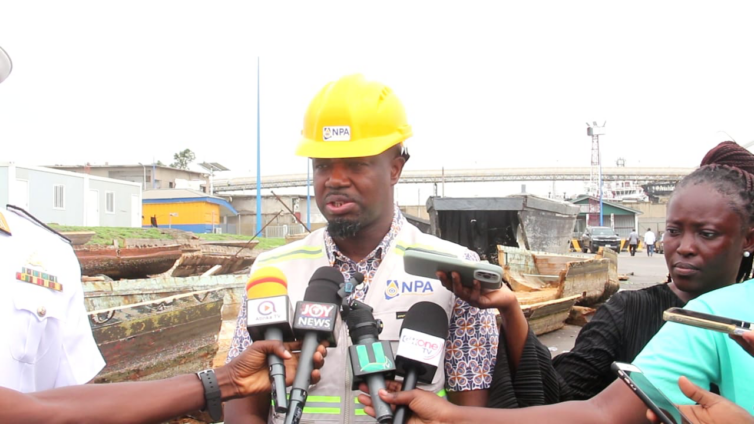
The CEO of the National Petroleum Authority (NPA), Godwin Edudzi Tamakloe, has identified three major factors that determine the availability and pricing of petroleum products in Ghana.
He said the factors are the international Free on Board (FOB) price, taxes and, most importantly, the exchange rate.
His comments come as Ghana’s downstream petroleum sector continues to contend with external pressures affecting pump prices.
The NPA has recently adjusted the price floors for petrol and diesel amid changes in international petroleum market conditions.
Speaking on Joy News’ PM Express Business Edition on Thursday, Mr Tamakloe said that managing Ghana’s petroleum sector is particularly challenging because the country is exposed to external market developments.
He said the situation requires careful management because petroleum products are central to the economy's functioning.
Mr Tamakloe also recalled the fuel shortages and queues experienced around 2014 and 2015.
He said those shortages were internally generated and were not caused by a lack of petroleum products.
“Those queues were internally generated. It was not because there was no availability of products, but for some obvious reasons, there was quote, unquote, an artificial shortage of products in the various pumps, and that created in itself some queue.”
He said the experience underscored the strategic importance of petroleum products to Ghana’s economy and national security.
“And so, at the core of the management of the downstream is the whole idea of national security. Very strategic area.”
According to him, petroleum products are so critical that consumers have limited alternatives when supplies are disrupted.
“I mean, when people don’t have light, they can adjust for 24 hours. They can adjust even 12 hours. But when they don’t have petroleum products, they have no alternative. They can’t even use water or anything.”
Mr Tamakloe said the NPA’s approach is therefore to manage domestic factors while remaining alert to external developments that could affect the industry.
He stressed that petroleum is at the heart of Ghana’s economy and described the downstream sector as highly strategic.
“It’s like the nervous system of the entire economy.”
He said the government’s management of the sector must therefore take account of both external market conditions and factors within its control.
“Let me say this: there are three principal things that usually impact on petroleum products availability and pricing: the FOB, the tax component, and most importantly, because it’s an imported product, the exchange rate.”
The explanation comes at a time when movements in global petroleum prices and currency conditions remain important considerations for Ghanaian consumers as they monitor changes at the pump.
Latest Stories
-
72 vessels, 17,336 fishing hours: The monitoring gap at Ghana’s first Marine Protected Area
40 minutes -
Ansa-Asare questions rush to lower presidential age to 30
54 minutes -
Minority challenges claim all 431 government-sponsored World Cup travellers have returned
60 minutes -
No evidence linking government, NDC members to cocaine probe – Kwakye Ofosu
1 hour -
Minority demands full breakdown of GH¢58.9m spent on Ghana’s World Cup participation
1 hour -
Police arrest seven suspected armed robbers over series of robberies
1 hour -
Stay away from negative peer influences – MP warns SHS students
1 hour -
Mahama to commission Agbogbloshie waste evacuation to Nsawam landfill today
1 hour -
Kwadaso NDC supporters demonstrate to demand removal of MCE
1 hour -
GSA records 18% revenue growth in 2025
2 hours -
2027 Budget to target nine sectors to create jobs – Mahama
2 hours -
GMC exploring partnership for concession at Takoradi Port – Deputy MD
2 hours -
I’ll strengthen NDC structures, promote unity and build future-ready party – Oppong-Fosu
2 hours -
Mahama briefed on recent narcotic trafficking cases
2 hours -
Accra-Kumasi Expressway procurement underway – Mahama
2 hours