

Audio By Carbonatix
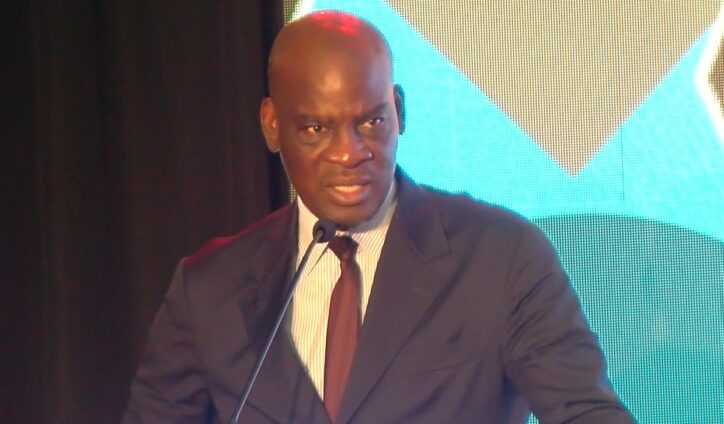
Education Minister Haruna Iddrisu has challenged Ghanaian universities to refocus their academic programmes on the skills needed in the country’s job market to help address graduate unemployment.
He said the growing disconnect between university training and available opportunities was contributing to unemployment among graduates, even as technical, digital and industrial sectors across Africa continue to face shortages of skilled workers.
Speaking at the Higher Education Transformation Convening in Accra, organised by the Mastercard Foundation, Mr Iddrisu specifically urged the Kwame Nkrumah University of Science and Technology (KNUST) to remain focused on its core mandate in science and technology.
“KNUST is noted for its concentration on science. We will expect them to focus more on science, engineering and mathematics education because that holds the key to the future,” he said.
The Minister said Ghana has more than 450,000 tertiary graduates entering the labour market, making it increasingly important for universities to ensure their programmes respond to the needs of industry.
He argued that higher education institutions must equip graduates with practical skills that can position them for opportunities in technical, digital and industrial sectors, where African economies continue to experience skills shortages.
Mastercard Foundation President and Chief Executive Officer, Sewit Ahderom, said the challenge facing Africa’s higher education sector goes beyond improving opportunities for those already enrolled in universities.
She noted that only about nine percent of young Africans of university age are currently in higher education, raising questions about how the continent can simultaneously expand access and improve the quality and relevance of university education.
“Only nine percent of young Africans in university age are in higher education. The question of this convening when we think about transformation is not just for the nine percent that are in higher learning,” she said.
Ms Ahderom was speaking as the Mastercard Foundation marks its 20th anniversary and reflects on its work in education and its next phase of support for young Africans.
Executive Director for Higher Education, Collaboratives and Strategic Initiatives at the Mastercard Foundation, John Nkengasong, said Africa can learn from other countries but should develop higher education systems that respond to its own economic and social needs.
He said Africa’s large and growing youth population makes the transformation of higher education critical to the continent’s economic future.
“Africa can learn from but doesn’t need to copy other countries. There’s no emerging economy in the world that has occurred without a strong investment in higher education,” he said.
Mr Nkengasong noted that people aged between 15 and 25 account for about 419 million of Africa’s population, while only a small proportion currently enter university.
He said the transformation of higher education should ultimately ensure that graduates are equipped to solve problems and compete in the global economy.
“The transformation we want is a young Ghanaian, when they graduate from any university, should fit in the global supply chain and be competitive,” he said.
The two-day convening is bringing together higher education leaders, government officials, industry representatives, development organisations and young people to discuss how African universities can better develop talent, drive innovation and create pathways to dignified and fulfilling work.
Latest Stories
-
‘You promised 24-Hour economy not 24-hour cocaine trafficking’ – Nana B to Mahama
11 seconds -
Nana Konadu dedicated her life to community transformation — Yaa Asantewaa Agyeman-Rawlings
18 seconds -
Protect the customer by changing who owns the loss
9 minutes -
Counterfeit currency syndicates used churches to hide printing operations – National Security Council Secretariat
18 minutes -
NPP press conference on drug busts should be treated with contempt – NDC
18 minutes -
Don’t abandon working policies because of politics – Asiedu Nketiah
24 minutes -
National Security arrests 16 and seizes millions in counterfeit currency and printing equipment
24 minutes -
NPP links resurgence of drug trafficking cases to NDC’s return to power
25 minutes -
KGL Foundation and GNPC Foundation partner to expand educational scholarships for Ghanaian students
25 minutes -
Asiedu Nketiah urges journalists to report fairly at all times, and not based on politicians’ complaints
30 minutes -
Finance Ministry to write off $120m of TOR’s $400m legacy debt – MD reveals
37 minutes -
Mahama: MiDA is Ghana’s gateway to global philanthropy
39 minutes -
NPP alleges illicit drug-processing laboratories operating at Ghana’s main ports
41 minutes -
‘A serious country cannot start afresh every four years’ – Asiedu Nketiah
42 minutes -
National Horticultural Seed Roadmap launched to strengthen Ghana’s vegetable seed sector
54 minutes