

Audio By Carbonatix
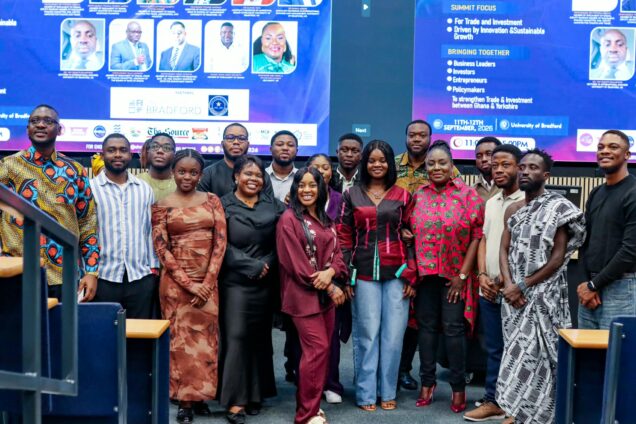
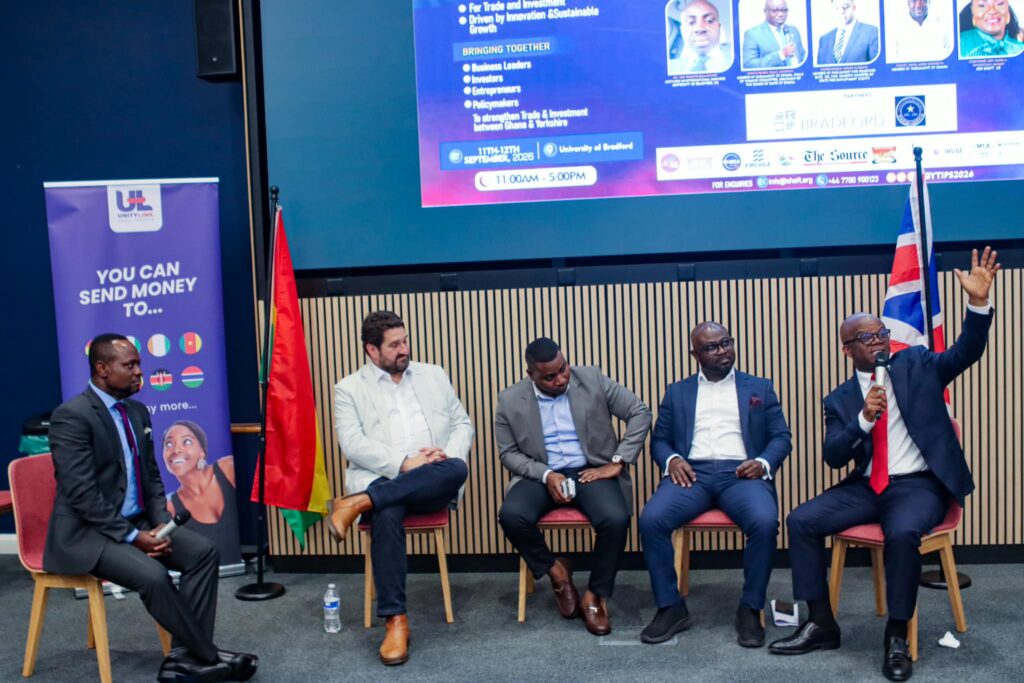
For two remarkable days in September, the University of Bradford became a meeting place between Ghana and Yorkshire, bringing together business, academia, government, traditional leadership, entrepreneurship, culture and creativity under one roof.
Held on 11 and 12 September 2026, the Ghana–Yorkshire Trade & Investment Summit was convened by Mrs Nana A. O. Hagan, Founder and CEO of SHOFT CIC (Shaping Our Futures Together), whose ability to bring people together was evident in both the calibre and remarkable diversity of those who attended.
Equally remarkable was the partnership between the University of Bradford’s School of Management and the Ghana Scholarly Society (GSS). They were magnificently central to the success of the summit; together, they embraced the event and carried it with the same care, commitment and generosity one would extend when welcoming an honoured guest.
The summit was ambitious in scope. Its central focus was strengthening trade and investment between Ghana and Yorkshire, driven by innovation and sustainable growth. Yet what emerged over the two days was about more than economics. It was also about relationships, creating connections between people who might otherwise never have found themselves in the same room.
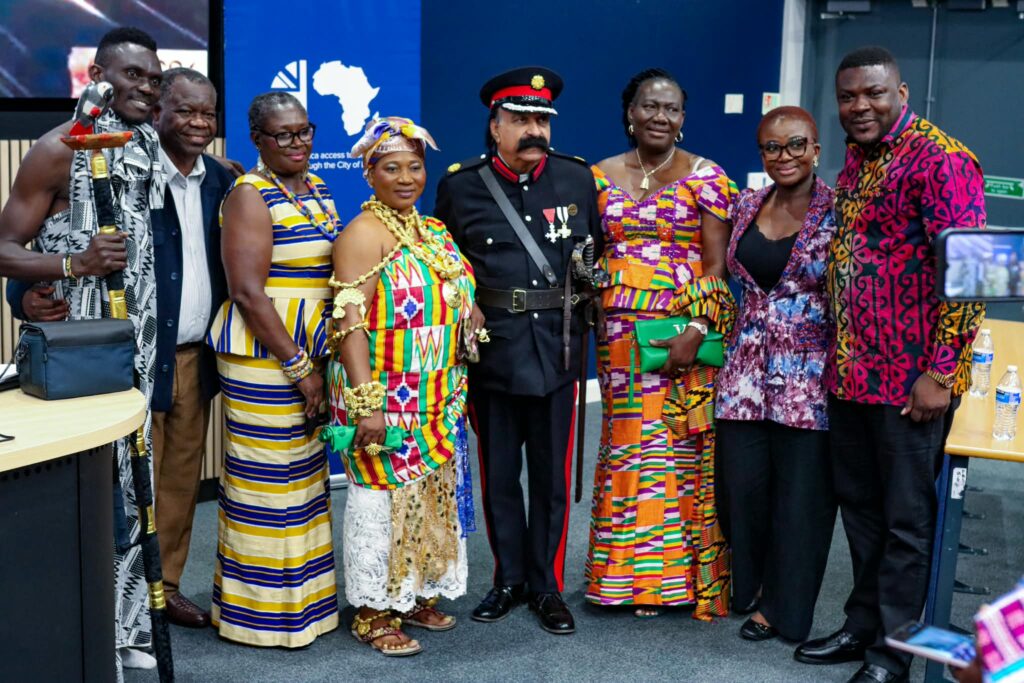
Among the special guests were the Lord Mayor of Bradford, Cllr Chris Herd; former Lord Mayor of Leeds, Cllr Abigail Marshall Katung; Bradford Council Leader, Cllr Stephen Anthony Place; and Dr Manoj Joshi MBE, DL, representing the Lord Lieutenant, Professor Adeeba Malik CBE, Personal Representative of HM The King in West Yorkshire.
They were joined by Professor Uduak Archibong MBE, Pro-Vice-Chancellor for Equality, Diversity and Inclusion at the University of Bradford; Ghana’s Deputy High Commissioner, Hon. Aquinas Quansah; and Nana Afua Apiatewa III, Nguabasin Atta Kuma Atta Henmaa of the Gomoa Assin Traditional Council, Ghana, and Konte Henmaa Nanakom of Greater Manchester, UK.
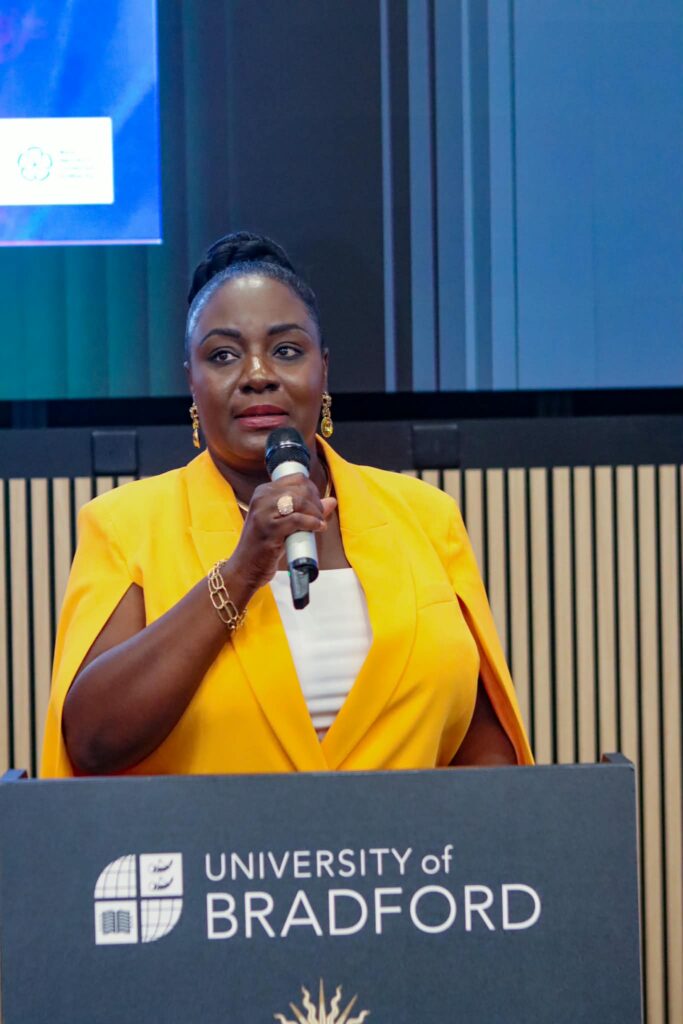
The calibre of the keynote speakers further reflected the summit’s commitment to meaningful discussion around finance, investment, international relations and economic development.
Speakers included Hon. Dr Stephen Amoah, Member of Parliament in Ghana, Deputy Ranking Member of Parliament’s Finance Committee and former Deputy Minister for Finance; Hon. Isaac Adongo, Member of Parliament, Chairperson of Parliament’s Finance Committee and Non-Executive Director on the Bank of Ghana Board; and Hon. Daniel Nana Addo Kenneth, Member of Parliament and member of Parliament’s Foreign Affairs and Regional Integration Committee, as well as Deputy Ranking Member for Private Member’s Bills and Motions.
They were joined by Mr Emmanuel Mensah Thompson Esq., Deputy Director-General of Ghana’s Securities and Exchange Commission.
The University of Bradford’s School of Management also brought its academic expertise to the gathering through Dr Kweku Adams, Associate Professor in International Business and Management; Dr Samuel Kusi, Assistant Professor of Marketing and Brand Consultant; Dr Boakye Boampong, Lecturer in International Business; Professor Richard Nyuur, Head of International Business, Marketing and Strategy; and Professor Yvonne Moogan, Director of the School of Management.
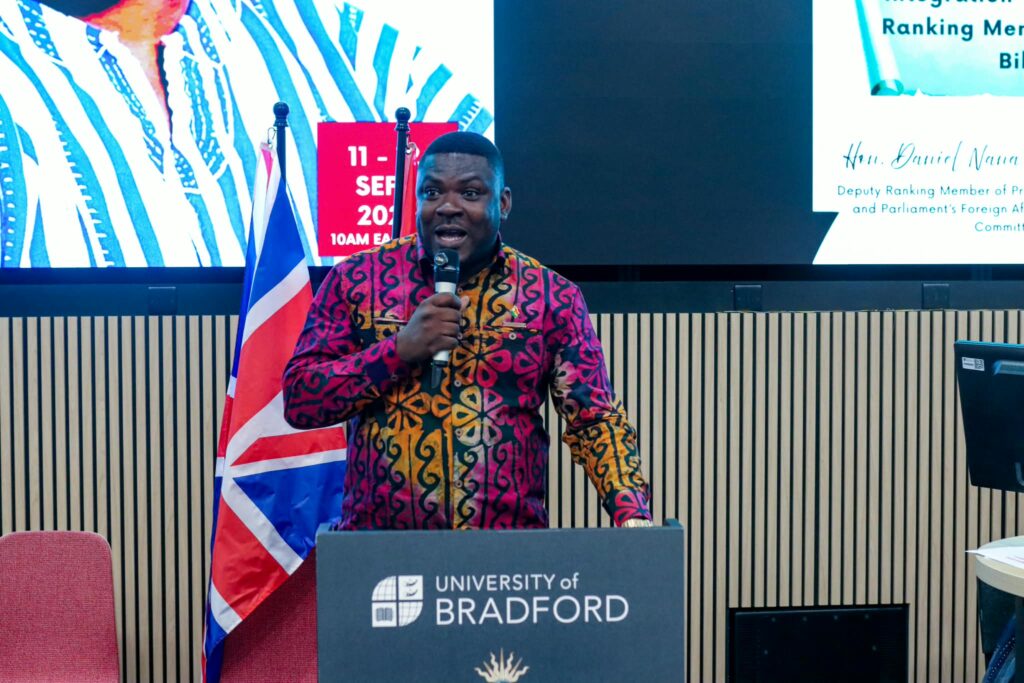
Together, this gathering of political, civic, diplomatic, financial and academic expertise provided a strong foundation for conversations about how Ghana and Yorkshire might build partnerships capable of creating lasting economic and social value.
The People Behind the Summit
Yet behind the dignitaries, presentations, exhibitions and conversations was another group without whom the occasion could not have run so smoothly: the volunteers.
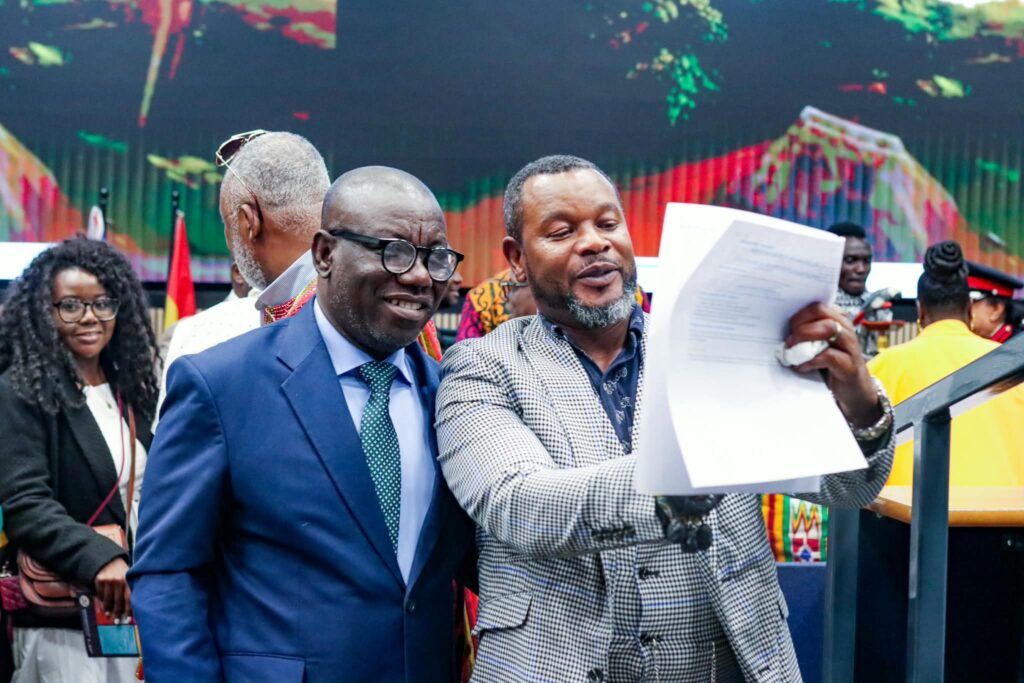
Their contribution was exceptional. Watching them work was rather like watching a choreographed dance. Quietly and efficiently, they seemed to know where they needed to be and what needed to happen next.
Guests were welcomed, people were directed, practicalities were dealt with and the programme continued to flow.
At a large international gathering, it is often the people working behind the scenes who make everything happening in front of the audience appear effortless. The summit’s volunteers did precisely that.
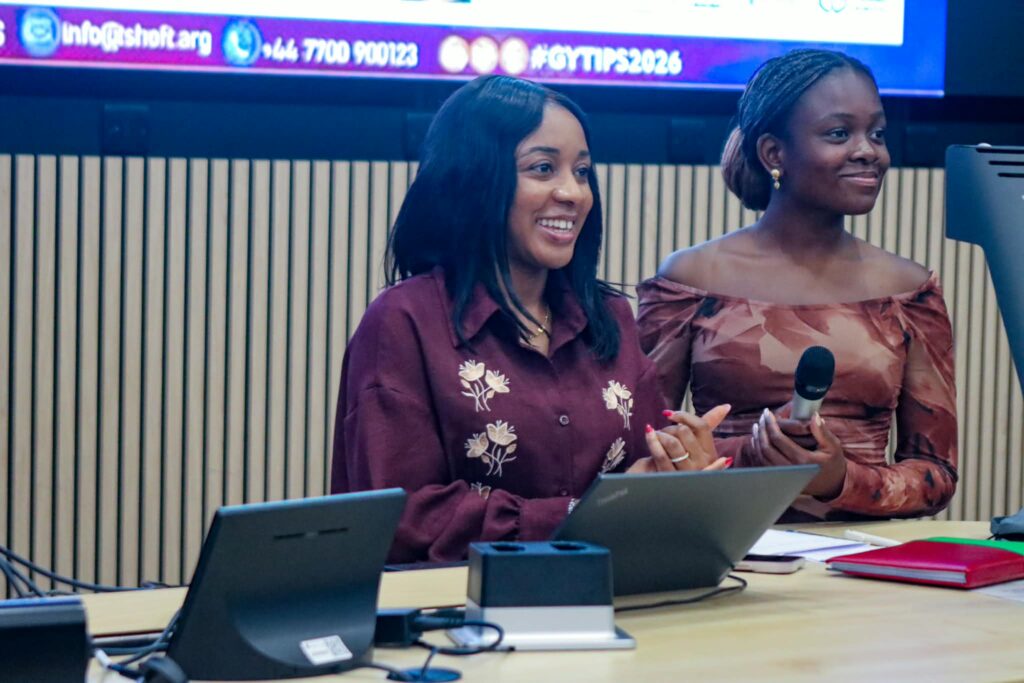
Royal Tradition Meets Contemporary Enterprise
Adding colour, ceremony and a powerful connection with Ghanaian tradition was Nana Afua Apiatewa III, Nguabasin Atta Kuma Atta Henmaa of the Gomoa Assin Traditional Council, Ghana, and Konte Henmaa Nanakom of Greater Manchester, UK.
She graced the summit with her royal presence, accompanied by her linguist, royal umbrella bearer and an Adowa dancer.
It was a striking reminder that international relationships need not require people to leave their cultural identities at the door. Ghana’s traditions and contemporary ambitions could instead occupy the same space, each enriching the other.
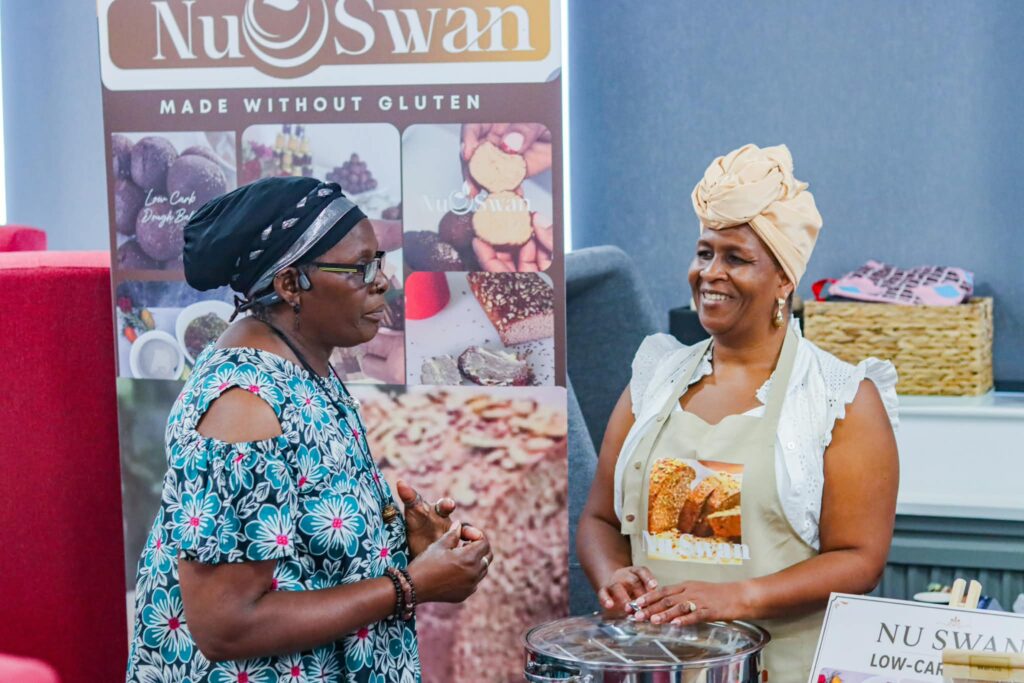
Rather than treating culture as something separate from business, the summit allowed the two to speak to each other. That was particularly apparent in the presence of makers and creative entrepreneurs.
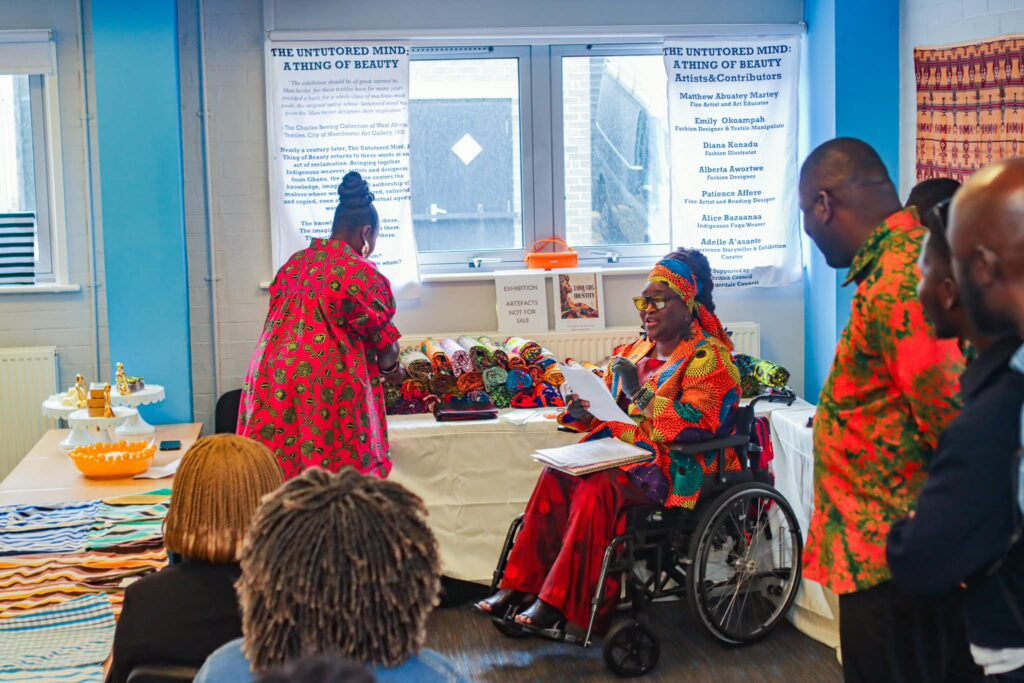
One such guest was Mrs Alice BazaaNaa, who travelled all the way from Wa in Ghana, West Africa. A weaver extraordinaire, she brought with her not simply a skill but a living repository of knowledge.
To watch her weave was almost to watch thought itself take physical form, individual threads crossing, separating and coming together until something far greater than the individual strands emerged.
Or, as I found myself thinking while watching her work: to watch her weave is to sit in your soul and interpret the intricacies of life.
There could hardly be a better metaphor for a summit concerned with creating connections.
Enterprise Has No Minimum Age
Perhaps one of the most delightful reminders of the summit’s breadth came from someone considerably younger.
Among the entrepreneurs present was 10-year-old Verity Ofori-Kuragu, an author and young entrepreneur.
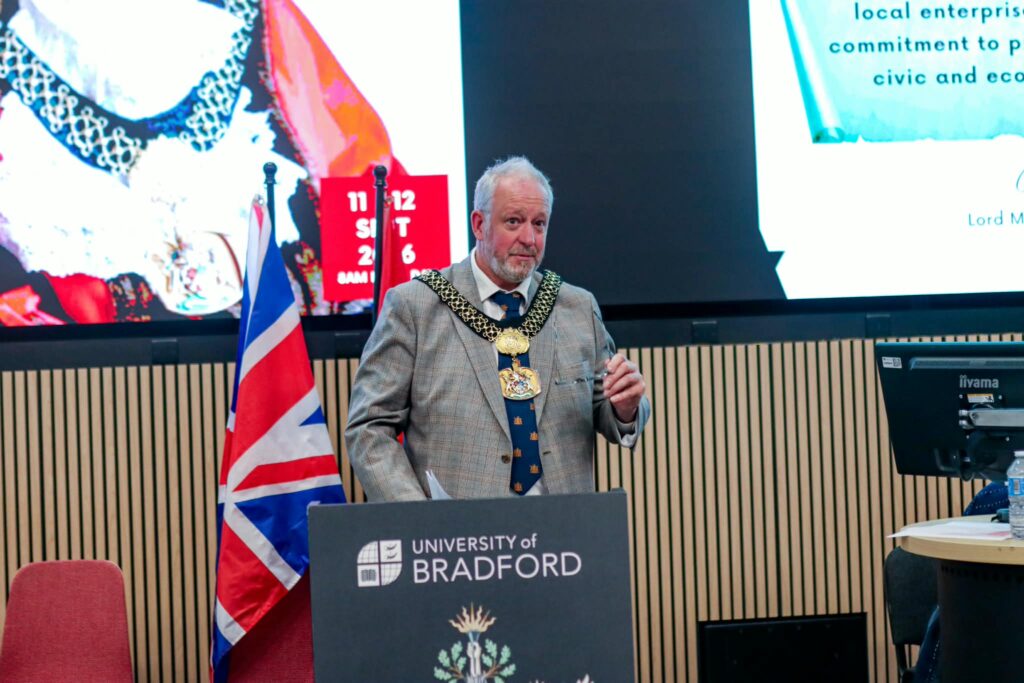
Her inclusion mattered. Amid discussions involving parliamentarians, diplomats, academics, international markets, investment and economic opportunity was a child already experiencing what it means to turn imagination into something tangible.
It broadened the meaning of the word investment.
Investment is, of course, about capital and commerce. But it is also about investing in people, ideas and potential. Giving a young person the confidence to regard herself as an author or entrepreneur may produce returns that cannot yet be entered on a balance sheet.
Threads of Identity and Red Mother Earth
Towards the latter part of the summit, I had the privilege of contributing two interactive workshops and exhibitions of my own.
The first, Threads of Identity, explored the language and stories carried in African wax prints.
These fabrics are far more than beautiful arrangements of colour and pattern. Prints can have names and meanings, carrying messages about relationships, character, aspiration, social standing and everyday life.
Understanding those meanings can be particularly important when choosing fabric as a gift. A piece of cloth selected simply because it is beautiful might communicate something altogether unintended, enough, as I joked with participants, to start “World War 10,000!”
The workshop encouraged participants to look beyond the surface of the cloth and recognise fabric as a form of communication: something capable of carrying history, humour, identity and social commentary from one person and generation to another.
The second workshop, Red Mother Earth, turned attention from the language of cloth to the extraordinary resources provided by the earth itself.
The exhibition introduced some of the many natural materials traditionally used in African everyday life. These included Crescentia cujete, the calabash, transformed into storage vessels, household utensils and musical instruments, alongside natural loofah sponges and traditional chewing sticks.
Central to the display were also miniature examples of traditional cooking equipment fashioned from red clay: earthenware cooking pots, coal pots, a mukyea, a traditional hearth used for cooking, and a clay oven.
These small objects told a much larger story.
Long before terms such as sustainability, biodegradability and the circular economy became part of contemporary environmental discourse, communities were making practical use of what the natural world provided.
Earth became the material from which people cooked and sustained their families; plants became vessels, cleaning materials and implements for everyday life.
When many of these objects eventually reached the end of their usefulness, they could return to the earth from which they had come.
That simple cycle lay at the heart of Red Mother Earth: an invitation to recognise that some of the ideas now presented as solutions for a more sustainable future can also be found by looking carefully at knowledge and practices inherited from the past.
The Bridges That Remain
By bringing all these elements together, the Ghana–Yorkshire Trade & Investment Summit demonstrated something important about what international trade and investment can look like.
There were parliamentarians, civic leaders, diplomats and decision-makers. There were academics, financial experts, established businesses and emerging entrepreneurs. There were artists and makers. There was traditional authority and youthful ambition.
And there were conversations about economic development taking place alongside conversations conducted through cloth, craft, movement and heritage.
Holding those many threads together was the vision of Mrs Nana A. O. Hagan.
Creating an event is one thing. Creating an environment in which such different people can meet one another, recognise something of value in one another and begin conversations that may continue long after the chairs have been put away is something else entirely.
The Ghana–Yorkshire Trade & Investment Summit was therefore not simply about what happened at the University of Bradford on 11 and 12 September.
Its real measure will be what happens next.
Which introductions become collaborations? Which conversations become businesses? Which ideas cross borders? Which young entrepreneur is inspired by somebody she met? Which tradition finds a new audience? Which investment creates an opportunity?
The summit’s message was: “Building Bridges, Creating Value, Delivering Prosperity.”
For two days in Bradford, those bridges were not merely discussed.
They were being built.
Latest Stories
-
IFC, LMI Holdings expand partnership to power Ghana’s industrial growth
2 minutes -
Ashanti Regional Police arrest two foreign nationals over alleged kidnapping and murder of Senegalese goalkeeper Cheikh Toure
3 minutes -
Rein in NIB over attempted arrest of Baffour Awuah – Kyei-Mensah-Bonsu
5 minutes -
Black Queens captain Portia Boakye joins Mexico’s UNAM Pumas
15 minutes -
Attempted arrest of Baffour Awuah was unjustified and dangerous – Kyei-Mensah-Bonsu
15 minutes -
La Shikitele Nii Adjei Koofeh IV denies responsibility for Laboma Beach Resort demolition
21 minutes -
Sentuo Oil Refinery urges government to price Ghana’s local crude oil in cedis
28 minutes -
GNFS honours two officers for rescue efforts during Sogakope floods
30 minutes -
Government pauses Agbogbloshie 24-Hour Economy Market redevelopment for consultations
31 minutes -
Dr Kwabena Bempah Tandoh engages Mim market traders as Parliamentary campaign gathers momentum
36 minutes -
PURC keeps electricity and water tariffs unchanged for fourth quarter of 2026
43 minutes -
Ejisu Police release parents, arrest caretaker over missing five-month-old baby from Asafo Market
56 minutes -
AfCFTA needs efficient payment systems, borders and infrastructure to boost intra-African trade – Wamkele Mene
1 hour -
Kow Essuman confident NPP will reclaim Ablekuma West ‘with a huge margin’
1 hour -
Today’s front pages: Thursday, September 24, 2026
1 hour