

Audio By Carbonatix
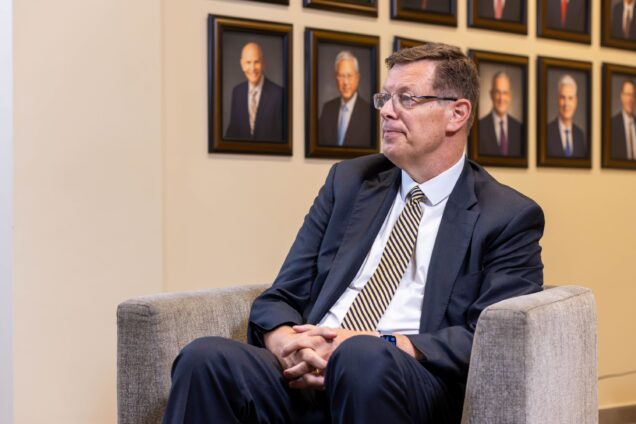
West Africa’s growing youth population will require greater access to education, skills and economic opportunities if its demographic strength is to translate into productive livelihoods, Elder Clark G. Gilbert, a member of the Quorum of the Twelve Apostles of The Church of Jesus Christ of Latter-day Saints, has said.
Elder Gilbert, who recently visited countries in the Church’s Africa West Area, said his interactions with young people across the region had left him impressed by their ambition, capacity and desire to contribute to their communities. But he said education would have to be accompanied by opportunities for young people to apply what they learn. “Talent is equally distributed, but opportunities are not,” he said.
He cited his experience with young Africans serving as missionaries, saying he had seen young people from Ghana, Zimbabwe, the Democratic Republic of Congo and other countries demonstrate capabilities comparable to those of their peers in the United States. The difference, he said, was often the opportunities available to them after completing their assignments. Elder Gilbert said this experience had influenced the Church’s decision to expand access to education in Africa, including through BYU-Pathway Worldwide, an online higher education programme. The programme began in Accra in 2011, which he described as its first international location, and has since expanded across the continent. “Today, across all of West Africa, we have almost 40,000 students,” he said.
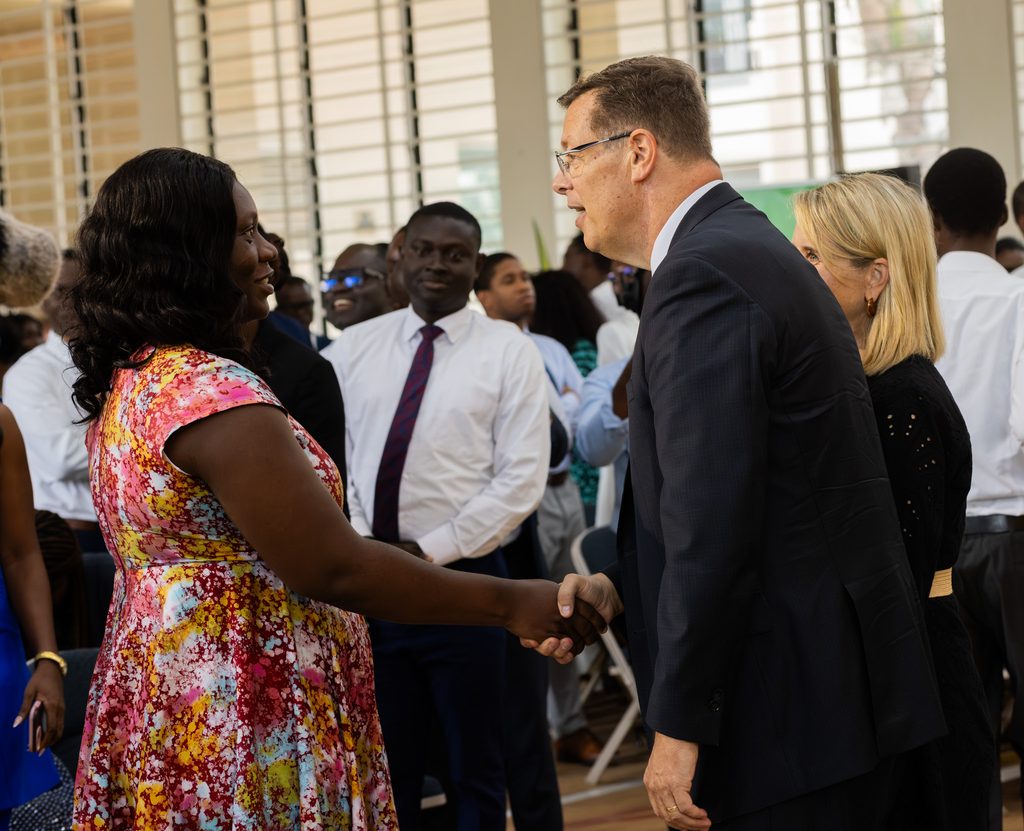
The programme provides online education in areas including accounting, project management, social media marketing, digital marketing and healthcare management. Students can begin with job-skills certificates before progressing towards higher qualifications, while Elder Gilbert said the curriculum and assessments were the same as those used by the Church’s universities in the United States.
He said the online model was intended to make tertiary education more affordable and accessible to young people who might otherwise struggle to study at conventional universities. The programme is also open to people outside the Church, including members of other Christian denominations.
Elder Gilbert said the education initiative was part of a broader effort to develop young people who could become self-reliant and contribute to their families and communities. He pointed to Sierra Leone as an example of the scale of the challenge facing the region. During a recent visit, he said, he saw people selling water and other goods on the streets and was struck by the potential of people who were capable of doing more if they had access to education and opportunity. He said the challenge was therefore not simply to increase enrolment in educational programmes, but to ensure that learning translated into productive economic participation.
The Church has also been promoting remote employment opportunities for graduates, with Elder Gilbert saying some BYU-Pathway students had secured jobs with employers outside their home countries while remaining in Africa. “Some of the jobs are local jobs, but some of the jobs are what we call remote jobs because they’re educated and that brings GDP into the country,” he said.
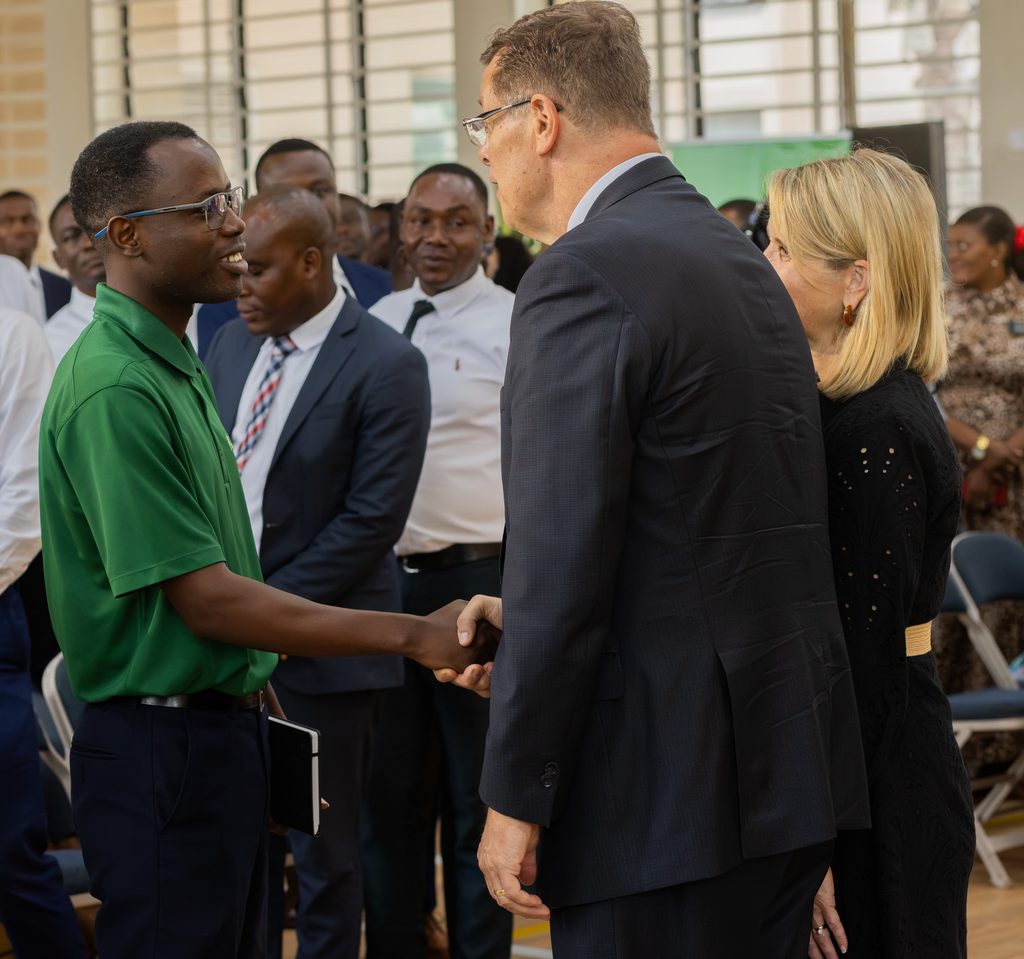
The approach is particularly relevant to Nigeria, which has one of Africa’s largest and youngest populations and faces the continuing challenge of creating sufficient productive employment for young people.
Elder Gilbert said Africa’s demographic strength could become a significant economic resource if young people were equipped with education, professional skills, leadership capacity and access to opportunity. He said the Church’s education programmes were intended to contribute to that process, alongside humanitarian and community-development initiatives across the region. “The long-term objective is to see African young people become educated, self-reliant and capable of creating value in their families, communities and national economies,” he said.
Latest Stories
-
LA 2028: Near misses and the crashouts, but Black Queens cannot afford another Olympic Games slip-up
6 minutes -
Wode Maya recounts how he won Miss Trudy’s heart with Shatta Wale’s song
9 minutes -
Dede Chancelor makes appearance at Milan Fashion Week 2026
32 minutes -
Today’s Front pages: Friday, October 9, 2026
1 hour -
Edmond Kombat named Energy Sector Reform Programme Champion of the Year 2026
3 hours -
PAC summons Takoradi doctor over GH¢341,229 study leave salary
4 hours -
37 Military Hospital traders given 7-days to clear pedestrian walkway
4 hours -
Wontumi challenges EOCO’s handling of Exim Bank loan dispute
4 hours -
Government keeps appealing to striking teachers to resume work – Apaak
4 hours -
Dr Daniel Acquaye urges Christian business leaders to build sustainable enterprises
4 hours -
Chief Justice urges employers to tackle mental health stigma in workplaces
4 hours -
52,000 teachers’ promotion payments targeted for October 15
4 hours -
Nzema chiefs honour Lands Minister, demand sustainable revival of Adamus Resources
4 hours -
ExxonMobil return talks emerge as GIPA CEO holds back details
4 hours -
Council of State meets teacher unions over strike today
4 hours