


Audio By Carbonatix
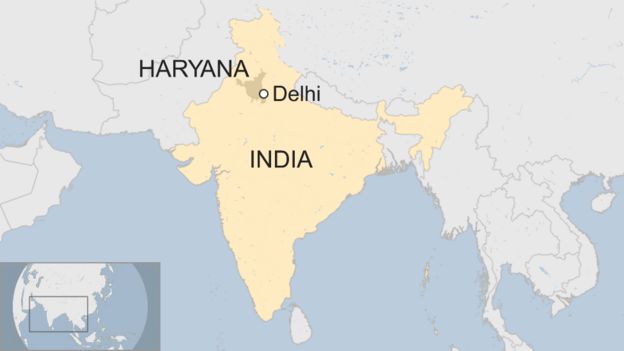
Indian officials suspect an icy ball which fell on a village in the northern state of Haryana is frozen human waste leaked from an aeroplane overhead.
The 10-12kg (22lbs - 26lbs) chunk of ice fell on Fazilpur Badli village with a "big thud", startling residents on Saturday.
Senior Gurgaon official Vivek Kalia told the BBC some villagers thought it was an "extra-terrestrial" object.
Plane toilets store human waste in special tanks.
These are normally disposed of once the plane has landed. But international aviation authorities acknowledge that lavatory leaks can occur in the air.
Mr Kalia told the BBC that a sample of the projectile had been sent for chemical analysis, but "we suspect strongly" that it is frozen airline excrement.
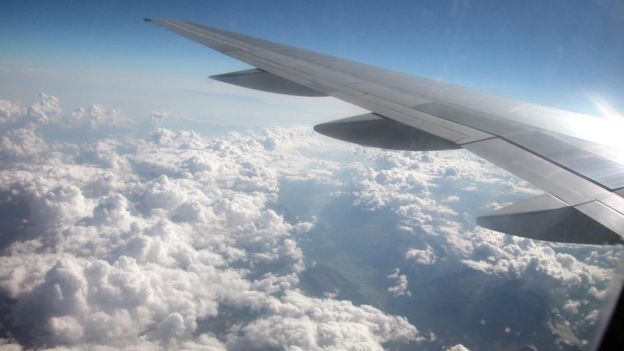
"It was a very heavy icy ball of ice which dropped from the skies early on Saturday morning. There was big thud and people of the village came running out of their homes to find out what had happened," he said.
"Some villagers thought it was an extra-terrestrial object. Others thought it was some celestial rock and I've heard that they took samples home," he said.
The Times of India newspaper reported that people "sneaked a few pieces into their clothes", stored them in refrigerators at home.
A senior official of the Indian Meteorological Department, who examined a small sample, said the projectile was "definitely not a meteorological phenomenon".
In December 2016, a court in India ruled that airlines in India would be fined if their planes release human waste from toilets in the air
In January 2016, a woman in central Madhya Pradesh state suffered a severe shoulder injury when she was hit by a football-sized chunk of ice which fell from the air and crashed into the roof of her house.
A newspaper said that she may have been hit by frozen airline waste.
Why is human waste falling from India's skies?
Modern commercial aircraft cruise at high altitudes, and the sub-zero temperatures outside cause any liquid to freeze immediately.
The resulting ice then breaks off the plane, gaining speed as it falls to the ground far below. Most ice will break up on descent.
Frozen human waste very occasionally forms around the overflow outlets for aeroplane toilets, and then falls to earth.
They are often called "blue ice", because of the chemicals added to the toilets in planes to reduce odour and break down the waste.
Britain's Civil Aviation Authority, for example, has said that around 25 falls of "blue ice" are reported every year from the 2.5 million flights a year over UK airspace.
Latest Stories
-
Accra-Kumasi Expressway to be operated as business to recover taxpayers’ investment – CEO
4 minutes -
UNFPA calls for presidential intervention as maternal deaths reach crisis levels
10 minutes -
Space reserved along Accra-Kumasi Expressway for railway line – Mahama
14 minutes -
Ashaiman’s deplorable roads: How long must residents wait?
18 minutes -
Elevate Africa Summit to push AfCFTA toward fully functional markets
20 minutes -
The search for clean water has failed — so can Nanton Zuo save the water source it already has?
32 minutes -
Accra-Kumasi Expressway construction expected to begin in January 2027 – CEO
38 minutes -
Parents in Ashanti make U-turn on Category C, D Schools as reporting deadline approaches
46 minutes -
September 21 declared public holiday for Founder’s Day
49 minutes -
Indonesia rescuers battle turbulent seas in search for 129 people after passenger ship capsizes
1 hour -
Iceland’s last whaling company shrugs off threat of permanent ban
1 hour -
‘Out of the abundance of the heart, the mouth speaks’ – GBA President on CJ’s SOEs comments
1 hour -
Member of UK Armed Forces dies in road traffic incident in Ukraine
1 hour -
Mahama to honour GAF Engineers Regiment with Order of the Companion of the Volta
1 hour -
Agbodza demands quality, value for money in Accra-Kumasi Expressway construction
1 hour