

Audio By Carbonatix
The recent announcement by President John Dramani Mahama to begin the construction of a brand-new six-lane expressway from Accra to Kumasi has understandably captured public attention. The President stated that the project will commence next year and be completed before he exits office; a timeline of less than three years. But beyond the headline-grabbing promise lies a troubling set of contradictions, omissions, and misplaced priorities that call for urgent scrutiny.
First, let us consider the context. The Accra–Kumasi Road is Ghana’s most critical transport corridor, connecting the capital to the Ashanti Region to Bono East to Northern to North East, Upper East and beyond, forming the spine of the national economy. With Kumasi as nodal, the same section will connect travelers to Bono Region, Savanna, Upper West and beyond as well as West North and Ahafo.
The current Mahama administration has announced to construct a new expressway from Accra to Kumasi and plans to jettison the comprehensive dualisation project that is already well underway started by President Kufuor, neglected by the Mills/Mahama administration, and resurrected by the Akufo-Addo administration. As of today, over 100 kilometers of the 240km corridor have been dualised, and an additional 46 kilometers are currently under active construction. These include major bypasses at Anyinam, Osino, Enyiresi, and Konongo, with physical progress ranging between 58% and 100%. After their completion, only 94 kilometers will be left to dualise. This is the real, tangible progress made under a long-term national strategy.
So why abandon it?
Instead of completing this existing project; whose scope, cost, and design are already known; the government now proposes to start afresh with an entirely new expressway, without a completed feasibility study, without an established cost, and without confirmed funding. In fact, during his own press briefing last week Wednesday, the Minister for Roads and Highways admitted that the Ministry is still in the process of hiring a consultant to undertake the feasibility study. This stunning admission raises the obvious question: how was the President able to determine a start date and a completion date for a project whose design, cost, and funding are unknown?
This defies logic and prudent planning.
It also raises significant governance concerns. Article 35(7) of the 1992 Constitution of Ghana, under the Directive Principles of State Policy, obligates every government, as far as practicable, to continue and execute projects and programmes initiated by previous administrations in the interest of continuity and national development. What we are witnessing, however, is a blatant disregard for this constitutional directive and rather a politically driven effort to undermine the work of a previous government by abandoning an ongoing project in favour of an untested alternative.
The cost implications of this shift are deeply concerning. Initiating an entirely new six-lane expressway which will likely involve new alignments, fresh compensation payments, environmental assessments, and a whole new procurement process, will place an even heavier financial burden on the state. At a time of severe fiscal pressure, when government is already struggling to finance ongoing projects nationwide, such a move is not only ill-advised; it is actually wasteful.
I am aware that the Minister for Roads and Highways has raised concerns about alleged cost overruns arising from project variations. While such claims deserve to be thoroughly investigated and, if necessary, addressed through appropriate corrective measures, they should not serve as justification for abandoning the entire project. Variations and cost adjustments are common in major infrastructure works and can be managed within existing contractual and legal frameworks. Discontinuing a critical national project on the basis of unresolved variations not only undermines continuity but also sets a troubling precedent for future infrastructure development.
Let’s be clear: we are not opposed to infrastructure development. We support every effort that brings progress to the people of Ghana. But progress must be strategic, cost-effective, and aligned with long-term national goals, not tailored to the political egos of a few individuals.
The Accra–Kumasi dualisation project is a technically sound, economically justified, and legally valid undertaking. To abandon it midway in favour of an unfunded and undefined expressway is to betray the public trust, waste scarce resources, and derail continuity in our infrastructure agenda.
Ghana deserves better. Our people deserve better.
Let us stay the course; not start over for political showmanship.
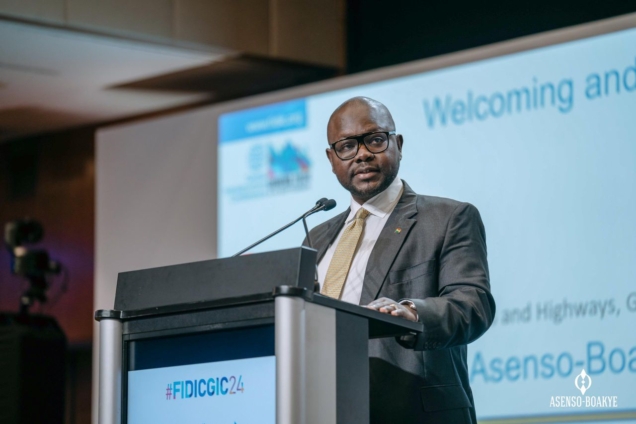
The author, Francis Asenso-Boakye, is the Member of Parliament for Bantama, and a planner by profession. He’s the immediate past minister for Roads and Highways and also a former minister for Works and Housing.
Latest Stories
-
World Bank maintains Ghana’s growth rate forecast at 4.8% in 2026
47 minutes -
Cedi was worst African currency in quarter 2, 2026 – World Bank
1 hour -
AI gains can lift three times as many people out of poverty in Ghana – World Bank
2 hours -
Police arrest suspect over jewellery theft during fire outbreak
4 hours -
EOCO returns Hanan’s £6,700, GH¢2,750 and devices after defence challenge
4 hours -
Opplift Youth Entrepreneurs Summit 2026 equips entrepreneurs with skills, mentorship and support
4 hours -
Rival clubs want range of punishments for Man City
4 hours -
Tear gas in Paris and Marseille as school protests grow across France
5 hours -
Kane inspires England to win over Czech Republic in UEFA Nations League
5 hours -
Finland orders halt to work on two Google data centres
5 hours -
Substitute Merino scores twice as Spain win in Croatia
5 hours -
Ronaldo wants Portugal ‘punishment’ but not retiring
5 hours -
White House defends Trump comment to let Iran ‘take out’ LA and San Diego
5 hours -
Asos confirms hackers sent ‘unauthorised’ notification to app users
5 hours -
US televangelist Jim Bakker, disgraced from sex scandal and fraud, dies at 86
5 hours