

Audio By Carbonatix
The United Nations have designated 2021 as the International Year of Creative Economy for Sustainable Development. Around the world, partly due to the pandemic, people are drawing on their creativity like never before to find innovative, creative solutions to the problems and challenges we face.
Creative skills are always in demand, and this applies to many sectors and careers across the globe, including in the fields of research, computing and the performing arts. A study by the UK’s Department for Digital, Culture, Media and Sport (2021) shows that employment in creative industries is growing at four times the rate of the UK workforce.
This is supported by McKinsey (2018), who predicts that as automation transforms the skills companies need, demand for creativity will rise sharply by 2030.
Developing creative skills in school to build a creative workforce
This rising demand for creative skills in the industry, and the positive response by 81 countries to the UN creative economy this year, emphasises how important creativity is for today’s global economy. Therefore, we must help young people to develop their creative skills from an early age in school.
Offering students the opportunity to study creative subjects throughout their school life is key to helping them develop their creative skills, which is one of the reasons why we have introduced new creative subjects to the Cambridge Primary and Lower Secondary programmes. I have seen first-hand how the arts can make self-starters and help children to develop emotional intelligence. Creative subjects require students to set their own agenda from within themselves and explore unconventional areas of thought.
However, creativity is much more than just learning to paint or dance, it is about generating new ways of thinking. Hence, it is also important to help students develop their creative thinking in all subjects.
Changes to the Cambridge Primary and Lower Secondary programmes will help students to develop creative skills explicitly through studying subjects such as mathematics and science. These subjects are underpinned by creative problem solving, and we expect our students to engage in their learning activities, to make sense of ideas and build connections across subjects. We must shift the focus to enable them to find innovative solutions rather than just recalling facts and figures.
Having worked as a curriculum developer for many years, I have seen the benefits of embracing creativity in the classroom, which allows all students to see themselves as having the potential to develop in this area. A good balance of knowledge and skills in any subject area allows teachers to allow creative explorations rather than rush through quickly to a perceived ‘right answer’ or ‘product’.
Assisting academic performance and mental health
There are also several other benefits to studying creative subjects and building creative skills. Recent research has found a correlation between studying creative subjects and students’ overall performance and wellbeing.
Research by Tim Gill, Research Officer at Cambridge University Press and Assessment, found that whilst the number of students in England who study music is decreasing, those who do study it tend to get better results across all subjects. The research found a potential link between playing a musical instrument and higher executive functions - students with higher executive functions are more likely to have high academic attainment. The overall benefit of playing a musical instrument or taking GCSE Music was an improvement of one grade in every six GCSE subjects taken.
Physical Education lessons also bring real benefits to student performance and wellbeing. Research conducted by the Centers for Disease Control and Prevention (CDC, 2021) has found that physical activity positively impacts cognitive skills such as concentration and attention for children aged 6-13 years old.
It also enhances classroom attitudes and behaviours, all of which are important components of improved academic performance. Furthermore, a study from the University of Illinois (2009) found that physically fit students are more likely to perform better in school and achieve higher grades.
Art subjects in the curriculum also benefit students’ overall well-being and promote good mental health, according to research by the Royal Society for Public Health. Their research, Reduction of Cortisol Levels and Participants' Responses Following Art Making, conducted by cognitive neuroscientists Kaimal, Ray & Muniz found that creating art reduces cortisol levels - markers for stress - and induces a positive mental state. A positive mindset enables a student to perform well and navigate any stressors and demands that may occur during their time at school.
In addition, according to joint research by leading UK art organisations - the Tate Museum, The Royal Shakespeare Company and the University of Nottingham - studying art subjects helps prepare students for life after school. It helps young people develop critical thinking and the ability to interpret the world around them, encourages self-expression and creativity, and builds confidence and a sense of individual identity.
Changing our Primary and Lower Secondary curriculum
From looking at the clear benefits of teaching creative skills to young students, and in light of feedback from Cambridge International teachers and educational experts, we decided to enhance and expand Cambridge International’s Primary and Lower Secondary curriculum. We have added Art & Design, Physical Education, Music and Digital Literacy alongside our existing subjects.
As well as complementing our overall promotion of creativity, these subjects give even more opportunities to develop the skills we know are increasingly valuable in responding to the demands of tomorrow’s changing world.
Creativity is key to our student's future success
Without creative subjects, schools risk offering one-dimensional curriculums that do not foster the full potential of young people. It is therefore essential that educational leaders are open to adapting and changing the courses and subjects they offer their students to nurture their creative skills. By doing so, we will enable our students to thrive in their future studies and careers and play their part in helping to find solutions to the problems and challenges of the future world.
*****
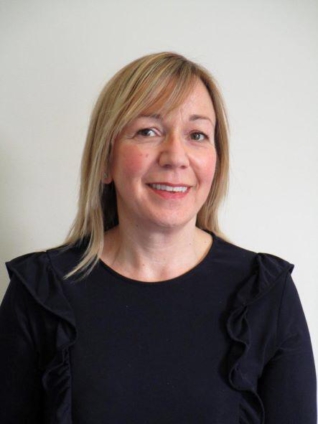
The writer is the Deputy Director of Curriculum Programmes, Curriculum and Qualifications at Cambridge Assessment International Education
Latest Stories
-
Ablakwa receives Presidential Special Envoy on Reparations to advance global agenda
7 minutes -
Christina Koch becomes first woman to travel around the moon on Artemis II
18 minutes -
Epstein survivors’ calls to meet King Charles and Queen harder to ignore as US visit approaches
24 minutes -
UN Secretary-General names Ghana’s Anita Kiki Gbeho as South Sudan envoy
26 minutes -
Mali withdraws recognition of Sahrawi Republic, backs Morocco’s autonomy plan
30 minutes -
Gov’t distributes over 8,500 laptops to One Million Coders project
31 minutes -
Julius Debrah, ‘man to beat’ as NDC’s James Agbey dismisses Musah Dankwah’s polls
37 minutes -
GPRTU in Savannah Region to protest alleged eviction in Damongo
1 hour -
Re: Reinsurance does not replace process — A response to the SIGA–SIC defence
1 hour -
Gender Ministry supports Harriet Amuzu in ongoing abuse case
2 hours -
AG joins plaintiff to scrap OSP ?: We should be mindful of the mischief in this – Bobby Banson
2 hours -
Samson Lardy Anyenini questions willingness of Attorneys-General to prosecute political colleagues
2 hours -
It is only fair the OSP is heard in Supreme Court case – Bobby Banson
2 hours -
Asiedu Nketia resumes Ashanti tour, second leg kicks off on Sunday
2 hours -
NLA denies salary cut claims, threatens legal action over reports
2 hours