

Audio By Carbonatix
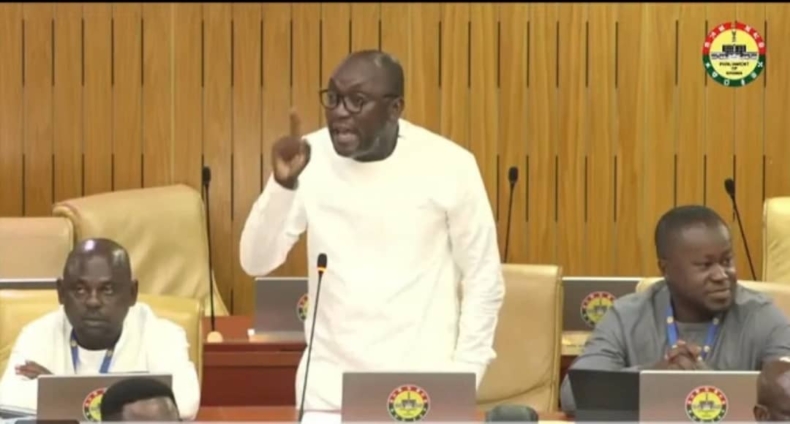
Dr Kingsley Agyemang, a member of the Parliamentary Committee on Health and MP for Abuakwa South Constituency, is calling on the government to allocate sufficient funds to tackle the growing abuse of opioid drugs among the nation’s youth.
He warns that this crisis is severely affecting young people’s mental health and requires immediate intervention.
Speaking during a debate on the 2025 budget in Parliament, the Abuakwa South legislator criticised the government for failing to incorporate concrete measures to address opioid abuse in its financial plan.
He stressed the urgent need for corrective action, drawing attention to the emergence of a new opioid substance known as "red," which is being abused increasingly.
“Mr Speaker, the new opioid substance is called ‘red.’ Mr Speaker, do you know what ‘red’ is? It is the latest opioid being misused. Yet, despite the government’s commitment to addressing mental health issues, as boldly stated in the NDC’s manifesto, there is no provision for this crisis in the national budget. We are all at risk. You aim to create jobs for the youth, but these same young people, whom you intend to empower, are battling substance abuse. The national budget must address this urgent issue.”
Ghana and its West African neighbours are grappling with a significant opioid crisis, particularly involving the non-medical use of prescription medications like tramadol and tapentadol.
Over the past five years, reports have highlighted a surge in tramadol abuse among the youth, often linked to work-related stress and socio-economic challenges. This trend has raised alarm about the potential for widespread addiction and associated health risks.
Compounding the issue, recent investigations have uncovered the illegal importation of unapproved opioid combinations into West Africa, including Ghana. Notably, a BBC Africa Eye report exposed the distribution of drugs containing tapentadol and carisoprodol by certain pharmaceutical companies, which has led to severe addiction and overdoses among users.
In response, Ghana's Food and Drugs Authority (FDA) has intensified enforcement efforts, seizing illicit drugs and imposing fines to curb this growing menace.
However, Dr Kingsley Agyemang believes the government must do more to tackle the crisis.
Latest Stories
-
Ghana housing finance conference adopts communiqué to improve affordable housing access
3 hours -
Special Initiatives Minister urges Wa Technical Institute to enrol more girls as EU-backed solar training lab opens
3 hours -
In the matter of my first year at the Bar
3 hours -
ActionAid Ghana calls for an end to child marriage, greater investment in girls’ rights
3 hours -
Newsfile to tackle World Cup visa scandal, beach demolitions, education strikes, BRICS bid
4 hours -
UK-Ghana Trade & Investment Summit: Trade Resource Centre to help businesses maximise UK-Ghana trade opportunities
4 hours -
Embassy of Denmark celebrates World Maritime Day
4 hours -
Linking LEAP to productive inclusion could cut extreme poverty by 2030 – UNICEF
5 hours -
Trade Ministry backs use of creative arts to rehabilitate prison inmates
5 hours -
Negotiations with government to continue despite strike suspension – GNAT
5 hours -
‘Ghana cannot afford to waste public resources; every cedi has a job’ – Ato Forson
5 hours -
Ghana expects economic boost as World Assemblies of God Congress brings 10,000 delegates to Accra
6 hours -
Joy in Nayilifong as Farouk Aliu Mahama donates 100kVA transformer to improve power supply
6 hours -
Chief Justice urges employers to tackle mental health stigma in workplaces
7 hours -
Analysis: Ghana’s yellow fever numbers reveal a gap between vaccination and protection
7 hours