

Audio By Carbonatix
Economists are calling for a strategic shift towards light industrialisation and enhanced support for small and medium enterprises (SMEs) as critical levers for unlocking the full potential of the African Continental Free Trade Area (AfCFTA).
Despite progress in creating a borderless trade system across the continent, lingering challenges such as poor infrastructure, limited access to credit, and misaligned industrial priorities continue to hinder the effective implementation of AfCFTA.
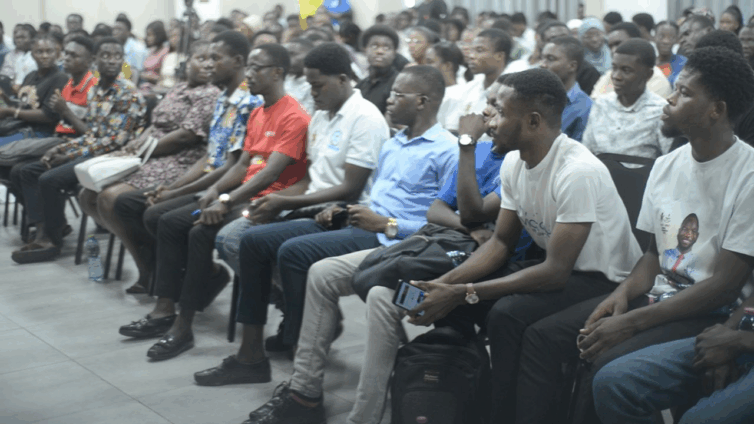
At a public lecture jointly hosted by the Economics Department of the Kwame Nkrumah University of Science and Technology (KNUST) and Third World Network-Africa (TWN-Africa), stakeholders emphasised inclusive policy frameworks to drive cross-country trade and structural economic transformation.
The lecture, held under the theme “Structural Economic Transformation and the AfCFTA: Prospects for Ghana,” explored economic diversification strategies and the need to realign industrial focus towards sectors with competitive advantages.
Professor Oteng-Abayie, Head of the KNUST Economics Department, highlighted the need to reform industrial priorities and enhance development banking support for SMEs, especially in manufacturing.
“In terms of industrialisation, we have been focusing on things we do not have an advantage in, instead of the light industrial areas where we have the advantages. The challenges of access to credit, especially to small-scale industries in Ghana, still exist,” he said.
“The recommendation is to strengthen the development banking system to boost SMEs, including the area of manufacturing. Address the political will, corruption, and what is called design thinking in planning things that will be effective and successful. If these recommendations are taken on board, Africa will stand to gain more from AfCFTA.”

Sylvester Bagooro of the Trade and Investment Unit at TWN-Africa outlined three essential pillars to streamline AfCFTA’s implementation and facilitate structural transformation:
“TWN-Africa has been offering policies and ideas on Africa’s economic development. And we believe that, in terms of economic development, there are three pillars. The first is productive capacity – how you produce goods on the continent. The second is trade infrastructure – how you move goods across borders. And the third pillar is tariff liberalisation to ease trade.”

The lecture also examined the potential of small-scale mining in Ghana as a source of jobs, revenue, foreign exchange, and exports. However, experts cautioned against the environmental and agricultural risks posed by unregulated mining.
Dr John Bosco Dramani, a senior economics lecturer, warned that unsustainable mining practices could undermine food security and ecological balance.

“When we look at the cost involved in extracting minerals, especially in the small-scale mining sector, there are a whole lot of rules and regulations that are not followed. If these lands are given out and destroyed, how do you reclaim them and use them for agricultural productivity again?”
“It will be difficult, and the cost involved will be very high. We are likely then to face food shortages if we do not take concrete steps to address this issue.”
The event formed part of TWN-Africa’s Africa@30 Campus Conversations series, aimed at deepening public engagement on trade and development policies across the continent.
Latest Stories
-
Police arrest suspect over jewellery theft during fire outbreak
2 hours -
EOCO returns Hanan’s £6,700, GH¢2,750 and devices after defence challenge
2 hours -
Opplift Youth Entrepreneurs Summit 2026 equips entrepreneurs with skills, mentorship and support
2 hours -
Rival clubs want range of punishments for Man City
3 hours -
Tear gas in Paris and Marseille as school protests grow across France
3 hours -
Kane inspires England to win over Czech Republic in UEFA Nations League
3 hours -
Finland orders halt to work on two Google data centres
3 hours -
Substitute Merino scores twice as Spain win in Croatia
3 hours -
Ronaldo wants Portugal ‘punishment’ but not retiring
3 hours -
White House defends Trump comment to let Iran ‘take out’ LA and San Diego
4 hours -
Asos confirms hackers sent ‘unauthorised’ notification to app users
4 hours -
US televangelist Jim Bakker, disgraced from sex scandal and fraud, dies at 86
4 hours -
Congolese-born golfer to represent Ghana at Turkish Airlines World Cup grand final
4 hours -
Amazon wins global rights to stream Emmys in six-year deal
4 hours -
European Film Festival returns to Ghana after a 5-year break
4 hours