

Audio By Carbonatix
The Taliban in Afghanistan have appealed for international support, as the country deals with the aftermath of a devastating 6.1 magnitude earthquake.
More than 1,000 people have died and at least 1,500 were injured, a local official said.
Paktika province in the south-east has been the most affected. The UN is scrambling to provide emergency shelter and food aid.
The rescue efforts are being hampered by heavy rain and hail.
The deadliest earthquake to strike the country in two decades is a major challenge for the Taliban, the Islamist movement which regained power last year after the Western-backed government collapsed.
The earthquake struck about 44km (27 miles) from the city of Khost and tremors were felt as far away as Pakistan and India. Witnesses reported feeling the quake in both Afghanistan's capital, Kabul, and Pakistan's capital, Islamabad.
"The government sadly is under sanctions so it is financially unable to assist the people to the extent that is needed," said Abdul Qahar Balkhi, a senior Taliban official.
"International relief agencies are helping, neighbouring countries, regional countries, and world countries have offered their assistance which we appreciate and welcome.
"The assistance needs to be scaled up to a very large extent because this is a devastating earthquake which hasn't been experienced in decades."
The number of people stuck under rubble is unknown. Health and aid workers have said the rescue operation is particularly difficult because of the heavy rain.
In remote areas, helicopters have been ferrying victims to hospitals.
The UN and aid agencies in neighbouring Pakistan are assisting with the humanitarian effort, which includes deploying medical teams and providing medical supplies.
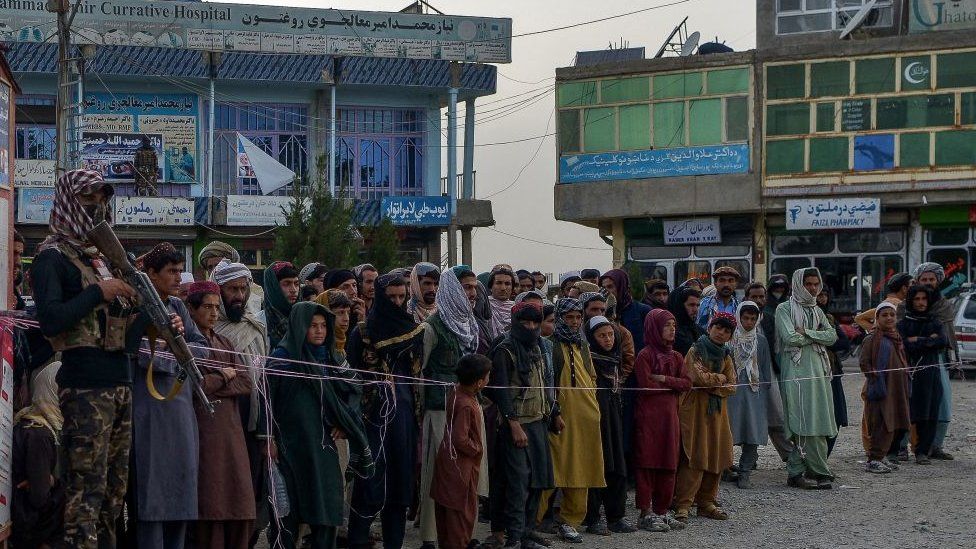
One humanitarian aid agency, Intersos, said it was ready to send an emergency medical team consisting of two surgeons, an anaesthetist and two nurses.
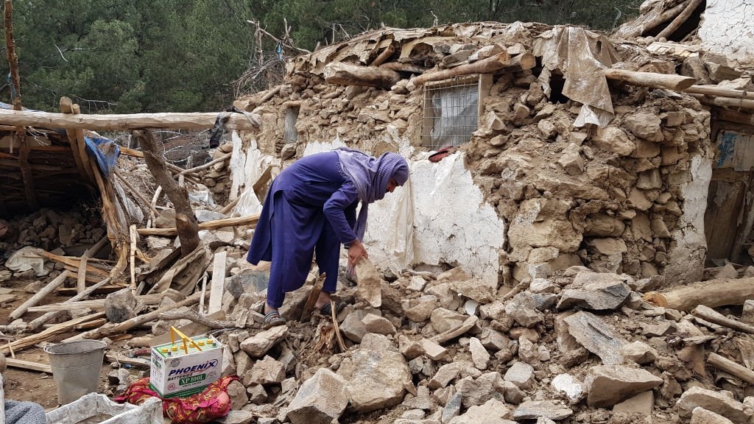
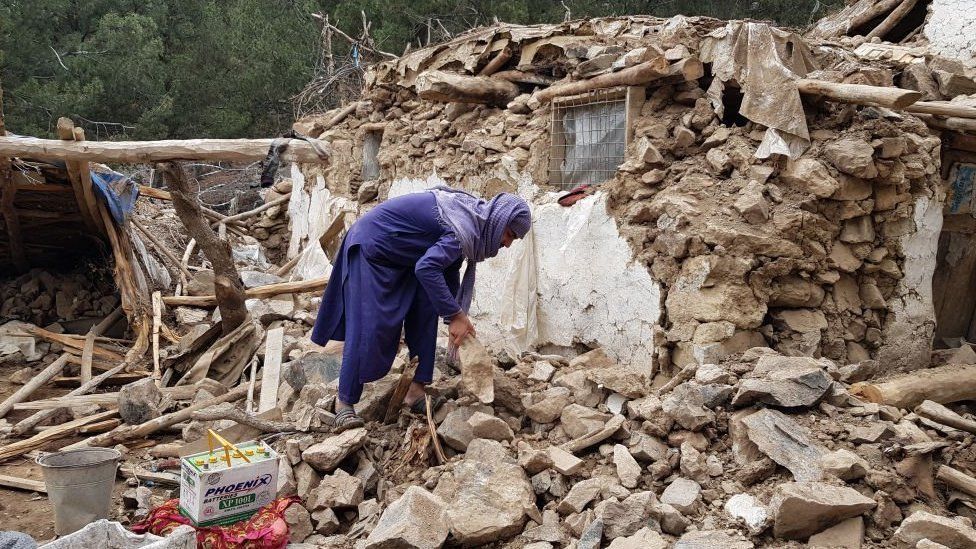
Most of the casualties so far have been in the Gayan and Barmal districts of Paktika, a local doctor told the BBC. A whole village in Gayan has reportedly been destroyed.
"There was a rumbling and my bed began to shake", one survivor, Shabir, told the BBC.
"The ceiling fell down. I was trapped, but I could see the sky. My shoulder was dislocated, my head was hurt but I got out. I am sure that seven or nine people from my family, who were in the same room as me, are dead".
Speaking to the BBC, a doctor in Paktika said medical workers were among the victims.
"We didn't have enough people and facilities before the earthquake, and now the earthquake has ruined the little we had," they said. "I don't know how many of our colleagues are still alive."
Communication following the quake is difficult because of damage to mobile phone towers and the death toll could rise further still, another local journalist in the area told the BBC.
"Many people are not aware of the well-being of their relatives because their phones are not working," he said. "My brother and his family died, and I just learned it after many hours. Many villages have been destroyed."
Afghanistan is prone to quakes, as it is located in a tectonically active region, over a number of fault lines including the Chaman fault, the Hari Rud fault, the Central Badakhshan fault and the Darvaz fault.
Over the past decade more than 7,000 people have been killed in earthquakes in the country, the UN's Office for the Co-ordination of Humanitarian Affairs reports. There are an average of 560 deaths a year from earthquakes.
Most recently, back-to-back earthquakes in the country's west in January killed more than 20 people and destroyed hundreds of houses.
Even before the Taliban takeover, Afghanistan's emergency services were stretched to deal with natural disasters - with few aircraft and helicopters available to rescuers.
But more recently, the country has experienced a shortage of medical supplies.
According to the UN, 93% of households in Afghanistan suffer food insecurity. Lucien Christen, from the Red Cross, said Afghanistan's "dire economic situation" meant "they're [Afghan families] not able to put food on the table".
Latest Stories
-
SSNIT says La Beach clearance was to protect hotel investments, beaches to remain public
8 minutes -
APSU congratulates St Augustine’s College after back-to-back National Investment Quiz wins
12 minutes -
Renewed flood intervention at Mallam Junction raises hopes among residents, businesses
53 minutes -
St Augustine’s College retain National Investment Quiz title after nail biting grand finale
1 hour -
Education infrastructure investment will drive Banda’s development – Ahmed Ibrahim
1 hour -
Teacher unions strike: Gov’t presents fresh proposals as talks end inconclusively
2 hours -
51,000 teachers’ promotion arrears to be validated for October payment – Education Minister
2 hours -
Kwabena Boamah appointed Board Chair for Impact Investing Ghana
2 hours -
Striking teacher unions to meet Fair Wages and Salaries Commission on October 6
3 hours -
EOCO working with AG to arraign Nana Baffour Awuah before weekend court
3 hours -
Duraplast reassures customers after fire, announces October 5 reopening
3 hours -
Call off strike, gov’t will not renege on promotion arrears pledge – Haruna Iddrisu to teacher unions
3 hours -
Committee set up to validate teachers eligible for 20% deprived-area allowance – Education Minister
3 hours -
Five-member committee to search for new Black Stars coach after Sports Ministry-GFA meeting
4 hours -
Pinktober: Breast cancer survival exceeds 90% when detected early – Breast Society of Ghana
4 hours