

Audio By Carbonatix
Leading snakebite experts from Ghana, Rwanda, Kenya, Eswatini and the Liverpool School of Tropical Medicine (LSTM), UK launch the African Snakebite Alliance (ASA) to tackle deadly snakebite envenoming.
The ASA is set to enhance collaboration between the international scientific community and policymakers as well as community groups in Africa. Its purpose is to improve health outcomes for victims of snakebite envenoming and to tackle existing gaps in evidence-based policies and practices.
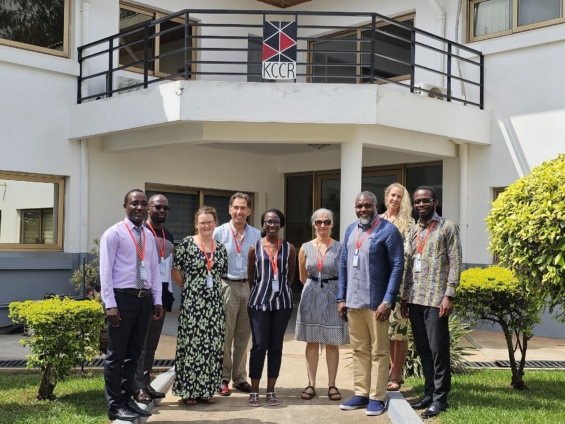
Dr. John Amuasi, principal investigator for ASA in Ghana and lead for the Global Health and Infectious Disease Research Group (GHID) at KCCR, shared that the launching of this alliance is crucial for meeting the World Health Organization’s (WHO) goal of halving snakebite deaths and disability worldwide by 2030.
“To meet the goals of the NTD roadmap, we need the kind of concerted collective effort that the African Snakebite Alliance offers. The Alliance offers important opportunities for research to inform better policies and deliver better outcomes in the fight against snakebite envenoming,” he said.
Snakebite envenoming kills between 81,000 and 138,000 people annually and a further 400,000 surviving victims are left with permanent physical disabilities and disfigurements.
Up to one-third of these deaths occur in sub-Saharan Africa, and individuals affected by snakebite often reside in some of the most disadvantaged rural communities across Africa.
Despite the myriad problems caused by snakebite, the WHO classifies snakebite envenoming as a neglected tropical disease due to the lack of global resources dedicated to tackling it, including the need for high-quality research.
With funding provided by the Wellcome Trust, ASA brings together members from LSTM, the Kenyan Institute of Primate Research (KIPRE), the University of Global Health Equity (UGHE), Kumasi Centre for Collaborative Research in Tropical Medicine (KCCR), Eswatini Antivenom Foundation (EAF) and Rwanda Biomedical Center (RBC).
The ASA has set three objectives to fill the research and evidence gap in snakebite envenoming: to undertake high-quality research relevant to improving health outcomes for people affected by snakebite in Africa, to develop systems to support national and regional bodies in Africa to incorporate research evidence into decision-making in policy and practice, and to develop and support a sustainable and cross-disciplinary capacity for snakebite research in Africa.
ASA Director Professor Ymkje Stienstra, from LSTM, explains how the alliance will influence snakebite policy and practice: “The ASA will pick up clinical and public health research questions based on the input from communities and policymakers.
"The findings will translate into prevention of snakebites and ways to reduce the damage caused by them.”
The international launch of ASA took place in Kenya on March 13, 2024. Coordination between these groups aims to ensure new research leads to changes on the ground.
ASA Deputy Director Dr George Omondi from the Kenyan Institute of Primate Research (KIPRE) said: “We are incredibly excited to launch this new alliance dedicated to fostering a robust portfolio of impactful research and policy towards improving health outcomes for snakebite victims.”
Initial research by members of the Alliance’s member organizations identified some of the barriers to tackling the burden of snakebite in sub-Saharan Africa, including limited funds, lack of relevant data, and the need to increase engagement with policymakers, all of which will be addressed by the development of the ASA as a research and policy hub.
Leslie Mawuli Aglanu, a research fellow at KCCR and coordinator for some ASA research activities in Ghana said: “Through collaborative efforts spearheaded by Africans for Africa, the burden of snakebite can be significantly alleviated. The launch of the African Snakebite Alliance in Kenya is a step to creating this common front”.
In addition to conducting research, the ASA wants to promote research on snakebite envenoming via open grants, including creating opportunities for postdoctoral researchers in Africa.
Information on how to apply for these grants will appear on the ASA website, and further updates will be published on its X (Twitter) account.
Latest Stories
-
Government pledges to pay striking teachers as payment dispute is resolved
7 minutes -
Government cannot investigate drug exports under its own watch – Abu Jinapor
9 minutes -
GTEC flags over 100 tertiary institutions as unrecognised
18 minutes -
Agric Committee chair commends NAFCO for turnaround from GH¢20m debt to GH¢96m profit
23 minutes -
NPP: Judicial office requires judges to surrender some personal freedoms
28 minutes -
Senyo Hosi: Ghana missed its chance to end galamsey under Akufo-Addo
34 minutes -
Okaikwei Central MP alleges Ghana was close to settling Tullow tax dispute for $150m
36 minutes -
Patrick Boamah credits Godfred Dame for Ghana’s victory in $400m Tullow tax arbitration
39 minutes -
Dr Jasaw calls for National Agriculture Development Fund to accelerate food systems transformation
43 minutes -
Armah-Kofi Buah honoured for developmental initiatives in Aiyinasi-North
47 minutes -
Agbodza didn’t accuse Adom Kyei’s church of blocking road — Spokesperson
53 minutes -
Tema native petitions EOCO over GH¢889,000 payment
53 minutes -
VIP Jeoun Service opens new terminal in Ho, expands transport network
57 minutes -
Mahama orders immediate action to get striking teachers back to class
1 hour -
Tema Fire Commander calls for private-sector support
1 hour