

Audio By Carbonatix
Senegal has highlighted the importance of strong governance, multisectoral collaboration and community-driven approaches in advancing health security across Africa, ahead of the upcoming One Health Summit in France.
The global One Health concept has gained renewed urgency in recent years, particularly following the COVID-19 pandemic, which exposed deep gaps in preparedness and coordination across human, animal and environmental health systems.
Increasing threats from climate change, zoonotic diseases, food insecurity and environmental degradation have further pushed governments and institutions to adopt more integrated responses.
It is against this backdrop that the One Health Summit will be held on April 7 in Lyon, coinciding with World Health Day and hosted by French President Emmanuel Macron.
The summit is expected to bring together global leaders, scientists, policymakers and development partners to align strategies on pandemic preparedness, strengthen surveillance systems and mobilise financing for integrated health approaches.
Key discussions will also focus on climate-related health risks, antimicrobial resistance, food systems and the role of data and innovation in early warning systems.
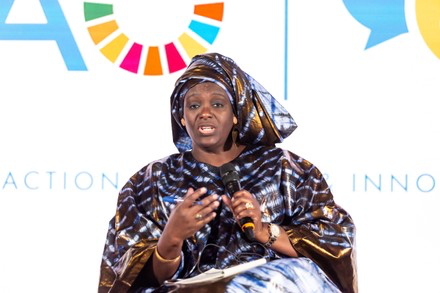
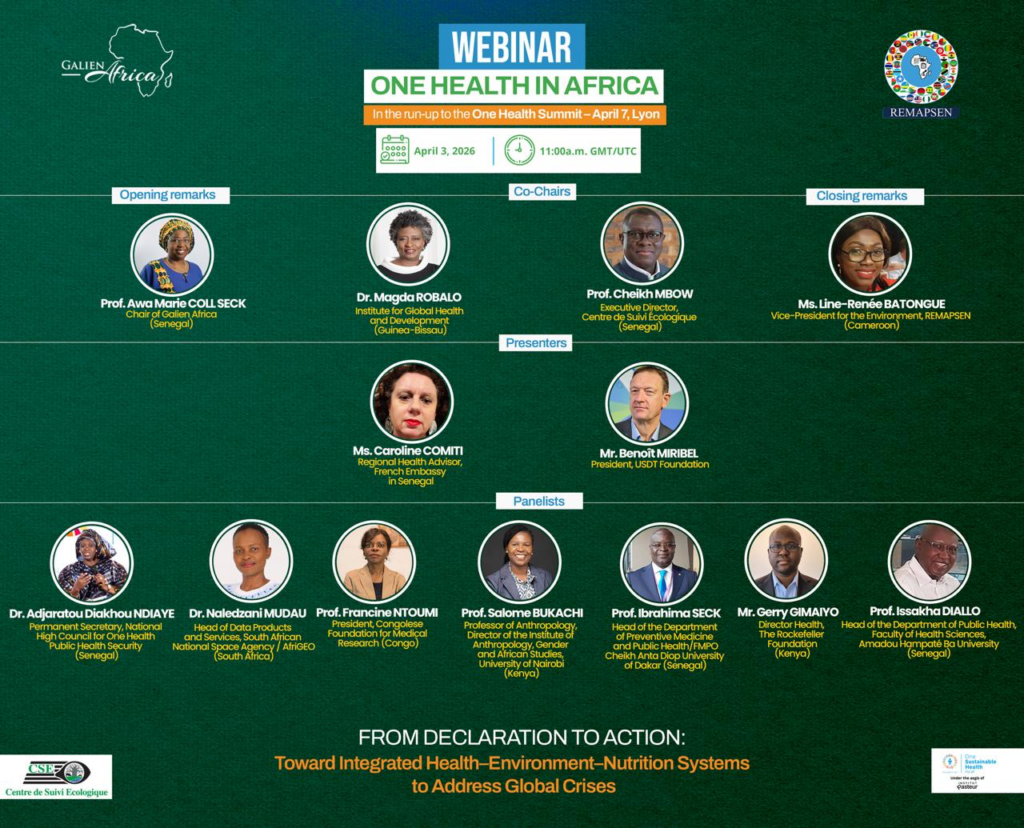
Speaking at a pre-summit webinar organised by Galien Africa in collaboration with REMAPSEN, Permanent Secretary of the High Council of Health Security, Dr Adjaratou Diakhou Ndiaye, outlined Senegal’s integrated “One Health” strategy and shared lessons from the country’s experience.
She stressed that Senegal’s approach recognises the interconnectedness of human health, animal health, the environment and nutrition, pointing to water and sanitation, biodiversity, food systems and community engagement as critical pillars of a resilient health system.
“Health security must be anchored in a local approach, particularly in animal health, while ensuring that environmental and nutritional factors are not overlooked,” she said.
Reflecting on lessons from the pandemic, Dr Diakhou Ndiaye noted that Senegal has strengthened prevention, surveillance and early detection systems while ensuring that economic and social dimensions are factored into national health strategies.
She detailed the country’s governance framework, which includes a High Council operating under the Prime Minister’s guidance and bringing together public institutions, civil society and scientific experts.
The model also incorporates decentralised regional committees and multidisciplinary technical teams to ensure coordination at all levels.
According to her, the role of the scientific community has become even more critical in linking national responses with international frameworks, particularly in managing complex health emergencies.
She emphasised that no single sector can effectively address emerging health threats, calling for stronger collaboration across sectors and borders.
“Without an intersectoral approach, we cannot succeed,” she stressed.
The webinar brought together leading experts from across Africa and global institutions, including Prof. Ibrahim Aset, Prof. Marie Coll-Seck, and Gerry Gimaiyo of the Rockefeller Foundation.
Other notable contributors included Prof. Salome Bukachi, Prof. Francine Ntoumi, and Dr Naledzani Mudau, among others, with moderation by Dr Magda Robalo of the Institute for Global Health and Development.
Outcomes from the webinar are expected to inform discussions in Lyon, where stakeholders will seek to translate the One Health agenda into concrete policies and investments, particularly for Africa and other vulnerable regions facing overlapping health and environmental risks.
Latest Stories
-
New York Times executive fatally shot allegedly by elderly in-laws
2 hours -
Teacher Payment Crisis: GES races to protect academic calendar
2 hours -
US prosecutors reopen case of alleged gang rape at Cornell University
2 hours -
Journalist to be crowned king in Uganda after bitter succession dispute
2 hours -
OpenAI scraps rollout of new model over safety concerns
3 hours -
Nigerian attempts to break world record by dancing non-stop for seven days
3 hours -
GES urges government agencies to end blame game over teacher payments
5 hours -
GES sets Oct. 5 deadline to resolve teachers’ payment dispute
5 hours -
GES working around the clock to get teachers back to class, says Daniel Fenyi
5 hours -
French PM warns against escalation of school protests after 164 arrested
5 hours -
UK tries to stop Trump’s diesel export ban
6 hours -
Late Olise goal gives France win over Belgium
6 hours -
Mancini enjoys first win since return as Italy boss
6 hours -
Interest payments to average a high 20% of government revenue over next 4 years
6 hours -
Anthropic warns AI may pose ‘existential risks to humanity’ in IPO filing
6 hours