

Audio By Carbonatix
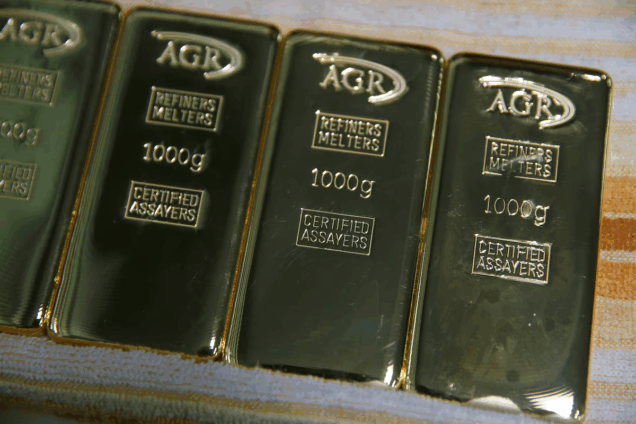
Sub-Saharan African central banks that have added gold to their reserves in recent years could face price and liquidity crises if the value of the precious metal slides, BMI, a unit of Fitch Group, said on Wednesday.
Ghana, Tanzania and Nigeria have been buying gold domestically to beef up their reserves, BMI said, a move accelerated by this year's broader market volatility stoked by U.S. trade tariffs and other geopolitical risks.
Policymakers in Kenya and Uganda are exploring a move into gold, Rwanda and Namibia have taken active steps towards adding the metal into their reserves, while Burkina Faso has indicated it will build up its stockpile and Zimbabwe has said its new ZIG currency is backed by gold reserves, BMI said.
"Gold is increasingly being used by sub-Saharan African markets as a strategic store of value," said Orson Gard, senior Sub-Saharan Africa analyst at BMI, during an investor presentation.
The move, however, comes with various risks, he said, citing Ghana where an aggressive gold purchase programme has led to the metal accounting for a third of its reserves according to BMI calculations, driving a surge in the cedi currency and potentially making the country's exports less competitive.
Governor of the Bank of Ghana, Johnson Asiama, said on Wednesday that while the West African country was heavily exposed to movements in commodity prices, it was taking measures to protect itself against potential price shocks.
"Any sharp price drop would have impact for international reserves... That is why we are starting with the hedging programme," Asiama told a news conference, referring to an arrangement which is expects to limit consequences of unexpected market fluctuations.
The price of gold, which touched a record high earlier this year, may have peaked, BMI said, and it faces potential downward pressure from any reduction in U.S. interest rates.
"Any sudden drop in global gold prices would have significant implications for those markets in sub-Saharan Africa which have rapidly increased gold as a share of their total reserves portfolio," Gard said.
A gradual price decline over the medium-term could also have a negative impact for countries that started buying gold around its recent peak, he added.
"This would not only weigh on reserve adequacy but would also undermine the perceived credibility of central bank policy," he said.
Ghana and Tanzania, which also rely on gold exports, could be hit by the "double whammy" of a drop in the value of their reserves and lower export earnings, he said.
Governments could also struggle to convert their gold holdings into liquid assets like hard currencies, Gard said, pointing to India and Argentina when they faced acute balance of payments challenges in the 1990s and 2000s, respectively.
Latest Stories
-
He entered at eight. He is now 16: Ghana’s children growing up in prayer camps
2 hours -
‘Development must not always begin from Accra’ — Anwelle Foundation launched in Jirapa
2 hours -
PKO trio eye victories at Odwira Festival
4 hours -
346 Ghana Navy recruits pass out after 26 weeks of intensive training
4 hours -
Newsfile to discuss EOCO-MP arrest, drug trafficking, speech arrests and $235m water debt
5 hours -
JoyNews gets results as listeners raise GH¢40,000 to help 17-year-old student with cerebral palsy attend SHS
5 hours -
Vice President calls for stronger local pharmaceutical production to reduce medicine imports
6 hours -
The brewing tension at KNUST; Beware the Ides of October….
6 hours -
Health Ministry moves to integrate traditional medicine into mainstream healthcare
6 hours -
550 pupils in Kintampo South get educational lifeline as ‘Seeds of Hope’ reaches farming communities
7 hours -
Opoku Mensah urges Christian Council, House of Chiefs to speak up on democratic freedoms
7 hours -
Teacher unions’ strike: Minority demands immediate payment of teacher arrears, 20% deprived area allowance
7 hours -
The Accra-Kumasi Expressway: Building it right
7 hours -
Beyond gold exports: Building value and economic resilience from Ghana’s gold
7 hours -
2027 AFCONQ: Ghana under pressure as Gambia beat Somalia 2-1
8 hours