

Audio By Carbonatix
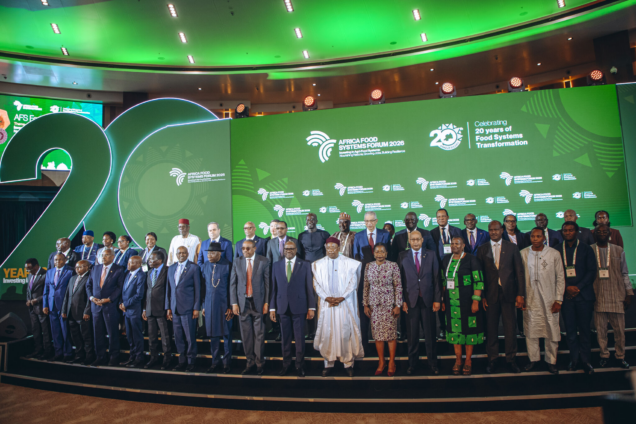
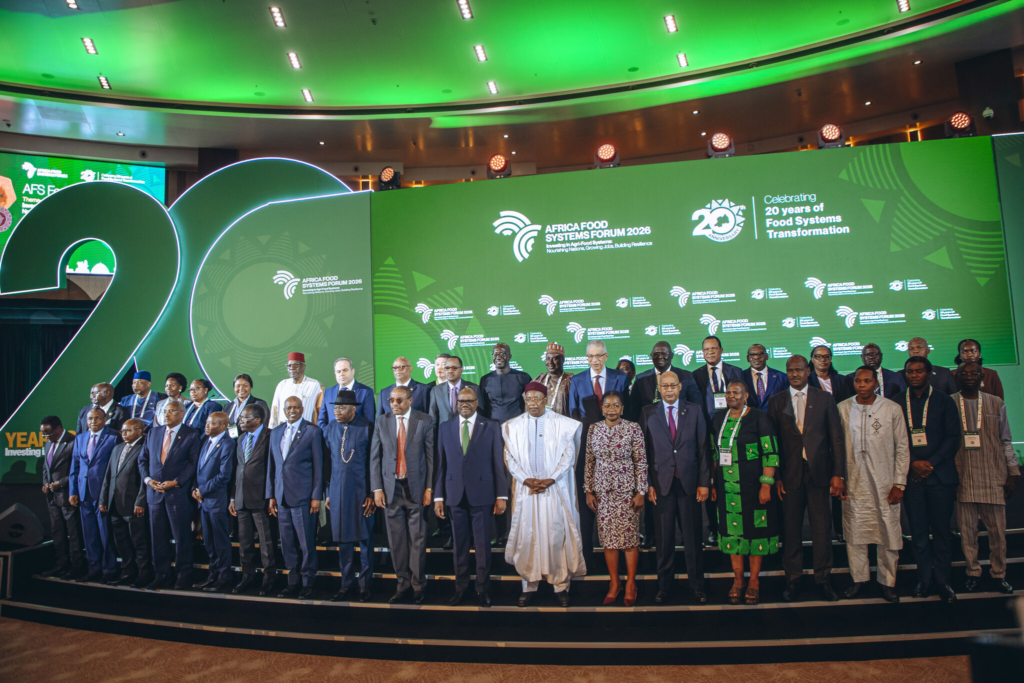
African leaders attending the Africa Food Systems Forum (AFSF) in Kigali, Rwanda, say that while the continent has made significant progress in transforming its food systems, decisive investments are needed to build a more sustainable agrifood sector.
The call came as the Forum opened with reflections on 20 years of efforts to strengthen African agriculture and improve the livelihoods of smallholder farmers.
Former Ethiopian Prime Minister Hailemariam Dessalegn, who is also chair of the AGRA Board, said Africa’s experience has demonstrated that agricultural transformation is possible when governments coordinate institutions and focus on empowering farmers.
He urged African governments to take greater ownership of their food systems agendas by establishing effective coordination and delivery mechanisms.
“A capable state does not wait for others to organise its future; it sets direction, brings partners into alignment and holds itself accountable for what changes in people’s lives,” Prime Minister Dessalegn added.
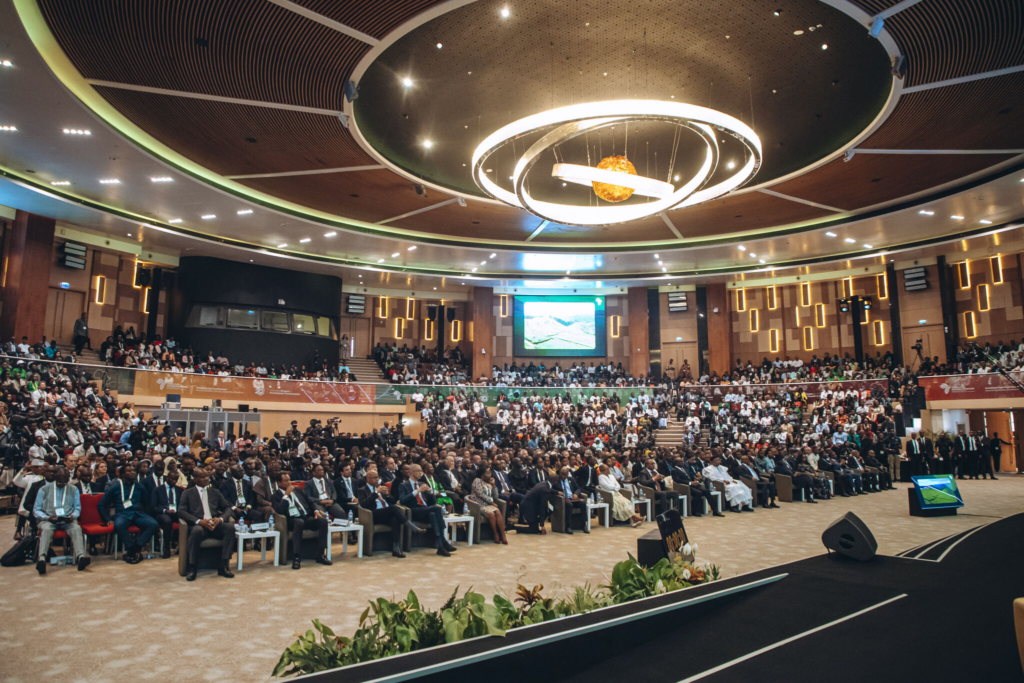
Dr. Namanga Ngongi, former President of AGRA, reflected on the vision that shaped the organisation’s work 20 years ago, when efforts were largely focused on helping smallholder farmers gain access to agricultural inputs and markets.
“20 years ago, the vision was to help the smallholder farmers access inputs and be connected to markets so that they can generate income,” Dr Ngongi said.
He said the discussions at the Forum demonstrated how significantly that vision had evolved, with greater emphasis now being placed on treating farms as businesses and farmers as entrepreneurs.
“The whole vision has changed from the smallest unit of farms to the largest as a business,” he said. “We should now take African farmers seriously as businesswomen and businessmen.”
Hari Menon, President of Global Growth & Opportunity at the Gates Foundation, pointed to advances in agricultural innovation and access to technologies as another important marker of progress over the past two decades.
He recalled that 20 years ago many smallholder farmers, particularly in sub-Saharan Africa, lacked access to agricultural solutions tailored to their specific farms, soils, crops and climatic conditions.
“Today, that's no longer the case,” Mr Menon said.
AGRA President Ms Alice Ruhweza also noted the progress achieved over the past 20 years was the result of a broader ecosystem of institutions and actors working to create the conditions necessary for farmers to succeed.
“20 years ago, we began with a clear conviction. That African smallholder farmers were not just waiting to be saved. They were waiting for the conditions around them to work — soils, seeds, science, knowledge, markets, finance, policy, partnerships,” Ms Ruhweza said.
She said farmers had always demonstrated innovation and resilience, but needed stronger systems to turn those capabilities into sustained economic opportunity.
“The farmers always had the innovation and the courage. They just needed a system to carry them forward,” she said. “And that is the part that we've done. But we haven't done it alone.”
Prime Minister of Rwanda, Dr Nsengiyumva Justin, said the country, like others across Africa, was continuing to learn how to convert its agricultural potential into prosperity while strengthening its commitment to the Comprehensive Africa Agriculture Development Programme (CAADP).
“None of us can do this alone. No single government, business or institution has all the answers or all the resources required. But together, we have what it takes,” he said.
The need to mobilise greater levels of finance for food systems transformation was also prominent during the opening ceremony.
Dr Gérardine Mukeshimana, Vice-President of the International Fund for Agricultural Development (IFAD), said recent global food security data indicated that the rise in hunger in Africa had halted, but warned that the progress needed to be converted into lasting transformation.

“The latest State of Food Security and Nutrition in the World report shows that the rise in hunger in Africa has halted. Our task now is to turn this progress into lasting transformation,” Dr Mukeshimana said.
Commissioner for Agriculture, Rural Development, Blue Economy and Sustainable Environment at the African Union Commission, Moses Vilakati, called for a stronger focus on domestic food production and processing, arguing that food imports represented missed economic opportunities for African farmers.
“We must reduce food imports. Africa should become a proper processor of food. Not an importer,” he said.
Mr Amath Pathe Sene, Managing Director of the Africa Food Systems Forum (AFSF), called for enhanced efforts to improve Africa’s food systems.
“We must move capital, we must move businesses, we must create jobs for African young people and our women, we must nourish our people, and we must build food systems capable of withstanding the climate change challenge ahead,” he said.
AFSF is the world's premier forum for African agriculture and food systems, bringing together stakeholders to take practical action and share lessons that will move African food systems forward.
The 20th edition of the Forum, from September 1–4, 2026, at the Kigali Convention Centre, is being held under the theme “Investing in Africa’s Agri-Food Systems: Nourishing Nations, Growing Jobs, Building Resilience.”
Organisers say more than 5,000 stakeholders from over 50 countries are expected to participate.
Latest Stories
-
We must account for every cedi entrusted to us as public officials – Ato Forson
32 minutes -
Supreme Court rejects Solomon Asamoah’s bid to overturn Sky Train ruling
47 minutes -
Nungua Traditional Stool, WT Plastics partner to establish factory, create 1,400 jobs
49 minutes -
Mahama describes Ghana’s religious diversity as its greatest treasure, defends fairness to all faiths
54 minutes -
Police to arrest motorists who use pedestrian footbridges – ACP Obeng
55 minutes -
KNUST announces revised reopening dates, lectures begin October 19
1 hour -
GoldBod, military engineers partner to reclaim galamsey-damaged Tano Nimri Forest
1 hour -
NACOC educates 450 Koforidua SHS students on dangers of drug abuse
1 hour -
First-year students stranded as Obuasi SHTS remains closed over misconduct probe
1 hour -
Court halts promotion of 40 police officers pending IGP’s appeal
1 hour -
Gender Ministry deploys teams nationwide to monitor LEAP cash grant payments
1 hour -
GNFS contains Somoco warehouse fire; bushfire near TTU in Takoradi
1 hour -
Recurring teacher-student sexual abuse cases give cause for worry – Salaga South MP
1 hour -
D-Black shocked as only 16 radio and TV stations pay music royalties
1 hour -
Former SIC Savings and Loans MD Amma Frimpomaa Dwumah honours EOCO invitation
2 hours