


Audio By Carbonatix
Caught between modernity and 20,000 years as hunter-gatherers, the San people sit at a crossroads.
An indigenous people in Southern Africa, they are our oldest human ancestors, DNA testing proving the San are direct descendants of the first Homo sapiens. But today their culture, traditions and heritage are at risk of being lost forever.
The San live across South Africa, Botswana, Angola and Namibia. In Botswana they're known as the Basarwa, where they live a largely nomadic lifestyle that has remained undisturbed for millennia.
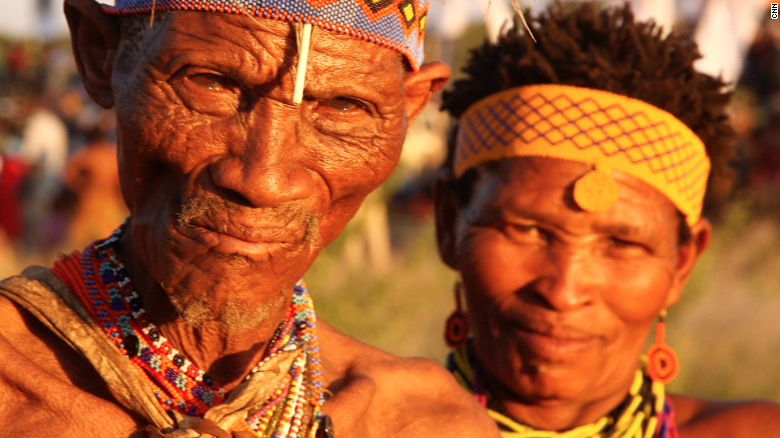
"Culture is something that can die and we should understand that culture is dynamic," says Bihela Sekere, part of the indigenous population who previously worked at the Botswana High Commission in London.
Sekere grew up in the Central Kalahari Game Reserve, the second largest of its kind in the world, hunting as his father had done before him. But in 1997 the government began removing the Basarwa from the reserve, ostensibly to protect the area and integrate the community into mainstream society.
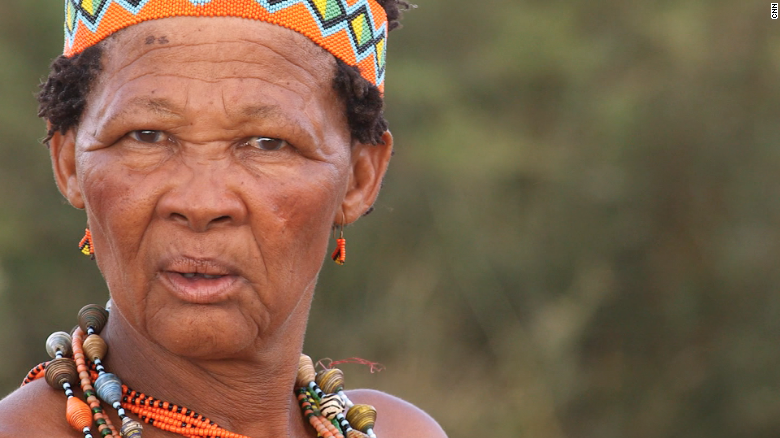
Now based in a resettlement village, passing on age-old traditions has become harder and harder for the Basarwa.
"Some of the kids, Basarwa kids, are taken to schools (and) they can lose their culture because they are taught other ways of living," explains Sekere. "To start with the language -- if they are taught Setswana and English, it means the language will suffer."
Sekere also cites the famous trance dance, a stalwart of Basarwa culture, as something that could one day suffer at the hands of modern music, played on radios and mobile phones by youths.
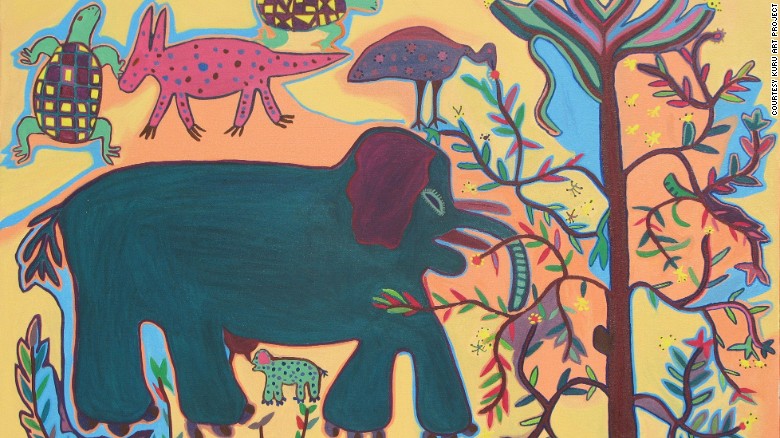
Hope is not lost, however, while there are those willing to preserve indigenous culture. Local man Xontae guides the curious around some of his people's greatest heritage sites, including the Tsodilo Hills, where 4,500 rock paintings dating back to the Stone Age can be explored. Meanwhile the Kuru Art Project seeks to revive art making among the Basarwa once more.
British-Caribbean artist Ann Gollifer, who is part of the initiative, says that the work the Basarwa create mainly depicts a hunter-gatherer lifestyle of yesteryear. Using modern mediums to paint ancient traditions, these artworks have sold all over the world.
It's proof that culture is dynamic, malleable and susceptible to change -- for better or for worse. But with will and determination, the likes of Sekere believes the Basarwa have what it takes.
"Culture on its own, it is what makes you who you are... It's upon us, the youth, to learn from these old people to promote our culture and to preserve it while they are still alive."
Latest Stories
-
Video: Immunity should be exercised without creating classism – Inusah Fuseini on cocaine bust
31 minutes -
Ghana Air Force passes out 293 recruits after six months of intensive training
39 minutes -
EOCO vrs Baffour Awuah: EOCO should have secured warrant before arrest attempt at court – Inusah Fuseini
42 minutes -
Triple fibre cuts disrupt telecom services across Northern, Oti regions – Sam George
46 minutes -
Politicisation could undermine parliamentary probe into cocaine seizures – Dr Osae-Kwapong
52 minutes -
EOCO chases MP: Can Section 41 cure lacuna in EOCO Act? – Inusah Fuseini asks
55 minutes -
GNFS, GWL inspect fire hydrants in Ministries enclave; 23 found faulty
1 hour -
Gov’t directs release of 50,000 bags of grain to ECOWAS
1 hour -
Ghana, Germany deepen cooperation on railways, labour mobility
1 hour -
Huge crowds greet Pope in Paris for open-air Mass
1 hour -
‘I never said I’ll declare a state of emergency’ – President Mahama on galamsey
2 hours -
Bobby Banson condemns EOCO’s attempted arrest of Nana Agyei Baffour Awuah
2 hours -
When Kumasi begins to look like somebody is in charge
2 hours -
Parliamentary probe into cocaine seizure would be a waste of time – Inusah Fuseini
3 hours -
Cocaine seizure: Focus on Ghana’s reputation, not partisan blame – Osae-Kwapong
3 hours