

Audio By Carbonatix
At a time when journalism is being reshaped by rapid technological advancement, artificial intelligence (AI) has emerged as both a transformative tool and a potential threat.
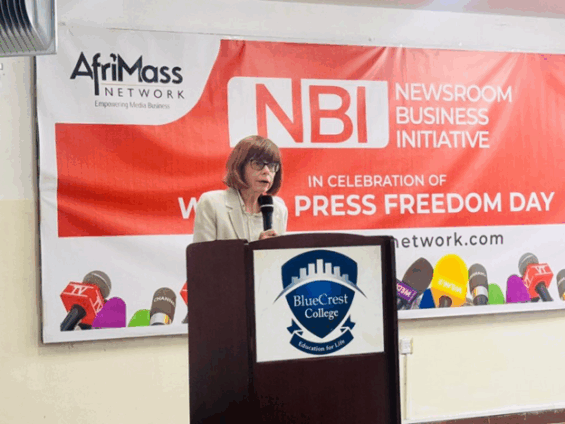
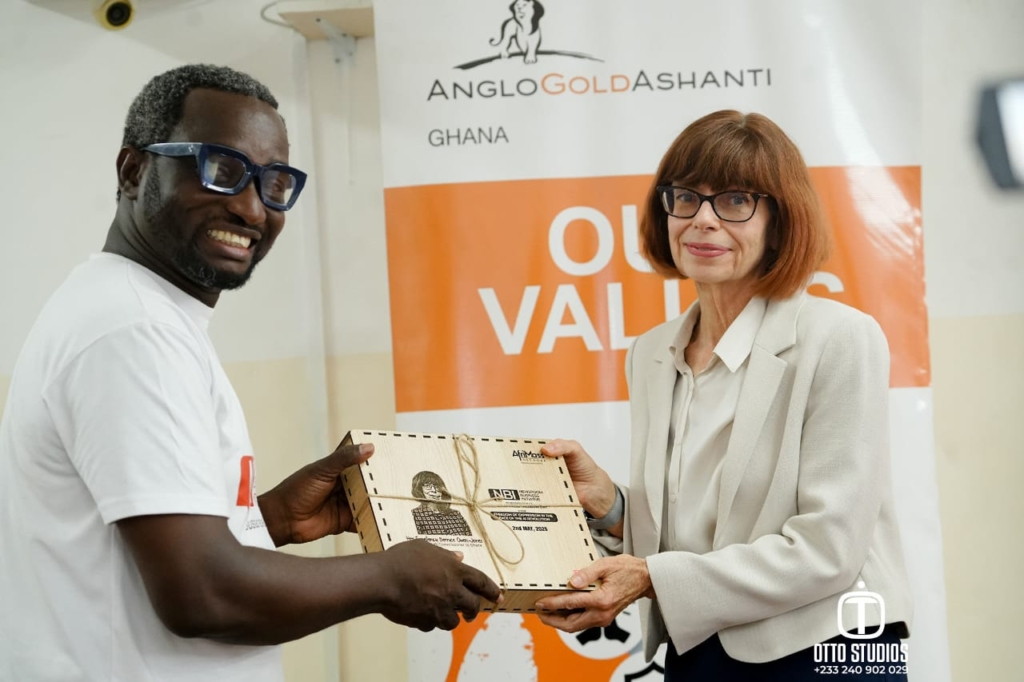
Speaking at the World Press Freedom Day 2025 commemoration in Accra by Afrimass Network in partnership with BlueCrest College, Australia’s High Commissioner to Ghana, Berenice Owen-Jones, issued a measured but urgent call for thoughtful navigation of AI’s impact on the media landscape.
“The fact is that media freedom is diminishing in a record number of countries,” she warned, citing the latest World Press Freedom Index. “Disinformation, propaganda, and artificial intelligence pose mounting threats to journalism.” According to Owen-Jones, while AI offers unprecedented efficiency and productivity gains for journalists, it also raises serious ethical and security challenges.
From generating deepfake videos to amplifying propaganda, AI tools are now being deployed by political actors and governments to manipulate public opinion. This distortion of reality, she noted, is easier and faster than ever before, undermining public trust in media and sowing confusion in democratic societies. “AI can be used to spread false or misleading information, increase online hate speech, and support new types of censorship,” she said.
Yet, the High Commissioner acknowledged the positive potential of AI when used responsibly. Journalists and editors can benefit from automated transcription, content summarisation, and advanced data analysis, which enhance productivity and allow more time for deeper investigative work.
For the public, AI can improve access to accurate, personalised information if content is properly verified and ethically deployed.
The dual nature of AI calls for a global conversation and localised solutions. Owen-Jones emphasised the importance of newsrooms establishing internal codes of conduct for the use of AI, while investing in fact-checking and media literacy.
“Newsrooms are increasingly fact-checking and developing codes of conduct, this is to be encouraged,” she said, adding that embassies and high commissions, including Australia’s, have a role to play in supporting such initiatives.
She also highlighted the dangers posed by AI to the safety of journalists, particularly those covering sensitive or controversial topics. Some AI tools, she revealed, have been weaponised as spyware, allowing bad actors to track journalists’ movements and communications, placing them at risk of harassment, arrest, or worse.
Owen-Jones urged stakeholders in the media ecosystem, governments, media organisations, technology companies, and civil society to engage more actively in shaping the ethical use of AI in journalism. “Access to reliable information has become increasingly important in the age of digitisation, fake news, and disinformation campaigns,” she said. “We must ensure AI strengthens, rather than weakens, press freedom.”
As World Press Freedom Day focused on the theme of AI this year, the High Commissioner’s remarks echoed a growing consensus: the future of journalism will be shaped not just by technology, but by how journalists, institutions, and societies choose to wield it. That choice, she implied, could mean the difference between a more informed public and a more misled one.
Latest Stories
-
Ibrahim Mahama’s Engineers & Planners contributed GH¢16m as gov’t spent GH¢33.72m on SA evacuation
11 minutes -
Errand boy linked to murder of Dr Jesse Amuah, wife deported from Dubai
18 minutes -
New cost-sharing model for Digital TV broadcasters to take effect in 2027
46 minutes -
Poor English, Maths performance shows Ghana’s literacy crisis – Dr Peter Anti
48 minutes -
Ghana’s SIM registration history from 2010 to the new biometric verification system
1 hour -
Police arrest dozens, recover weapons in nationwide anti-robbery operations
1 hour -
Parents cautioned against fraudsters promising SHS placement changes
1 hour -
Selecting schools after results a backward approach – Abuakwa MP
1 hour -
Ransford-Yeboah Königsdörffer scores on emotional return as Mainz hammer Hamburg 5-0
1 hour -
Xenophobic attacks: Ghana spent GH¢49.72m evacuating 1,900 citizens from South Africa
1 hour -
A rising number of women have never been screened for cervical cancer. Here are the risks
2 hours -
Ghanaian youngster Sam Amo-Ameyaw scores brace in Strasbourg’s big win
2 hours -
2026 U-20 WWC: ‘We have a chance to recover from opening defeat’ – Charles Sampson
2 hours -
‘Social media language’ in classrooms not on our blind side – Education Ministry
2 hours -
Republic Bank, UPSA sign MOU to strengthen staff skills and industry-academia collaboration
2 hours