

Audio By Carbonatix
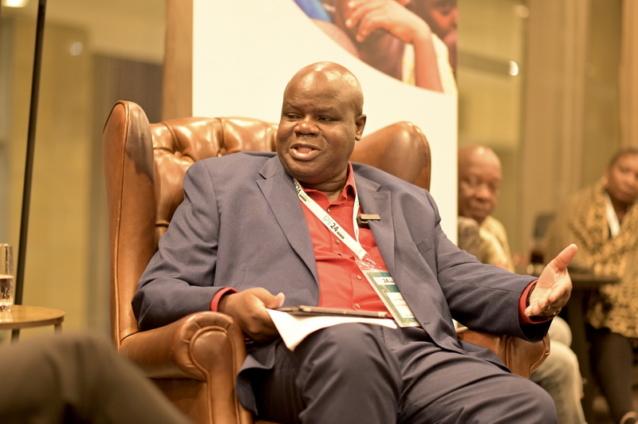
Artificial intelligence (AI) and technology can help address voter apathy, especially among African youth, but cannot take the place of substantive policy solutions, Afrobarometer Director of Surveys Boniface Dulani told the International Political Campaigns Expo (IPE).
“While AI and technology provide opportunities for greater engagement with voters, it’s not a panacea to all the problems related to voter apathy, particularly among the youth,” he said at the maiden edition of the IPE in Cape Town, South Africa.
The IPE brought together political leaders, political scientists, campaign strategists, AI experts, and technology innovators to explore the transformative potential of AI and Big Data for political campaigns and voter engagement in Africa.
Dulani expressed concern about the low rate of political participation by African youth and urged political parties to leverage technology and AI to engage them, considering the youth’s heavy reliance on technology. But he also stressed the need to address the underlying issues that matter most to young people.
Afrobarometer data show that unemployment tops the list of the most important problems that African youth want their government to address, and young Africans are considerably more likely than their elders to be out of work and looking for a job. They are more likely than older cohorts to see state institutions and leaders as corrupt and to mistrust them. Youth are also more willing to tolerate a military takeover of the government if elected leaders abuse their power (56% among those aged 18-35 vs. 47% among those aged 56 and above).
"Simply reaching out through technology is not sufficient,” Dulani insisted. “Political actors must actively tackle the root causes of youth apathy.”

In a separate panel discussion at the Expo, Afrobarometer co-founder and senior adviser Robert Mattes echoed concerns about dissatisfaction eroding political party support. Mattes emphasised the impact of face-to-face interactions in political campaigns and debunked the misconception that gifts significantly influence voter turnout.
“Let’s remember that the research literature suggests that face-to-face contacts have a far greater impact than other forms of voter engagement,” Mattes said. “Canvassing matters and makes voters even more likely to vote. Campaign rallies also matter. But, in contrast to common wisdom, giving gifts does not seem to have any significant impact on voter turnout.”
The International Political Campaigns Expo featured a line-up of speakers with a diverse range of perspectives and expertise, showcasing a shared commitment to effective political campaigns that promote sustainable development across the continent.
Latest Stories
-
I have supported highway authority financially to fix roads in my constituency – A Plus
29 minutes -
US, Iran fail to reach peace agreement after marathon talks in Pakistan
53 minutes -
ECG kicks off Phase Two of transformer upgrades at Lashibi; brief outages expected
1 hour -
Port crises loom as 11,000 drivers threaten four-day strike
2 hours -
A source of excellence across generations – Vice President Opoku-Agyemang lauds Mfantsipim
3 hours -
(Photos) Mfantsipim School launches historic 150th anniversary
4 hours -
Knights and Ladies of Marshall group backs Catholic Bishops’ stance on anti-LGBTQ+
4 hours -
Bright Simons writes: All the Filla in the Ibrahim Mahama/E&P – Gold Fields Saga
5 hours -
Monetise Idiocy In Ghana
5 hours -
The Ghanaian prophet and the mysterious death of his scottish wife Charmain Speirs
6 hours -
Nearly 400 sentenced in Nigeria for links to militant Islamists
6 hours -
Ghana’s recovery supported by gold strength despite global oil price pressures – Standard Bank Research
6 hours -
Methodist Church hails Mfantsipim@150; calls for “fresh consecration” to excellence
7 hours -
‘Excellence is our inheritance’ – Nana Sam Brew-Butler hails Mfantsipim’s 150-year reign in leadership
7 hours -
Kwaku Azar writes: A-G vs OSP
7 hours