

Audio By Carbonatix
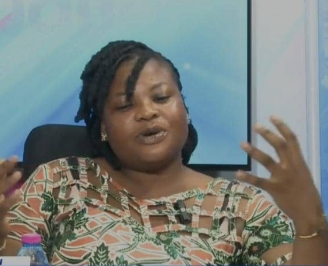
A member of the National Democratic Congress (NDC) communication team, Gifty Enam Gbedevi, has sparked fresh debate over Ghana’s anti-corruption architecture, claiming that the Office of the Special Prosecutor (OSP) was established out of political bitterness rather than purely for institutional reform.
Speaking on Adom FM’s Dwaso Nsem, on April 17 Mrs Gbedevi argued that while the Constitution vests prosecutorial authority in the Attorney-General under Article 88, the creation of the OSP introduced confusion into the country’s prosecution system.
According to her, the former administration led by Nana Akufo-Addo and Dr. Mahamudu Bawumia established the OSP in a politically charged environment.
“The office was created out of bitterness to facilitate targeted arrests and prosecution. So now, the reason for the High Court to strip the OSP of its power is due to the delayed investigations and prosecution,” she stated.
She explained that under Ghana’s constitutional arrangement, the Attorney-General remains the sole authority responsible for prosecutions, although some limited investigative functions are delegated to institutions such as the police.
She argued that the OSP’s mandate has increasingly become controversial due to questions over its prosecutorial authority and effectiveness, especially when cases are transferred between the special prosecutor and the attorney general's office.
“In all, the Attorney-General is the sole person who can handle prosecution. The OSP arrangement creates confusion when dockets move back and forth,” she said.
She further questioned the practical results of the OSP’s operations, arguing that despite significant public resources, the office has not delivered sufficient outcomes to justify its current structure.
According to her, this has reopened discussions about whether Ghana should revert to a strengthened Directorate of Public Prosecutions model instead of maintaining the OSP as a separate entity.
Mrs Gbedevi also referenced earlier anti-corruption efforts, noting that prosecutions of public officials existed before the creation of the OSP, and questioned why similar structures cannot be reinforced instead of maintaining parallel institutions.
“Look at the sum of money that goes into the OSP’s office, yet there are no results. Those days when we prosecuted Victor Selormey, Kwame Peprah, and the rest, there was no OSP, so why don’t we go back to our Directorate of Public Prosecutions, which existed at a time?”
Her comments come amid renewed public debate over the legal powers of the OSP amid ongoing tensions between the Attorney General's Department and the Special Prosecutor’s office regarding who holds ultimate authority over corruption-related prosecutions.
Latest Stories
-
Hohoe floodwaters recede, leaving over 5,000 homeless
11 minutes -
Three arrested after drones allegedly flown over EOCO headquarters during Baffour Awuah probe
11 minutes -
Gender Ministry urges Ghanaians to see older persons as contributors, not beneficiaries
15 minutes -
Flydubai passenger describes hugging his children as plane nosedived during attack
15 minutes -
Africa’s richest man launches Kenya oil refinery despite land protests
15 minutes -
CSOs urge government to review 10,000 sq km offshore gold licences over fisheries concerns
16 minutes -
National Ambulance Service treats 8 casualties after Avenor fire in Accra
17 minutes -
Former Duffuor spokesperson, Antonio Asinyo enters NDC Youth Organizer race
19 minutes -
Zimbabwe tycoon Wicknell Chivayo and wife killed in helicopter crash
20 minutes -
Russia targets busy bridge in central Kyiv in broad daylight
20 minutes -
Putin shows no sign of stopping the war as Russia doubles down on Ukraine
22 minutes -
Gov’t outlines measures to support Ghana’s growing population of older persons
23 minutes -
Star Oil rejoins COMAC, calls for reforms to governance structure
29 minutes -
Norwegian government strengthens soybean value chain to expand market access for farmers
30 minutes -
NPP diaspora executives back proposal to allow dual citizens to contest parliamentary elections
32 minutes