

Audio By Carbonatix
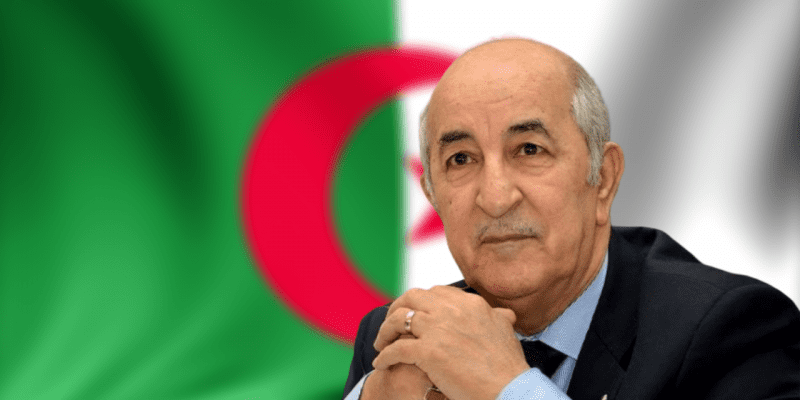
Algerian authorities declared President Abdulmadjid Tebboune the overwhelming winner of Saturday's election on Sunday, but a rival candidate alleged irregularities in the count and fewer than half of registered voters cast ballots.
Official preliminary results gave Tebboune 95% of the vote, enough to avoid a second round run-off, with Abdelaali Hassani Cherif getting 3% and Youcef Aouchiche 2%. Turnout was 48%.
Tebboune, backed by the military, was facing only nominal opposition from Hassani Cherif, a moderate Islamist, and Aouchiche, a moderate secularist, both running with the blessing of Algeria's powerful establishment.
Hassani Cherif's campaign said polling station officials had been pressured to inflate results and alleged failures to deliver vote-sorting records to candidates' representatives, as well as instances of proxy group voting.
"This is a farce," said Hassani Cherif's spokesperson Ahmed Sadok, adding that the candidate had won far more votes than had been announced, citing the campaign's own tallies from regions. Reuters could not immediately verify those tallies or reach Tebboune's or Aouchiche's campaign for comment.
However, electoral commission head Mohammed Charfi said when announcing the results that the body had worked to ensure transparency and fair competition among all candidates.
Late on Sunday, three presidential candidates, including Tebboune and Cherif, issued a joint statement in which they objected to the provisional results announced by the electoral commission.
"We inform public opinion of the ambiguity, contradiction, vagueness and conflicting numbers recorded with the announcement of the provisional results of the presidential elections," the joint statement said.
Tebboune's re-election means Algeria will likely keep on with a governing programme that has resumed lavish social spending based on increased energy revenues after he came into office in 2019 following a period of lower oil prices.
He has promised to raise unemployment benefits, pensions and public housing programmes, all of which he increased during his first term as president.
"As long as Tebboune continues to raise wages and pensions and maintain subsidies he will be the best in my eyes," said Ali, a cafe customer in the Ouled Fayet district of Algiers, asking not to write his family name.
First elected during the mass "hirak" (movement) protests that forced his veteran predecessor Abdulaziz Bouteflika from power after 20 years, Tebboune has backed a tough approach from the security forces, which have jailed prominent dissidents.
His election in 2019 reflected the anti-establishment mood in Algeria that year, with turnout of 40%, far below previous votes.
The protests, which brought hundreds of thousands of people onto the streets every week for more than a year demanding an end to corruption and the ousting of the ruling elite, were finally curtailed by the COVID pandemic.
"Turnout is very low. It shows that the vast majority is like me," said another Ouled Fayet resident, Slimane, 24, who also asked not to give his family name. He did not vote because he does not trust politicians, he said.
UNEMPLOYMENT BENEFITS
Russia's invasion of Ukraine in 2022 boosted European demand for Algerian gas and pushed energy prices back up, increasing Algerian state revenue after years of burning through foreign exchange reserves and leading to new hydrocarbons projects.
While using much of the money for social handouts, Tebboune's government has also pushed economic reforms aimed at strengthening the private sector to create jobs.
However, while unemployment is down from its highs of around 14% during the pandemic, it remained above 12% last year and inflation is also high.
The economic difficulties faced by ordinary Algerians may have contributed to the low turnout on Saturday.
"Turnout at 48% versus 40% in 2019 clearly shows that the gap between rulers and the people is still to be filled," said political analyst Farid Ferrari.
In foreign policy, Tebboune's record is patchy.
Despite Algeria's key role in Europe as a gas provider, arch regional rival Morocco has succeeded in winning over Spanish and French acceptance of its sovereignty over Western Sahara, where Algiers backs the Polisario separatists. Morocco has won over some African and Arab states too.
Meanwhile, Algeria's push for membership of the BRICS group when it expanded in January was thwarted, with the bloc instead inviting Egypt, Ethiopia, Iran and the United Arab Emirates to join. Algeria instead joined the BRICS development bank last month.
Its efforts to bring greater stability in Africa's Sahel region also ran adrift, with an attempt to mediate between rival forces in Niger following a coup last year failing to deliver progress.
However, Algeria remains a major military power in the region and seems unlikely to shift from its traditional stance balancing ties between Western powers and Russia.
Latest Stories
-
I have supported highway authority financially to fix roads in my constituency – A Plus
53 minutes -
US, Iran fail to reach peace agreement after marathon talks in Pakistan
1 hour -
ECG kicks off Phase Two of transformer upgrades at Lashibi; brief outages expected
2 hours -
Port crises loom as 11,000 drivers threaten four-day strike
3 hours -
A source of excellence across generations – Vice President Opoku-Agyemang lauds Mfantsipim
4 hours -
(Photos) Mfantsipim School launches historic 150th anniversary
4 hours -
Knights and Ladies of Marshall group backs Catholic Bishops’ stance on anti-LGBTQ+
5 hours -
Bright Simons writes: All the Filla in the Ibrahim Mahama/E&P – Gold Fields Saga
5 hours -
Monetise Idiocy In Ghana
5 hours -
The Ghanaian prophet and the mysterious death of his scottish wife Charmain Speirs
6 hours -
Nearly 400 sentenced in Nigeria for links to militant Islamists
6 hours -
Ghana’s recovery supported by gold strength despite global oil price pressures – Standard Bank Research
7 hours -
Methodist Church hails Mfantsipim@150; calls for “fresh consecration” to excellence
7 hours -
‘Excellence is our inheritance’ – Nana Sam Brew-Butler hails Mfantsipim’s 150-year reign in leadership
7 hours -
Kwaku Azar writes: A-G vs OSP
7 hours