


Audio By Carbonatix
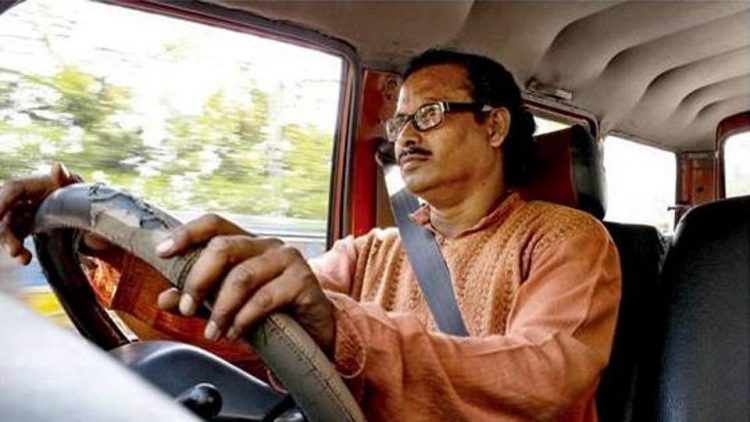
An Indian driver has received the Manush Sanman award for not honking once in the past 18 years.
It may seem a strange award, but India is well known for the chaos of its roads, and the typical driver’s almost constant use of the car horn. Dipak Das, a Kolkata-based driver, believes that India can change this and eventually achieve peaceful, quiet roads.
Honking is a huge part of the driving experience in India, as people pretty much use them as an alternative to side mirrors. Some cars don’t even have side mirrors, while others have them folded, as to extend them outward could lead to collisions with other vehicles.
Instead, Indian motorists honk incessantly to avoid collisions on the road where traffic is chaotic and so dense that cars appear just about to bump into each other at all times.
Drivers honk to indicate that they’re about to make a pass or to indicate that another driver is too close. This creates unbearable noise pollution that many consider hugely detrimental to Indian society.
“People need to be educated on how bad this noise pollution is,” motorist Vijay Agarwal told Forbes, “It’s all about drivers being impatient.”
Dipak Das, however, is not one of those drivers. He has worked as a chauffeur for many Indian celebrities, such as table maestro Pandit Tanmoy Bose, and guitarist Kunal, among others, and they have all praised his efforts to reduce noise pollution. The organizers of Manush Mela (Humanity Fair) have verified his atypical driving etiquette, and have recently honored him with the Manush Sanman award for his inspiring efforts.
Das is a firm believer in a no-horn policy and hopes that his behavior will help inspire other drivers to use the horn less frequently. He hasn’t used the car honk in 18 years, and hopes others will follow his example.
“I think if a driver follows this no-horn policy, he will become more alert while driving. If a driver has proper sense of space, speed, and timing, he or she need not use horn,” he said to Hindustan Times adding that when passengers ask him to use the horn, he politely declines and tells them that it isn’t a solution to the problem. His car carries a small placard featuring the saying, ‘Horn is a concept. I care for your heart’.
Das, who maintains his firm no-honking policy even during long trips to Darjeeling or Sikkim, hopes that someday Kolkata will become a “no-honking city.”
“It is not something that cannot be achieved or very difficult to achieve. What is required for this is administrative and political goodwill,” Das said.
The Manush Mela honors citizens who are doing something unique and valuable for society. Sudipa Sarker, one of the 2017 organizers of the event, told Hindustan Times that Das was well known and appreciated by individuals and organizations for whom he had worked, making him a natural choice for the award.
Latest Stories
-
NPP’s new executives will not alter our 2028 preparations – Tanko-Computer
55 seconds -
Tema East MP urges men to take active role in breast cancer awareness
6 minutes -
Hawa Koomson vows to bring experience and maturity to NPP women’s wing
10 minutes -
Opare Addo cautions NDC against adopting NPP’s aggressive politics
12 minutes -
NPP has 35 months to prepare for 2028 after early reorganisation – Political strategist
17 minutes -
All six passengers presumed dead after plane went missing off US coast
28 minutes -
Teachers’ promotion arrears to be paid by Oct. 30 – Education Minister
36 minutes -
Stop talking too much on stage – Kafui Dey warns MCs
42 minutes -
Government has Ho, Volta Region at Heart — Warlord of Asogli
49 minutes -
Mahama reaffirms commitment to Volta development at Asogli Te Za
57 minutes -
REGSEC orders immediate demolition of fire-ravaged building at Koforidua Jackson Park
1 hour -
Ambassador Boateng congratulates new NPP leadership, urges reconciliation, rebuilding
1 hour -
50 vetted to contest Effutu NDC executive positions
1 hour -
GACL enhances security screening at Accra International Airport
1 hour -
COCOBOD raises GH¢3.39bn at 11% in first Commercial Paper tranche
2 hours