

Audio By Carbonatix
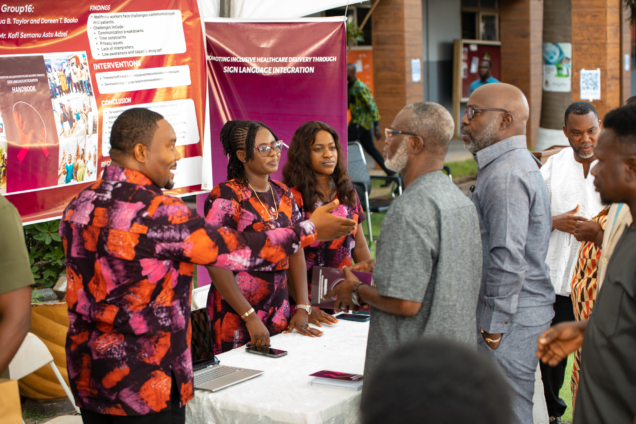
The Africa University of Communications and Business (AUCB) in collaboration with the HBCU Africa Coalition (HAEC), successfully held its 2025 Capstone Project Presentations on June 11, showcasing the ingenuity and applied knowledge of its final year students.
The event marked the culmination of a rigorous academic journey and was evaluated by an esteemed panel comprising the Chancellor, Vice Chancellor, Governing Council Chair, AUCB HACE/HBCU faculty members, and guest evaluators drawn from industry and academia.
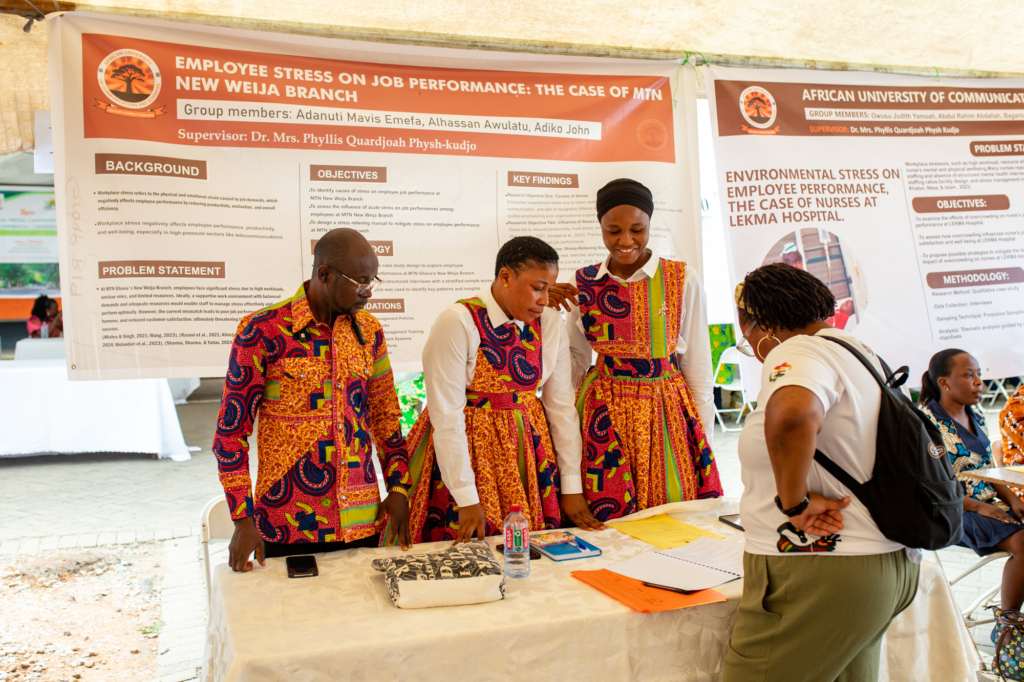
The Level 400 Project at AUCB represents a unique and progressive approach to final year academic requirements. Unlike the traditional model of submitting long essays that often remain shelved in academic libraries, AUCB has reimagined the capstone experience to be more practical, solution-oriented, and deeply connected to Ghanaian challenges.
In a statement during the event, the Vice Chancellor, Prof Abeku Blankson highlighted the transformative nature of this initiative.
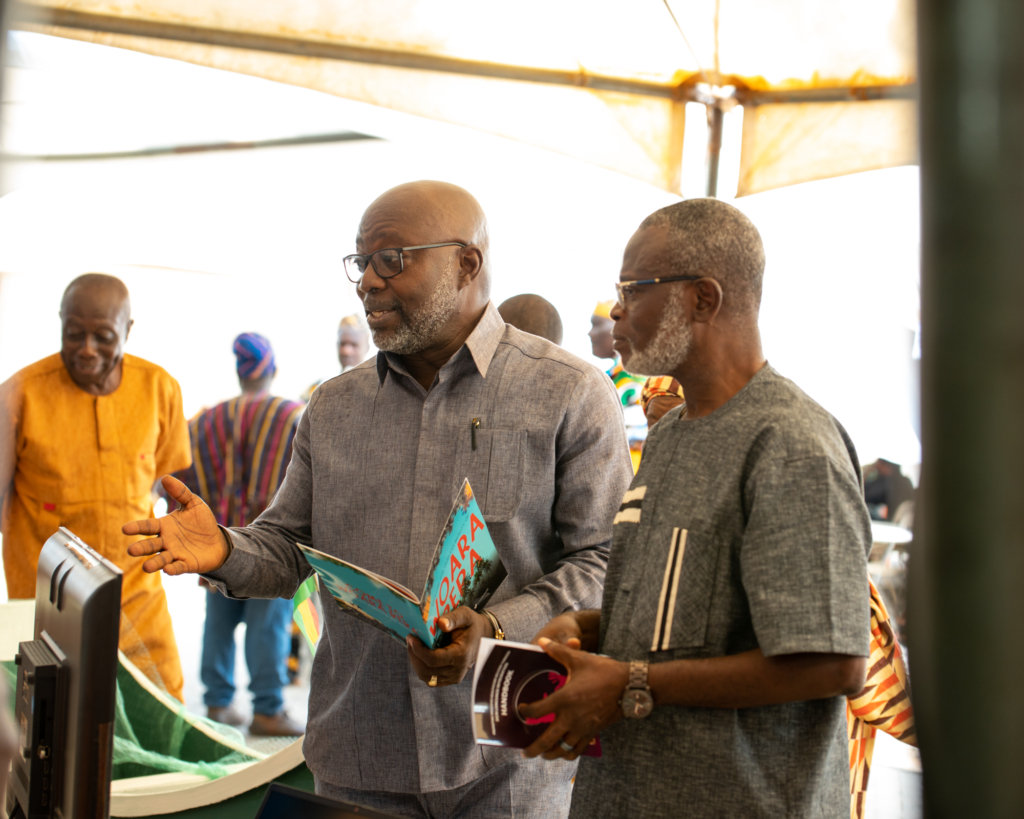
“This method of final year projects departs from the conventional practice of writing lengthy essays that are seldom utilized after submission. Instead, this exercise is designed to prepare our students for the future of work by equipping them with problem-solving skills that start within their own environments and communities.”
The capstone project, a six-credit course spread across the final academic year, is divided into two phases: the first involves research and project proposal development, while the second focuses on implementation, evaluation, and presentation.
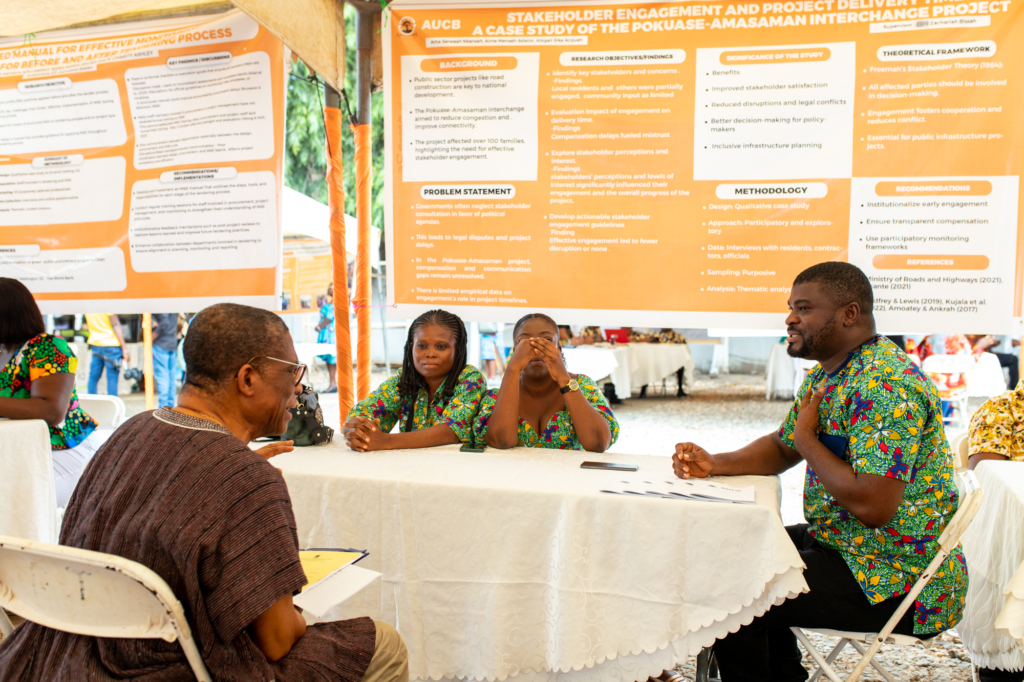
This format ensures that students not only propose ideas but also carry them through to practical application. AUCB’s approach emphasizes group work, innovation, and problem-based learning.
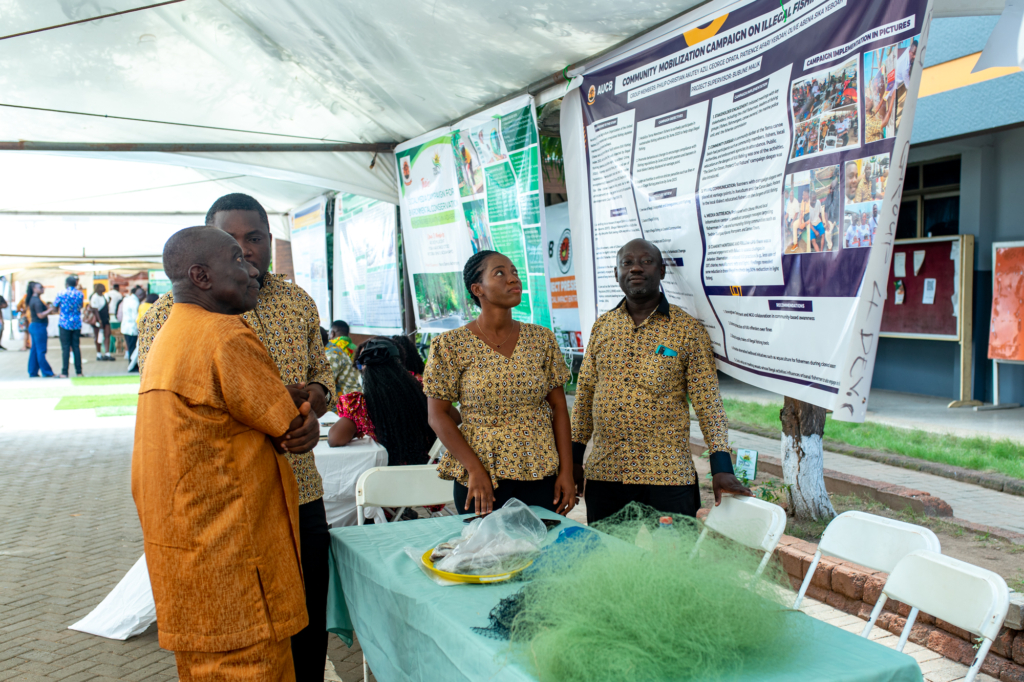
Students apply their academic knowledge in business, communication, journalism, media, visual communication, development communication, strategic communication, and business administration to address pressing human, societal, industrial, and organizational challenges, particularly those prevalent in Ghana.
The presentations featured a variety of tangible outputs such as documentaries, campaign manuals, posters, and other creative media. These works reflect the students’ deep engagement with issues ranging from economic and social development to environmental and political advocacy.
This year’s event underscored AUCB’s and HAEC’s shared vision of education as a force for national development, and their commitment to producing graduates who are not only academically proficient but also socially responsive and industry ready. By aligning academic work with the practical demands of the modern world, AUCB continues to lead in shaping the next generation of solution-driven professionals.
Latest Stories
-
Cryptocurrency regulation: BoG, SEC must collaborate closely to align risk assessments – IMF
2 hours -
Shatta Wale performs Stonebwoy’s ‘Putuu ’, preaches unity among artistes and fans
2 hours -
Congo’s Ebola outbreak has killed more than 4,000, government data shows
2 hours -
Ethiopian rebel forces withdraw from Tigray regional capital
2 hours -
All set for 7th Ghana Credit Excellence Awards 2026 on October 10
2 hours -
Why pastors may not be seen – or heard – preaching on buses for much longer
2 hours -
Oil slips as Middle East crude exports rise, G7 to release stocks
2 hours -
France to step up Ebola funding in Congo amid resurgence fears, minister says
2 hours -
Djokovic beats Zverev to reach China Open semis
3 hours -
Brazil election goes to run-off as right-wing Flávio Bolsonaro wins first round
3 hours -
Modric ‘ashamed’ of Croatia’s ‘catastrophic night’
3 hours -
Klopp’s mixed start continues as Germany held
3 hours -
The job interview question you don’t have to answer
3 hours -
Trump unveils ‘Super Intelligence Force’ to oversee AI policy
3 hours -
Zirkzee gives Netherlands win as van Dijk joins 100 club
4 hours