

Audio By Carbonatix
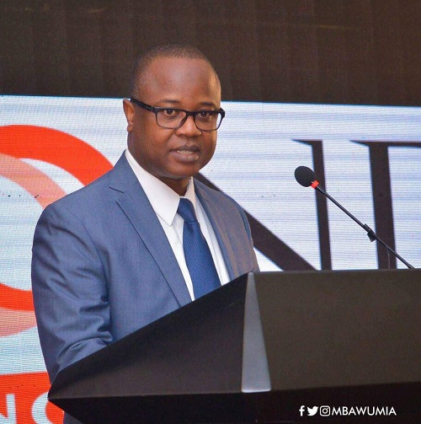
Ghana’s banking sector was undercapitalised for much of the decade preceding the 2017 cleanup, with weak governance and risk-management practices across parts of the system, former Bank of Ghana First Deputy Governor, Dr. Maxwell Opoku-Afari, has revealed.
According to hm, the 2017–2019 banking-sector clean-up and recapitalisation was therefore critical to restore confidence and strengthen prudential standards, including by resolving weak institutions and reinforcing governance in line with core supervisory principles.
In a paper titled “How not to Miss a Crisis: Lessons from Ghana”, he said the fiscal costs were, however, significant.
The paper highlighted the International Monetary Fund’s (IMF’s) 2024 review of Ghana’s Economic Credit Facility (ECF)-supported programme, the resolution and clean-up costs of the domestic banking system that reached about 7.1% of Gross Domestic Product (GDP) over 2017–2021, largely absorbed by the state in the absence of an effective deposit insurance framework at the time.
In addition, the paper revealed that the recapitalisation bonds equivalent to about 2.6% of GDP were issued to support undercapitalised banks as part of broader financial-sector strengthening following the Domestic Debt Exchange Programme (DDEP).
These interventions illustrate a “spillback” from the financial system to the budget to safeguard financial stability and depositor confidence.
Persistent Fiscal Deficits, Others Visible Before Crisis
Dr. Opoku-Afari continued that these weaknesses — persistent fiscal deficits, weak revenue mobilisation, quasi-fiscal operations, and rising sovereign exposure within the banking system — were visible well before the crisis.
“Yet political incentives and overly optimistic assumptions contributed to delayed recognition and corrective action by key domestic and external stakeholders, until risks crystallised”.
Notwithstanding elevated vulnerabilities, he pointed out that fiscal policy continued to be approved through the budget process, market access was maintained for a time (including oversubscribed Eurobond issuances), and external partners continued to provide financing and complete programme reviews.
According to him, this disconnect between underlying fundamentals and financing conditions raised questions about risk pricing, the effectiveness of domestic oversight, and the extent to which surveillance frameworks adequately captured liquidity and rollover risks.
He added that this feedback loop is central to understanding the subsequent domestic-debt build-up.
“As fiscal financing increasingly shifted toward Cedi-denominated instruments, banks and other institutional investors became the primary absorbers of government issuance, tightening the sovereign–bank nexus and increasing the macro-financial costs of any loss of market confidence. The next section therefore broadens the lens beyond the banking system to examine how domestic debt expansion—alongside off-budget obligations and contingent liabilities—shaped Ghana’s overall debt dynamics and amplified crisis transmission”.
Latest Stories
-
Minority awaits formal notice of arrest warrant for Manhyia South MP – Annoh-Dompreh
3 seconds -
LTIF announces 2026 Pan-African edition in Accra from October 6-7
29 seconds -
Mfantsipim needs broader funding partnerships to bridge infrastructure gap – Prof Baiden
1 minute -
MP status must not shield anyone from law enforcement – Kwakye Ofosu
10 minutes -
EOCO had tactical team ready to arrest Baffour Awuah – Felix Kwakye Ofosu
30 minutes -
Afoko can unite NPP’s factions, says Charles Owusu Juanah
44 minutes -
Guardiola backing Man City after guilty verdicts
50 minutes -
Annoh-Dompreh questions EOCO’s claim that Manhyia South MP was unavailable for questioning
51 minutes -
Djokovic wins first match since Wimbledon at China Open
1 hour -
KAIPTC, National Peace Council move to bridge civilian-security trust deficit to counter violent extremism
1 hour -
Infantino should have no place in future of football – Pinto
1 hour -
A decade of duty: First Commander recounts the unexpected birth of Ministries Fire Station
1 hour -
Mfantsipim must cultivate more business leaders, entrepreneurs – Nana Awuah
1 hour -
MOBA must reduce reliance on donations to protect Mfantsipim’s future – Patrick Kittoe
1 hour -
GCB extends Customer Service Week into month-long customer engagement
1 hour