

Audio By Carbonatix
Parliament’s approval of the Ghana Accelerated National Reserve Accumulation Policy (GANRAP 2026–2028) has sparked renewed debate over transparency and policy continuity.
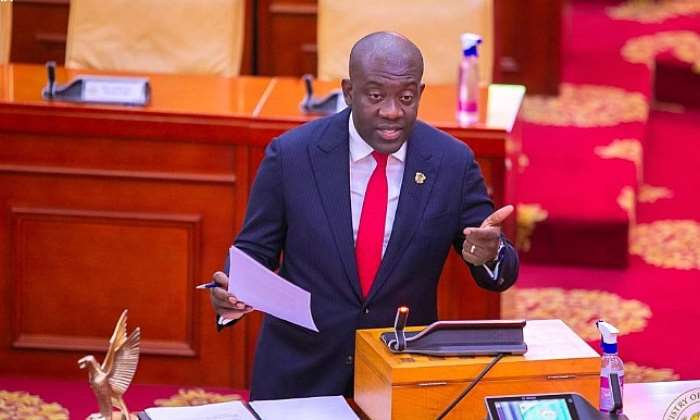
Kojo Oppong Nkrumah, Minority Spokesperson on the Economy and Development Committee, took centre stage to urge the government to be more candid.
Speaking on the floor of the House, he framed the discussion around the long-standing Domestic Gold Purchase Program, first introduced under former Vice President Mahamudu Bawumia.
“The program was designed to boost the foreign reserves by buying local gold and either adding it to bullion or converting it into forex,” he said, noting that GANRAP essentially continues the same framework under a new name.
“Ghanaians deserve honesty,” he stressed. “If this government finds the program useful, there is no need to rebrand it as something new. Admit that you inherited a working policy and build on it. Candour is central to credible economic management.”
GANRAP's key feature is its ambitious goal of adding US$9.5 billion annually to Ghana’s reserves through weekly purchases of approximately 3.02 tonnes of gold.
Under the policy, the Ghana Gold Board (GOLDBOD) will procure gold from small-scale miners, while a pre-emptive right will allow the state to acquire 20% of output from large-scale mining companies.
The Ministry of Finance says the policy is expected to strengthen Ghana’s foreign reserves and provide 15 months of import cover by the end of 2028.
While acknowledging the potential benefits, Mr Oppong Nkrumah raised concerns about recent inconsistencies in the government’s handling of gold reserves.
“A few weeks ago, they sold 50% of our gold reserves and converted them into U.S. dollar-based assets. Now they are asking Parliament to approve the purchase of more gold to replenish reserves. Why sell at $4,000 per ounce, only to consider repurchasing weeks later at over $5,200?” he questioned.
The MP argued that the current government should embrace continuity rather than reinvention.
“The Ghanaian voter is informed and understands economic policies. You don’t need to rebrand, rename, or polish inherited programs. What matters is building on them responsibly.”
Mr Oppong Nkrumah also commended the aspects of GANRAP that align with Dr Bawumia’s earlier G-4-R principles, which emphasised domestic resource mobilisation, results-based management, and the use of gold as a stabilising anchor for the Ghanaian currency.
However, he warned that without transparency, the program risks public scepticism and could undermine confidence in national reserve management.
Parliamentarians largely supported the policy’s operationalisation, highlighting its potential to strengthen gross international reserves without further borrowing.
Latest Stories
-
Knights and Ladies of Marshall group backs Catholic Bishops’ stance on anti-LGBTQ+
9 minutes -
Bright Simons writes: All the Filla in the Ibrahim Mahama/E&P – Gold Fields Saga
34 minutes -
Monetise Idiocy In Ghana
40 minutes -
The Ghanaian prophet and the mysterious death of his scottish wife Charmain Speirs
1 hour -
Nearly 400 sentenced in Nigeria for links to militant Islamists
2 hours -
Ghana’s recovery supported by gold strength despite global oil price pressures – Standard Bank Research
2 hours -
‘Excellence is our inheritance’ – Nana Sam Brew-Butler hails Mfantsipim’s 150-year reign in leadership
2 hours -
Kwaku Azar writes: A-G vs OSP
2 hours -
Mfantsipim–Adisadel rivalry built excellence, not division – Sam Jonah
3 hours -
Vice President launches Mfantsipim’s 150 years of shaping Ghana’s greatest mind
3 hours -
I assure Otumfuo, Mahama will join him to commission KNUST Teaching Hospital by end of this year – Haruna Iddrisu
4 hours -
Barcelona dominate derby to extend La Liga lead
4 hours -
Gov’t to roll out free special education for persons with disabilities from July 1 – Education Minister
4 hours -
Importers and Exporters Association declares full support for Publican AI port system
4 hours -
“We used it to test our officiating officials’ readiness” – Bawah Fuseini after CAA Athletics event
5 hours