

Audio By Carbonatix
Amid speculations that surrounded the silence of the presidency on the Proper Human Sexual Rights and Family Values Bill unanimously passed in parliament on 28 February 2024, President Akufo-Addo broke his silence with the statement that “l am aware that last week's bi-partisan passage by Parliament of the Human Sexual Rights and Ghanaian Family Values Bill, on a Private Member's motion, has raised considerable anxieties in certain quarters of the diplomatic community and amongst some friends of Ghana that she may be turning her back on her, hitherto, enviable, longstanding record on human rights observance and attachment to the rule of law.
"I want to assure you that no such back-sliding will be contemplated or occasioned…I think it will serve little purpose to go, at this stage, into the details of the origin of this proposed law, which is yet to reach my desk. But, suffice it to say, that I have learnt that, today, a challenge has been mounted at the Supreme Court by a concerned citizen to the constitutionality of the proposed legislation. In the circumstances, it would be, as well, for all of us to hold our hand, and await the decision of the Court before any action is taken”.
Before the passing of the Proper Human Sexual Rights and Family Values Bill, the obvious was expected – it would not swiftly and automatically receive the president’s assent. Despite the president’s past utterances that depicted his subtle subscription to the bill, the current political and economic landscape puts him in an uneasy position especially when his protege Vice President is vying to take over the mantle of the presidency amid an economic downturn.
As it stands, the 1992 Constitution of Ghana does not require the president to wait on the judicial outcome of a bill before deciding to assent or veto it. While it may be prudent to wait on the outcome of imminent litigation to avoid potential future challenges to the law, it fully lies within the president’s constitutional remit to accent or veto it.
The entire reason for waiting on a Supreme Court decision further raises constitutional questions as posed by a co-sponsor of the bill, about the propriety of the Supreme Court’s intervention in the bill process while it has yet to become a law. From a legal standpoint, article 106 of Ghana’s constitution which stipulates the mode of exercising legislative power in Ghana makes no mention of the Supreme Court in the law-making process. It can only intervene if a bill upon being ultimately assented to by the president is believed or found to conflict with other fundamental constitutional provisions.
The varied contentions surrounding the bill since its introduction in parliament, have stoked political strategies and machinations akin to a chess game. Former President Mahama has sought to justify his stance on the broader issue by citing a conflict with his Christian religious beliefs.
However, he has so far vehemently refrained from declaring his explicit position on the bill. His contender, Vice President Mahamudu Bawumia has also stayed neutral and refrained from declaring any stance that may not only hurt his campaign but may further entangle the ruling government in a web of having to navigate the economic challenges without the International Monetary Fund (IMF and World Bank’s budget support lifeline as asserted by Ghana’s Ministry of Finance.
Both advocates and proponents of the bill have powerful voting blocs and although these blocs would not be solely driven to the polls based on a candidate’s stance on the bill, their voices and discontentment with the bill may be bound to impact Ghana’s political future. It may also complicate economic governance in the future if international financial partners collectively decide to withdraw aid or credit as a castigatory measure against a future government that assents to the bill.
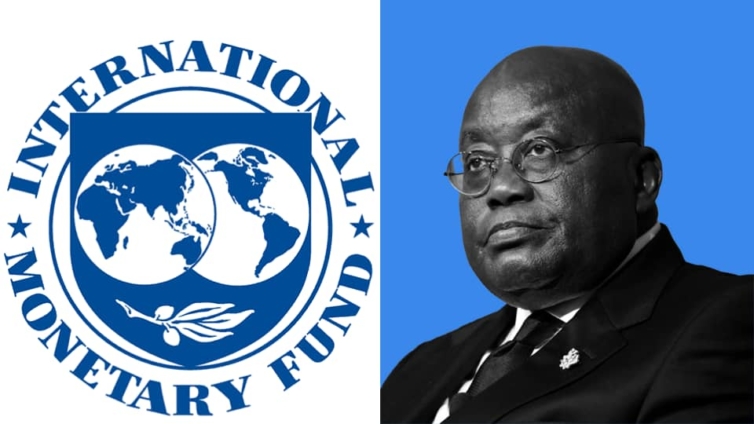
The Bretton Woods institutions – the IMF and the World Bank have since been drawn into the debate, particularly on how their positions on the bill may affect Ghana’s current bailout program and economic future. According to the IMF, loan conditionality assists nations in resolving balance of payments issues without resorting to actions detrimental to national or global prosperity. Furthermore, these measures seek to protect IMF resources by ensuring the recipient country's financial stability to facilitate loan repayment and enable other nations to access resources, if necessary, in the future.
It further adds that conditionality is integrated into both financial and non-financial IMF programs to advance toward mutually agreed policy objectives. The mutually agreed policy objectives and performance criteria between Ghana and the IMF as captured in the current Extended Credit Facility (ECF) arrangement make no explicit mention of the latter’s involvement in legislation that borders on making or amending laws regarding Ghana’s socio-cultural set-up.
Thus, the Ministry of Finance’s communiqué about the World Bank’s potential reluctance to release US$250 million financing and its consequential impact on the current IMF bailout program because of the bill may be unfounded. The Bretton-Woods institutions, however, have a legitimate role to play in providing input or expressing their views if they recognize that the bill’s passage can engender significant fiscal and budgetary consequences that could undermine the original or adjusted goals of the bailout program.
In Ghana’s history, rarely do we see a bill pass parliament only to encounter a president’s decision to await a judicial outcome before accenting or vetoing it, especially when the president has the majority in parliament. However, this bill today is unique and the president's decision to wait for the court's verdict was a strategic political move, allowing him and his party to distance themselves from the bill's fate while also providing an escape route for Vice President Mahamudu Bawumia in an election year.
This manoeuvre may aim to insulate both from potential domestic and international backlash, as the non-elected justices of the Supreme Court will ultimately bear responsibility for the bill's outcome. These are indeed trying times in Ghana’s political, cultural, and economic history, and the presidency would not easily cede ground to any legislation that may not only affect its political fortunes but also its ability to sustain an economy that is running on its last legs.
The author, Dr. Daniel Abankwa is an Assistant Professor of Political Science at Western Carolina University.
Latest Stories
-
Tema native petitions EOCO over GH¢889,000 payment
17 minutes -
VIP Jeoun Service opens new terminal in Ho, expands transport network
21 minutes -
Tema Fire Commander calls for private-sector support
25 minutes -
Adaklu is not a safe haven for environmental degradation – DCE
29 minutes -
Judiciary urged to expedite corruption cases
33 minutes -
Adenta-Accra travel time improves significantly under contra-flow – GAPTE
37 minutes -
Government reviews diesel subsidy as transport fare increase takes effect
39 minutes -
SEND-Ghana, UCC students march for mandatory food warning labels
44 minutes -
Auditor-General vows tough surcharges, unveils tracker, AI audits
50 minutes -
Government vows no political protection for drug trafficking suspects
1 hour -
Government clarifies Interior Minister’s ‘involvement’ comment in drug probe
1 hour -
Mahama orders security agencies to make Ghana’s ports ‘ironclad’ against drug trafficking
2 hours -
Government admits turf war among security agencies is undermining port security
2 hours -
Government rejects ‘Cocaine Coast’ label, says drug busts show security agencies are working
2 hours -
Banks NPL ratio of 16.1% is still too high – S&P
2 hours