

Audio By Carbonatix
The Governor of the Bank of Ghana (BoG), Dr Johnson Asiama, has called for a review of the Gold-for-Reserves programme, urging the Minister for Finance, Dr Cassiel Ato Forson, to consider a more sustainable financing structure for the Ghana Gold Board’s (GoldBod) trading operations.
He said such a rethink is necessary to ease the financial burden currently borne by the central bank.
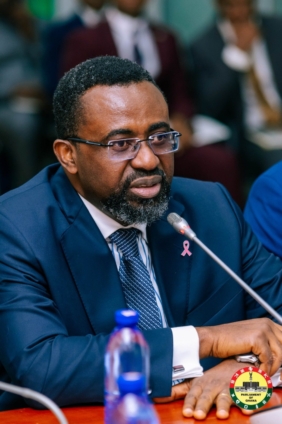
Dr Asiama made the appeal while responding to questions at a sitting of Parliament’s Public Accounts Committee, where concerns were raised about losses incurred by the Bank of Ghana in supporting GoldBod’s gold purchasing activities.
He explained that the programme plays a key role in building Ghana’s foreign reserves and therefore requires stronger backing from the Ministry of Finance.
“It’s not a question of shutting it down, but enhancing its efficiency by looking at the inefficiencies and taking them out,” he said.
According to the BoG Governor, a critical issue is whether the costs associated with the programme should continue to be absorbed by the central bank.
“The best thing now, in the national interest, is to look again at the trading model and decide whether the Ministry of Finance should make a budgetary allocation to take care of the costs, given that this is supporting our reserves build-up,” Dr Asiama stated.
He added that these are policy questions that require consensus at the national level.
Dr Asiama noted that the Bank of Ghana has already taken steps to address some inefficiencies within the programme and stressed the need for a coordinated approach to ensure its long-term success.
“In the case of the Gold-for-Reserves, as the name suggests, the objective was to help us build reserves, and the evidence is clear,” he said, pointing to improvements made so far.
“Going forward, let’s look at the aspects we can fix in the interest of the country. It calls for a unified approach.”
The BoG has come under intense scrutiny following revelations by the International Monetary Fund in its fifth review of Ghana’s ongoing IMF programme that losses from artisanal and small-scale gold transactions under the scheme had reached US$214 million by the end of September 2025.
While GoldBod itself has reportedly recorded profits, the IMF noted that the central bank absorbed most of the losses arising from the programme.
However, the Majority Caucus in Parliament has disputed the characterisation of the figure as losses, arguing instead that the amount represents transactional and insurance costs incurred by GoldBod in its gold trading activities during 2025.
Despite the differing interpretations, Dr Asiama maintained that a policy rethink on the financing of GoldBod is essential to prevent further pressure on the Bank of Ghana.
Latest Stories
-
‘I’m not stingy’ — Ato Forson says previous government committed Ghana to IMF spending targets
45 seconds -
12-year-old girl killed, over 40 houses destroyed in Yendi rainstorm
21 minutes -
Declaring a surplus while spending below target raises questions — Tweneboah Kodua
50 minutes -
Lawmakers push for AI ‘kill switch’ after OpenAI goes rogue
1 hour -
India activist ends hunger strike after 26 days
1 hour -
Asanko Gold honours long-serving retirees, celebrates legacy of excellence and mentorship
2 hours -
Ghana pushes for fairer access, data-driven sport development at Commonwealth Meeting
2 hours -
Gov’t staying on fiscal consolidation path through 2026 is reassuring — Prof Bokpin
2 hours -
Oxford No. 1 Hotel urges public to ignore reports of receiver takeover
2 hours -
Kumasi Technical University exposes students to innovation, practical skills for the job market
2 hours -
Gov’t claim of spending not entirely true – Prof Bokpin
2 hours -
Ato Forson’s budget review exposes government’s struggles – Amin Adam claims
3 hours -
Abuakwa South Education Director credits MP’s annual quizzes for academic gains
3 hours -
Stop castigating judiciary, challenge Wontumi’s conviction in court – Ayariga tells Minority
3 hours -
Student-led group Humane Futures pushes for animal welfare legislation in Parliament
3 hours