

Audio By Carbonatix
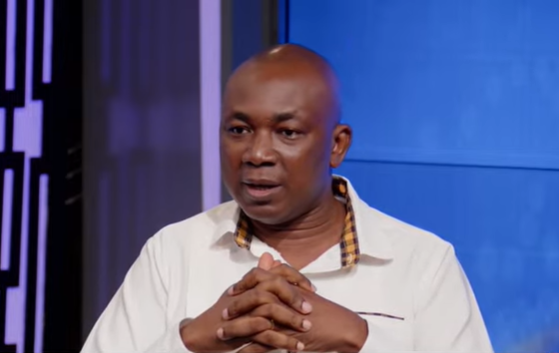
Economist and Professor of Finance, Prof. Godfred Bokpin, has challenged the government’s claim that it has been undertaking significant spending, arguing that actual expenditure levels relative to the size of Ghana’s economy show a different picture.
Speaking on JoyFM’s Top Story on Thursday, July 23, 2026, following the presentation of the 2026 Mid-Year Budget Review by the Finance Minister, Prof. Bokpin said government expenditure has not matched previous trends.
“The Minister indicated that they have been spending. That is not entirely true. If you look at total government expenditure relative to the size of this economy, we have not kept the pace like we have done in the time past,” he said.
According to him, while government has attributed previous high spending levels to wasteful expenditure under the previous administration, the current approach has resulted in insufficient investment needed to drive job creation and long-term economic growth.
“Government will say that 2024 expenditure, a lot of them were wasteful spending, but the reality is that government is not spending appropriately to stimulate job-rich growth. That is a fact,” he stated.
Prof. Bokpin explained that the situation has been worsened by revenue shortfalls, forcing government to rely on expenditure controls rather than borrowing to bridge the gap.
“Bear in mind that because our revenue has underperformed and expenditure remains very high, government doesn't want to explain the difference through borrowing.
"Therefore, we are in a situation where there is every expenditure control and expenditure cut as a way of managing the dry revenue envelope,” he said.
He acknowledged that the government’s fiscal restraint has contributed to some positive short-term outcomes, including a decline in inflation, but warned that the approach could affect long-term economic sustainability.
“In the short term, that may deliver short-term gains. We can see inflation has come down. We have seen all of it because the government is not spending the way they should. The Bank of Ghana is also tightening liquidity,” Prof. Bokpin noted.
However, he cautioned that reducing public spending and tightening liquidity could mean sacrificing critical investments required to support sustainable growth.
“What that means is that you are foregoing critical expenditure that would actually ensure long-term growth sustainability,” he added.
Latest Stories
-
Services drive 7.4% expansion in Ghana’s economic activity
7 minutes -
‘I don’t make music for awards, I make it to connect people’ – Rocky Dawuni
19 minutes -
Farmer jailed for three months over assault on wife in viral video
24 minutes -
Police arrest eight in Okaishie operation targeting illicit drugs and medicines
27 minutes -
David Agyemang Yeboah: Marriage is not the problem; your approach is
30 minutes -
Lawyer sues Standards Authority over used-vehicle import restrictions
32 minutes -
Ukraine to restart strikes on Russian oil refineries, Zelensky says
33 minutes -
CIMG awards drive competition among Ghanaian businesses
38 minutes -
NSA regional director Emmanuel Reagan files nomination to contest NDC Ashanti Regional Organiser position
43 minutes -
Obuasi SHTS: Number of students alleging sexual abuse rises to 16
49 minutes -
Ghana’s economy grows by 7.4% in July 2026
59 minutes -
NDC member challenges Dennis Yeboah Twumasi’s eligibility for Bono Regional Secretary elections
1 hour -
Popular Nigerian gospel singer Toluwanisings dies
1 hour -
Spio-Garbrah proposes debt swaps to fund reparative justice in Africa and Caribbean
1 hour -
Alban Bagbin calls for governance reforms and coordinated action to address Africa’s debt crisis
1 hour