

Audio By Carbonatix
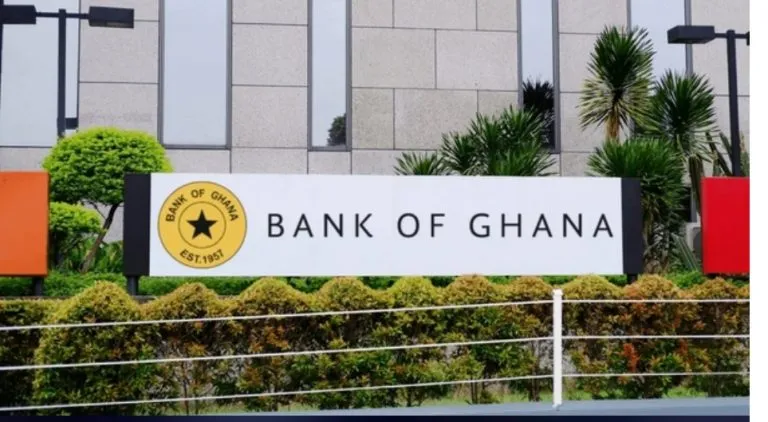
The Bank of Ghana (BoG) is expected to release its Financial Accounts for the 2025 operations on Thursday, April 30.
JOYBUSINESS has gathered from persons with knowledge of the preparation of the accounts that the final processes are nearing completion ahead of publication.
Before release, the financial statements are expected to be presented to the Audit Sub-Committee of the Bank’s Board and later to the full Board for approval.
Reasons for delay in 2025 financial accounts
Under the Bank of Ghana Act, the Central Bank is required to publish its annual accounts not later than March 31 of the following year.
This means the 2025 financial statements should have been released on or before March 31, 2026.
However, JOYBUSINESS understands that before the deadline, the Bank wrote to the Minister of Finance, Dr. Cassiel Ato Forson, requesting a one-month extension, which was approved.
This extension shifted the new deadline to April 30, 2026 — a timeline the Bank is now expected to meet.
One source told JOYBUSINESS that this could be the first time in recent years that the Bank of Ghana is releasing its accounts within the 30-day extension window after the statutory deadline.
JOYBUSINESS also understands that the delay was partly due to a change in external auditors, in line with banking-sector requirements that auditors be rotated every five years. The timing coincided with the preparation of the 2025 accounts.
Sources say the new auditors requested additional time to review the financials, including a closer examination of the Bank’s gold operations and its exposure to the Ghana Gold Board, following concerns previously raised by the International Monetary Fund (IMF).
According to sources, the auditors wanted extra time to ensure full due diligence on the 2025 figures.
What to expect in the 2025 financial accounts
The Bank of Ghana is expected to post another operating loss in its 2025 financial statements.
However, JOYBUSINESS cannot independently confirm the exact magnitude of the yet-to-be-determined loss.
Governor Dr Johnson Asiama has already indicated in previous engagements, including Monetary Policy Committee briefings, that the Bank would remain in a loss position for 2025.
He has consistently attributed the losses to the cost of stabilising the economy, containing inflation, and supporting the cedi.
JOYBUSINESS understands that the impact of the Domestic Debt Exchange Programme (DDEP) continues to weigh on the Bank’s income position. The restructuring reduced returns on government securities held by the Central Bank.
This has led to a significant decline in interest income, with estimates suggesting that forgone income in 2025 could exceed GH¢12 billion. This represents unearned income rather than cash losses.
The Bank’s open market operations are also expected to feature prominently in the accounts. While these operations helped reduce inflation from 23.8% in 2024 to 5.4% in 2025, they came at a cost.
Interest expenses on these instruments rose sharply, from GH¢8.86 billion to GH¢16.7 billion.
Another key factor is the Gold-for-Reserves programme and exchange rate effects. Gold purchased locally at market rates but recorded at official Bank of Ghana rates created valuation gaps that contributed to higher costs.
The appreciation of the cedi also affected the Bank’s balance sheet. A stronger cedi reduces the value of foreign-denominated reserves, including Special Drawing Rights (SDRs), foreign securities, and monetary gold held by the Bank.
2024 performance context
In 2024, the Bank of Ghana recorded an operating loss of GH¢9.49 billion, compared to a restated loss of GH¢13.23 billion in 2023.
Despite the loss, the Bank reported a net gain of GH¢4 billion relative to the previous year’s position.
Operating income of GH¢9.40 billion fell short of total operating expenses of GH¢18.89 billion.
Key drivers of the 2024 loss included GH¢8.60 billion in open market operation costs, GH¢3.49 billion in revaluation and exchange losses, and GH¢1.82 billion in losses linked to the Gold-for-Oil programme.
Currency issuance costs also rose to GH¢1.01 billion.
Outlook for 2026
There are expectations that the Bank of Ghana could record an improved financial position in 2026.
This outlook is based on tighter monetary policy, which has helped reduce inflation and may reduce the need for aggressive liquidity control measures.
Amendments to laws governing central bank financing of government operations are also expected to strengthen fiscal discipline.
The banking sector’s improved liquidity position may further reduce the need for emergency central bank interventions.
However, external risks remain, including global oil price movements, geopolitical tensions in the Middle East, and tighter international financing conditions.
IMF assessment of BoG operations
The International Monetary Fund (IMF) has also weighed in on the Bank of Ghana’s 2025 outlook.
In an interview with JOYBUSINESS, IMF Country Director Dr Adrian Alter maintained that the Fund’s assessment points to a possible US$214 million loss linked to the Gold-for-Reserves programme implemented through the Ghana Gold Board.
He clarified that the IMF’s staff report was not intended to label the programme as purely loss-making, but to highlight operational and financial risks.
He added that the final figures remain subject to audit and could change slightly in either direction.
The IMF’s latest review of Ghana’s programme confirmed that losses from artisanal and small-scale gold transactions under the initiative had reached US$214 million by September 2025, equivalent to about GH¢2.43 billion at current exchange rates.
Latest Stories
-
GAUA to consult members before deciding whether to suspend two-month university strike
2 minutes -
Moody’s upgrades Ghana’s credit ratings to B3, but changes outlook to stable
7 minutes -
‘I want to raise well-rounded individuals, not just men’ – Kate Addo on parenting boys
12 minutes -
Yaa Konadu Agyeman’s ‘Exceptionally Yours’ is the perfect romance read for the holiday season
21 minutes -
‘You have to man up’ – Kobby Kyei on the hidden cost of silence for Ghana’s boys
24 minutes -
DVLA extends regional office hours to 10pm under 24-Hour Economy
29 minutes -
‘Ghanaians are becoming like Kweku Ananse’ – Agyinasare warns against culture of lies
30 minutes -
‘The nation failed us’ – Okada Riders’ PRO defends young riders caught between survival and the law
31 minutes -
DVLA plans demerit point system, real-time monitoring of testing stations
32 minutes -
Health Committee Chair lauds NHIA’s swift disbursement of insurance claims
32 minutes -
Okada Association says it’s preparing training centre as gov’t works on new regulations
33 minutes -
Imperial General Assurance backs Team Auto Racing Ghana ahead of historic Angola showrun
41 minutes -
Before they failed the BECE, did Ghana fail them?
42 minutes -
Photos: Mahama swears in Emelia Afi Agbenyo, Joseph Kwaku Asamoah as EC Deputy Commissioners
44 minutes -
Centre for CSR, West Africa partners with Climate x Culture Summit to champion corporate sustainability at Google AI Centre
50 minutes