

Audio By Carbonatix
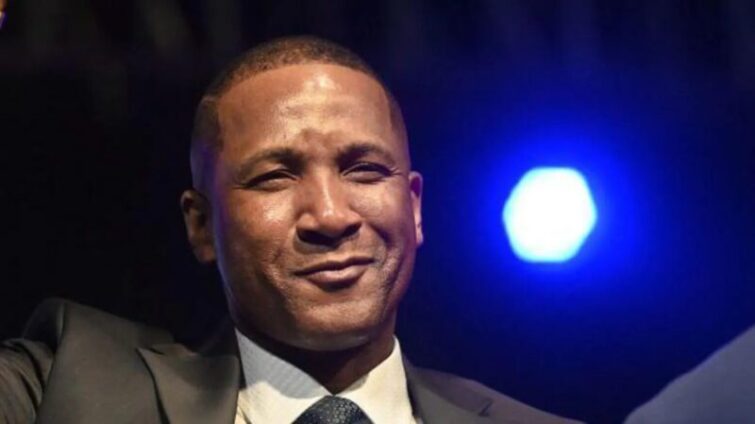
Botswana’s new president has told the BBC that he wants undocumented Zimbabweans to be legalised by granting them temporary work and residence permits.
"They do jobs that would otherwise not get done," Duma Boko told the BBC Africa Daily podcast before his historic inauguration on Friday.
Botswana hosts the world’s second-largest community of Zimbabweans fleeing their country’s economic woes - and they are often resented, with deportations taking place daily.
The decision is not likely to be popular in the diamond-rich southern African nation, but Boko, 54, who has just unseated the ruling party that was in power for 58 years, said it was part of his plans to revive the economy.
President Boko said it was a challenge when thousands of Zimbabweans entered Botswana through the long and porous border between the two countries.
"They come in and are undocumented. Then their access to amenities is limited, if it is available at all, and what they then do is they live outside the law and they commit crimes - and this brings resentment," he said.
"So what we need to do is to formalise, have a proper arrangement that recognises that people from Zimbabwe are already here."
It is unclear exactly how many Zimbabweans are in Botswana, but thousands have been coming back and forth since Zimbabwe's economy imploded because of hyperinflation two decades ago. Some have also sought political refuge.
Statistics that are available show that Zimbabweans account for 98% of what is termed "irregular migrants".
Responding to a parliamentary question earlier this year, a minister said that from 2021 to 2023, out of a total of 13,489 recorded, 13,189 were Zimbabwean nationals.
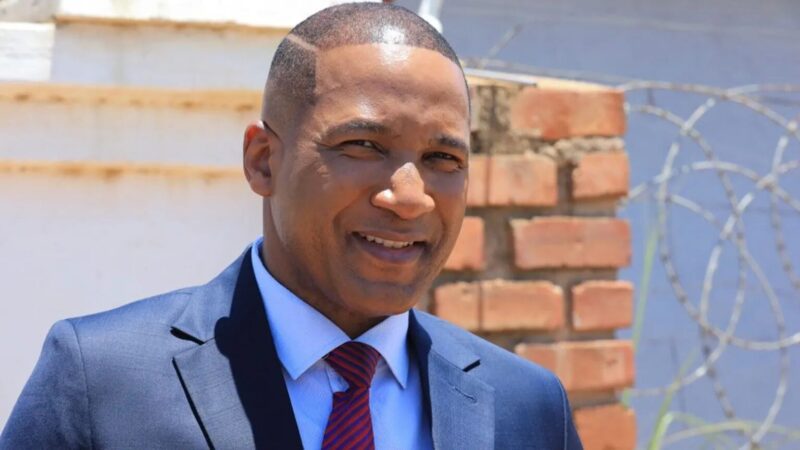
Every day, police stations around the country organise deportations of Zimbabweans arrested for not having papers or involvement in crimes.
They tend to work doing cheap labour often as domestic workers and farm workers.
"A lot of these workers from Zimbabwe perform tasks that the citizen finds unattractive... they do jobs that would otherwise not get done and so there's no conflict there," Boko said.
However, there was a backlash against the government late last year after it was proposed that identity cards be used instead of passports for those travelling between Botswana and Zimbabwe.
The overall sentiment was that the move would lead to the arrival of more Zimbabweans.
But President Boko told the BBC Africa Daily podcast that his initiative would also be an opportunity for his countrymen to learn basic skills, like welding and plumbing, from Zimbabweans.
"In any and every construction site in Botswana the majority of people with those skills are from Zimbabwe, so we need to do a twin programme of allowing them to come in and we utilise the skills that they have and in the process of utilising these skills we also engage in some sort of skills transfer," he said.
"We can’t stop people with skills from coming in when we don't have the skills ourselves - we need to develop these skills and it takes time, so in the interregnum we need to have them come in properly, come in legally and be rewarded appropriately for the skills that they bring."
Boko, a human rights lawyer who founded the Umbrella for Democratic Change (UDC) party in 2012, is at pains to show he is a man of the people, encouraging colleagues around him to take selfies.
He says he intends to break down barriers and "make sure everybody has easy access, not just access to come close, but also bring ideas and suggestions".
His main focus - and the reason behind his victory - is his promise to improve the economy.
He says that his first move will be to sign a new deal with global diamond giant De Beers.
Boko believes the agreement has been in jeopardy because of how his predecessor handled negotiations over diamond sales.
With diamond revenues assured, investors would have confidence in Botswana, which would bring in money to the country, Boko told the BBC Africa Daily podcast.
This would aid his ambition to create jobs - 100,000 a year over the next five years.
"We are facing a crisis of unemployment - for a population that's 2.4 million when you have almost 30% of those people unemployed, it is a crisis. It’s a ticking time bomb," he said.
Twinned with his proposal of sharing skills brought in by Zimbabweans, the new president added that he wanted young people to engage in business "to become entrepreneurs, employ themselves and employ others".
"What they need from government is access to affordable finance and access to markets, and government should facilitate these," Boko said.
His inauguration will take place at the national stadium in the capital, Gaborone, on Friday - which has been declared a public holiday - and international dignitaries are expected to be in attendance.
Latest Stories
-
Ablakwa receives Presidential Special Envoy on Reparations to advance global agenda
5 minutes -
Christina Koch becomes first woman to travel around the moon on Artemis II
16 minutes -
Epstein survivors’ calls to meet King Charles and Queen harder to ignore as US visit approaches
21 minutes -
UN Secretary-General names Ghana’s Anita Kiki Gbeho as South Sudan envoy
23 minutes -
Mali withdraws recognition of Sahrawi Republic, backs Morocco’s autonomy plan
28 minutes -
Gov’t distributes over 8,500 laptops to One Million Coders project
29 minutes -
Julius Debrah, ‘man to beat’ as NDC’s James Agbey dismisses Musah Dankwah’s polls
35 minutes -
GPRTU in Savannah Region to protest alleged eviction in Damongo
1 hour -
Re: Reinsurance does not replace process — A response to the SIGA–SIC defence
1 hour -
Gender Ministry supports Harriet Amuzu in ongoing abuse case
2 hours -
AG joins plaintiff to scrap OSP ?: We should be mindful of the mischief in this – Bobby Banson
2 hours -
Samson Lardy Anyenini questions willingness of Attorneys-General to prosecute political colleagues
2 hours -
It is only fair the OSP is heard in Supreme Court case – Bobby Banson
2 hours -
Asiedu Nketia resumes Ashanti tour, second leg kicks off on Sunday
2 hours -
NLA denies salary cut claims, threatens legal action over reports
2 hours