

Audio By Carbonatix
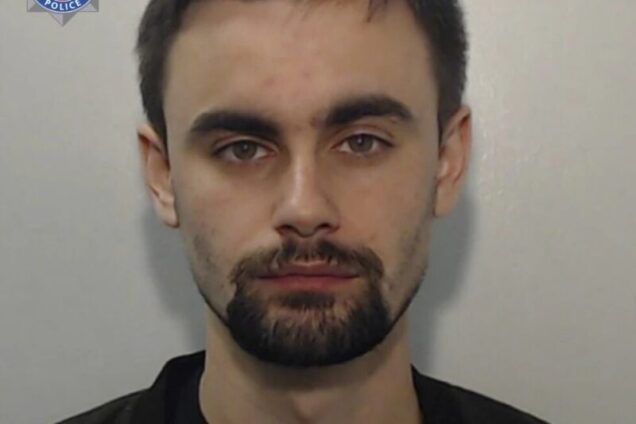
A British man who used artificial intelligence to create images of child abuse was sent to prison for 18 years on Monday.
The court sentenced Hugh Nelson, 27, after he pleaded guilty to a number of sexual offences including making and distributing indecent images of children and distributing “indecent pseudo photographs of children.” He also admitted to encouraging the rape of a child.
Nelson took commissions from people in online chatrooms for custom explicit images of children being harmed both sexually and physically.
Police in Manchester, in northern England, said he used AI software from a U.S. company, Daz 3D, that has an “AI function” to generate images that he both sold to online buyers and gave away for free. The police force said it was a landmark case for its online child abuse investigation team.
The company said the licensing agreement for its Daz Studio 3D rendering software prohibits its use for creating images that “violate child pornography or child sexual exploitation laws, or are otherwise harmful to minors.”
“We condemn the misuse of any software, including ours, for such purposes, and we are committed to continuously improving our ability to prevent it,” Daz 3D said in a statement, adding that its policy is to assist law enforcement “as needed.”
Bolton Crown Court, near Manchester, heard that Nelson, who has a master’s degree in graphics, also used images of real children for some of his computer-generated artwork.
Judge Martin Walsh said it was impossible to determine whether a child was sexually abused as a result of his images but Nelson intended to encourage others to commit child rape and had “no idea” how his images would be used.
Nelson, who had no previous convictions, was arrested last year. He told police he had met like-minded people on the internet and eventually began to create images for sale.
Prosecutor Jeanette Smith said outside court that it was “extremely disturbing” that Nelson was able to “take normal photographs of children and, using AI tools and a computer program, transform them and create images of the most depraved nature to sell and share online.”
Prosecutors have said the case stemmed from an investigation into AI and child sexual exploitation while police said it presented a test of existing legislation because using computer programs the way Nelson did is so new that it isn’t specifically mentioned in current U.K. law.
The case mirrors similar efforts by U.S. law enforcement to crack down on a troubling spread of child sexual abuse imagery created through artificial intelligence technology — from manipulated photos of real children to graphic depictions of computer-generated kids.
The Justice Department recently brought what’s believed to be the first federal case involving purely AI-generated imagery — meaning the children depicted are not real but virtual.
Latest Stories
-
A source of excellence across generations – Vice President Opoku-Agyemang lauds Mfantsipim
22 minutes -
(Photos) Mfantsipim School launches historic 150th anniversary
46 minutes -
Knights and Ladies of Marshall group backs Catholic Bishops’ stance on anti-LGBTQ+
2 hours -
Bright Simons writes: All the Filla in the Ibrahim Mahama/E&P – Gold Fields Saga
2 hours -
Monetise Idiocy In Ghana
2 hours -
The Ghanaian prophet and the mysterious death of his scottish wife Charmain Speirs
3 hours -
Nearly 400 sentenced in Nigeria for links to militant Islamists
3 hours -
Ghana’s recovery supported by gold strength despite global oil price pressures – Standard Bank Research
3 hours -
Methodist Church hails Mfantsipim@150; calls for “fresh consecration” to excellence
4 hours -
‘Excellence is our inheritance’ – Nana Sam Brew-Butler hails Mfantsipim’s 150-year reign in leadership
4 hours -
Kwaku Azar writes: A-G vs OSP
4 hours -
Mfantsipim–Adisadel rivalry built excellence, not division – Sam Jonah
4 hours -
Vice President launches Mfantsipim’s 150 years of shaping Ghana’s greatest mind
5 hours -
I assure Otumfuo, Mahama will join him to commission KNUST Teaching Hospital by end of this year – Haruna Iddrisu
5 hours -
Barcelona dominate derby to extend La Liga lead
6 hours