

Audio By Carbonatix
The Central Regional Department of Gender has called for amendments to existing legislation or the enactment of a comprehensive law to effectively address technology-facilitated gender-based violence (TFGBV) in Ghana.
It said although laws such as the Cybersecurity Act, 2020 (Act 1038), the Data Protection Act, 2012 (Act 843), the Domestic Violence Act, 2007 (Act 732), and the Electronic Communications Act, 2008 (Act 775) provided some safeguards, their provisions did not adequately address emerging TFGBV issues.
Madam Richlove Amamoo, Acting Central Regional Director of the Department of Gender, who made the call, expressed concern about the emotional trauma many Ghanaian women – including professionals, students, and community leaders – were experiencing as a result of deepfake videos, synthetic sexual images, and online impersonation.
She stressed the need for a participatory, cross-sectoral approach to close existing legal gaps, saying any new legislative framework must reflect Ghana’s constitutional values and social context to ensure offenders were adequately punished.
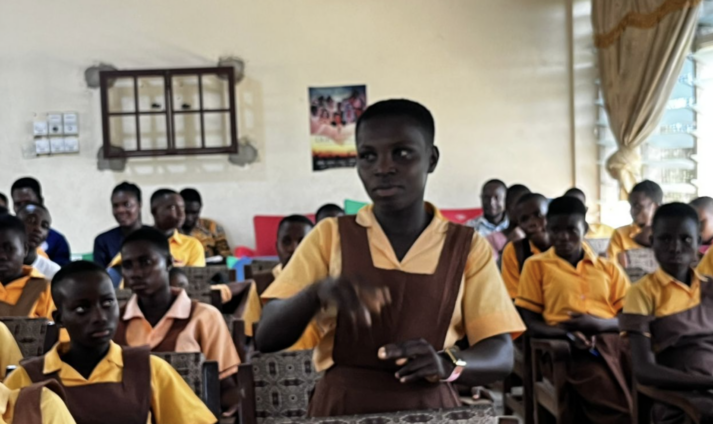
Madam Amamoo was speaking at an educational engagement for students of the Cape Coast School for the Deaf to raise awareness about TFGBV and help curb violence perpetuated against children, particularly vulnerable groups.
The programme was organised by the Central Regional Department of Gender in collaboration with the Central Regional Coordinating Council, with funding support from the United Nations Population Fund (UNFPA).
The students were educated on emerging tactics used by perpetrators to lure children into non-consensual sexual activities, which often had long-term effects on victims’ lives and development.
Madam Amamoo noted that deepfake and image-based sexual abuse, as well as doxing, had severe psychological, social, and economic consequences, particularly for women and children.
She explained that deepfakes involved the creation, manipulation, and dissemination of sexually explicit images or videos by superimposing an individual’s face onto another person’s body using artificial intelligence, adding that about 98 per cent of such abuses targeted women.
Touching on doxing, she said it involved the intentional release of a person’s private information online without consent, often leading to harassment and abuse.
“This can result in reputational, emotional, and economic damage, which is often irreversible, unfortunately, our current legal framework does not adequately address these emerging harms,” she said.
Madam Amamoo urged the students to be confident, assertive, and bold in resisting all forms of violence and called on authorities to identify and prosecute perpetrators while protecting victims to prevent stigma and social repercussions.
Mr Allan Paintsil, UNFPA Regional Focal Person, called for a united front in tackling domestic and gender-based violence, urging communities to move beyond awareness to decisive action to create safer and more supportive environments.
He explained that “action” included reporting abuse, helping victims access legal and psychosocial services, intervening safely when signs of abuse were identified, and creating safe spaces where victims could speak without fear of stigma or retaliation.
Assistant Superintendent of Police (ASP) John Asare-Bediako, Central Regional Director of the Domestic Violence and Victim Support Unit (DOVVSU), said domestic abuse cut across all social classes, genders, and backgrounds.
He urged victims and witnesses to seek help at the earliest signs of danger, emphasizing that no one was immune to abuse.
“Abuse does not know class, gender or status. Anyone can be a victim, and it is important that people speak up and seek help when they sense danger,” he stated.
ASP Asare-Bediako also advised society to promote openness and honesty in relationships and warned against glorifying marriage at the expense of personal safety and well-being.
The programme brought together representatives from the Ghana Health Service, the National Youth Authority, the Judicial Service, and the Legal Aid Commission.
Latest Stories
-
Godfred Dame questions 2-night EOCO detention of Baffour Awuah over GH¢2.2m legal fees
7 minutes -
GH¢1.64bn NHIS claims paid in 2026 as Private Health Facilities welcome improved reimbursements
14 minutes -
Blue Medics champions healthy ageing at Akuapem North older persons commemoration
19 minutes -
NPP elects national executives today in Kumasi ahead of election 2028
24 minutes -
Godfred Dame accuses EOCO, CID, AG of using state power to punish political opponents
35 minutes -
Walter Mosley visits W.E.B. Du Bois Centre in Accra: A New York Secretary’s homecoming story on where Du Bois spent his final years.
3 hours -
MTN set to deploy 5G services after winning spectrum licenses worth US$202m
5 hours -
NPP national elections: 3,000–4,000 police to handle security, traffic in Kumasi – Karbo
7 hours -
Atta Akyea fumes as Manhyia MP is to spend another night in EOCO custody
7 hours -
SSNIT says La Beach clearance was to protect hotel investments, beaches to remain public
8 hours -
APSU congratulates St Augustine’s College after back-to-back National Investment Quiz wins
8 hours -
Renewed flood intervention at Mallam Junction raises hopes among residents, businesses
9 hours -
St Augustine’s College retain National Investment Quiz title after nail-biting grand finale
9 hours -
Education infrastructure investment will drive Banda’s development – Ahmed Ibrahim
9 hours -
Teacher unions strike: Gov’t presents fresh proposals as talks end inconclusively
10 hours