

Audio By Carbonatix
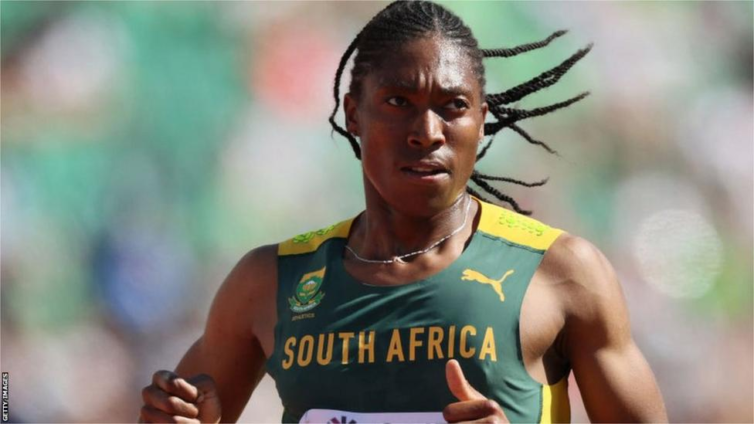
Double Olympic 800m champion Caster Semenya was discriminated against by rules which forced her to lower her testosterone levels in order to continue competing, the European Court of Human Rights has found.
The 32-year-old South African was born with differences in sexual development (DSD) and is not allowed to compete in events between 400m and a mile without taking testosterone-reducing drugs.
On Thursday the ECHR ruled in favour of Semenya in a case involving testosterone levels in female athletes.
Semenya, a three-time 800m world champion and 800m and 1500m Commonwealth champion, has been in a long-running dispute with governing body World Athletics since regulations requiring her to have hormone treatment were introduced in 2018.
She has twice failed in legal battles to overturn the decision.
The case at the ECHR was against the government of Switzerland for not protecting Semenya's rights and dates back to a Swiss Supreme Court ruling three years ago.
In the lengthy judgement published on Tuesday, the ECHR found the Swiss government did not protect Semenya from being discriminated against when its Supreme Court refused to overturn a decision by the Court of Arbitration for Sport (Cas) which upheld World Athletics rules governing the participation of athletes with DSD.

The decision, made by a panel of seven people at the ECHR, was split 4-3 in favour of Semenya.
World Athletics described the ECHR chamber as "deeply divided".
In a statement, it said: "We remain of the view that the DSD regulations are a necessary, reasonable and proportionate means of protecting fair competition in the female category as the Court of Arbitration for Sport and Swiss Federal Tribunal both found, after a detailed and expert assessment of the evidence.
"The case was filed against the state of Switzerland, rather than World Athletics. We will liaise with the Swiss government on the next steps and, given the strong dissenting views in the decision, we will be encouraging them to seek referral of the case to the ECHR Grand Chamber for a final and definitive decision.
"In the meantime, the current DSD regulations, approved by World Athletics Council in March 2023, will remain in place."
Announcing the judgement, the ECHR statement read: "The court found in particular that the applicant had not been afforded sufficient institutional and procedural safeguards in Switzerland to allow her to have her complaints examined effectively, especially since her complaints concerned substantiated and credible claims of discrimination as a result of her increased testosterone level caused by differences of sex development."
Semenya argued that taking testosterone-reducing medication could endanger her health and that the ruling denied her and other athletes with DSD the right to rely on their natural abilities.
Because of the ruling, she could not defend her 800m title at the Tokyo Olympics, which took place a year later than planned in 2021.
Semenya, who has always been legally identified as female, has said she should be able to compete in women's events even if her testosterone levels are higher than her competitors.
In 2019 she told BBC Sport she had been "crucified" but will "never stop fighting" against the regulations brought in by World Athletics, then known as the IAAF.
Latest Stories
-
A source of excellence across generations – Vice President Opoku-Agyemang lauds Mfantsipim
45 minutes -
(Photos) Mfantsipim School launches historic 150th anniversary
1 hour -
Knights and Ladies of Marshall group backs Catholic Bishops’ stance on anti-LGBTQ+
2 hours -
Bright Simons writes: All the Filla in the Ibrahim Mahama/E&P – Gold Fields Saga
2 hours -
Monetise Idiocy In Ghana
3 hours -
The Ghanaian prophet and the mysterious death of his scottish wife Charmain Speirs
3 hours -
Nearly 400 sentenced in Nigeria for links to militant Islamists
4 hours -
Ghana’s recovery supported by gold strength despite global oil price pressures – Standard Bank Research
4 hours -
Methodist Church hails Mfantsipim@150; calls for “fresh consecration” to excellence
4 hours -
‘Excellence is our inheritance’ – Nana Sam Brew-Butler hails Mfantsipim’s 150-year reign in leadership
4 hours -
Kwaku Azar writes: A-G vs OSP
4 hours -
Mfantsipim–Adisadel rivalry built excellence, not division – Sam Jonah
5 hours -
Vice President launches Mfantsipim’s 150 years of shaping Ghana’s greatest mind
5 hours -
I assure Otumfuo, Mahama will join him to commission KNUST Teaching Hospital by end of this year – Haruna Iddrisu
6 hours -
Barcelona dominate derby to extend La Liga lead
6 hours