

Audio By Carbonatix
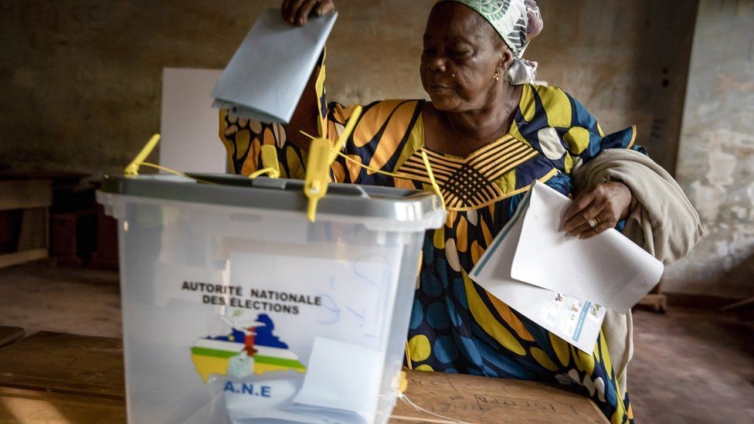
Elections in the Central African Republic (CAR) are underway, after a campaign marred by violence between government and rebel forces.
On Saturday, the Constitutional Court rejected a bid by opposition candidates to postpone the vote because of the insecurity.
In the run-up, three UN peacekeepers were killed by unidentified assailants during two separate attacks.
This is the first election since a peace deal was struck in February 2019.
President Faustin-Archange Touadera is seeking a second term in office and has accused his predecessor, François Bozizé, of fomenting a coup with rebel groups.
Mr Bozize, who is barred from running in the election and is under UN sanctions, has denied the allegation.
Meanwhile, the government has denied allegations of election rigging by the Coalition of Patriots for Change (CPC) - a recently created alliance of the country's most powerful rebel groups.
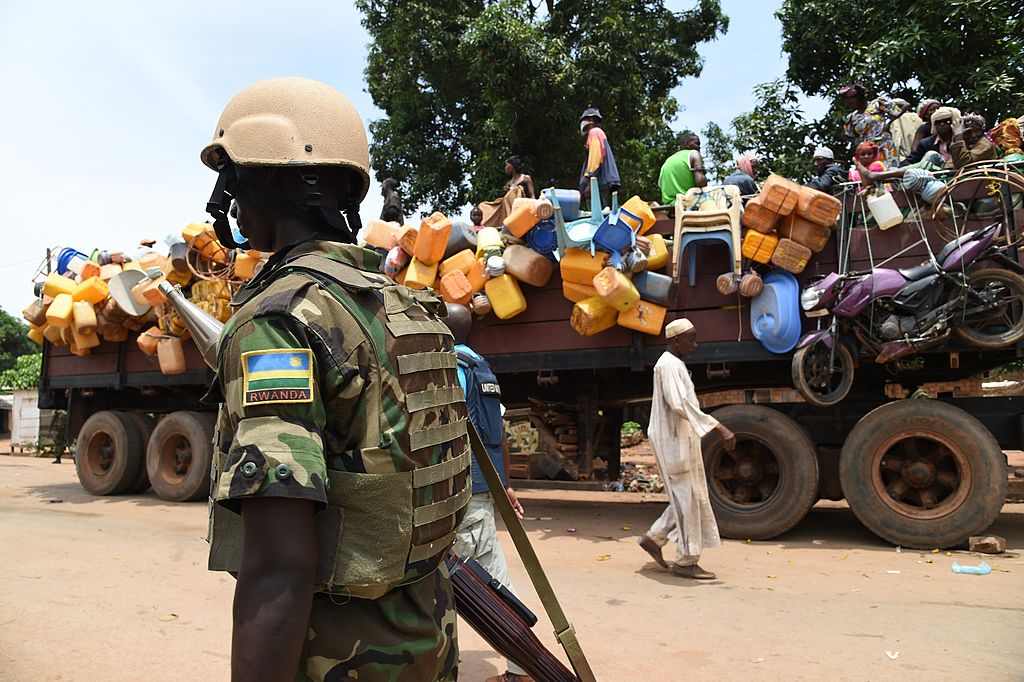
Ballots are being cast in presidential and legislative races, with UN peacekeepers patrolling the streets in the capital, Bangui, and armoured vehicles posted outside some polling stations.
The rebel coalition said on Friday that it had called off a three-day ceasefire over the election period due to attacks by government forces.
However, the government dismissed the ceasefire, calling it "a non-event" that had not been honoured by rebels.
The rebel groups have seized several towns close to Bangui, clashing with government forces and looting property.
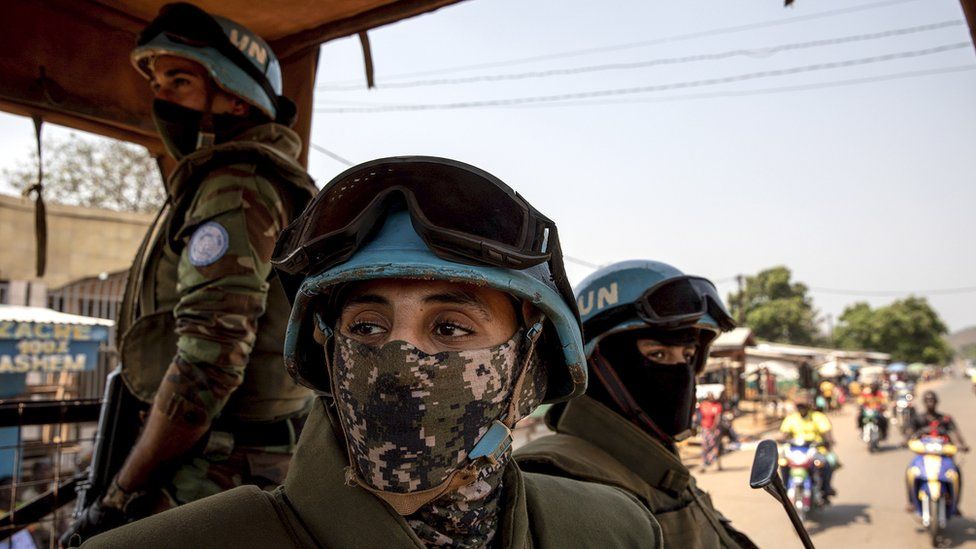
The UN said on Friday that the killing of two of its peacekeepers, hailing from Burundi, may constitute a war crime. It said two other peacekeepers were injured in the attacks, which took place in southern Bakouma and in Dekoa, in the centre of the country.
The CAR is one of Africa's poorest and most unstable countries, even though it is rich in resources like diamonds and uranium. The UN estimates that half of the population are dependent on humanitarian assistance and up to a fifth have been displaced.
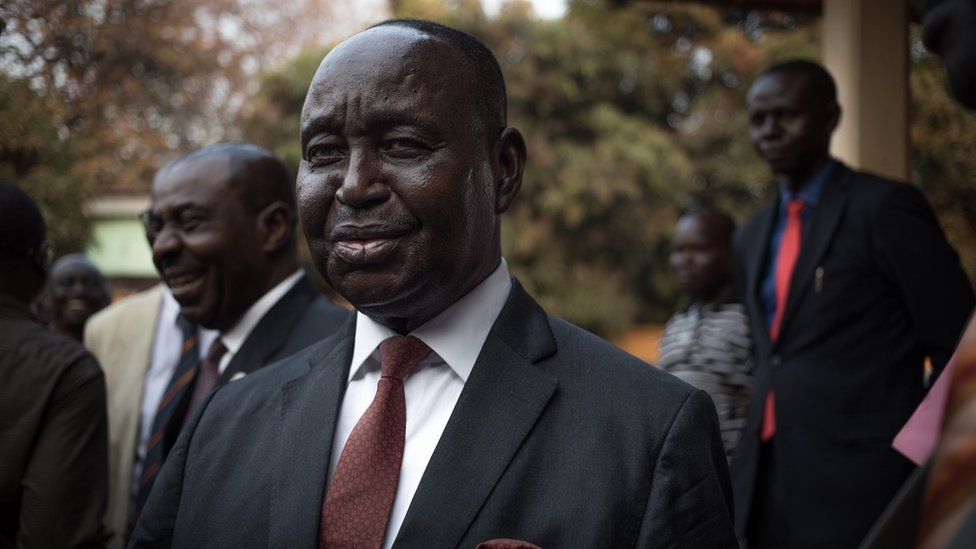
On 3 December the Constitutional Court ruled that Mr Bozizé did not satisfy the "good morality" requirement for candidates because of an international warrant and UN sanctions against him for alleged assassinations, torture and other crimes during his rule.
Mr Bozizé, a Christian, came to power after a coup in 2003 and subsequently won two elections that were widely seen as fraudulent. He was ousted in 2013 by the Séléka - a rebel coalition drawn largely from the Muslim minority - which accused him of breaking peace agreements
Russia is allied with President Touadéra and this week said it had sent 300 military instructors to CAR, following a request for help from the government. Russia insists it is not involved in the fighting.
Latest Stories
-
A source of excellence across generations – Vice President Opoku-Agyemang lauds Mfantsipim
11 minutes -
(Photos) Mfantsipim School launches historic 150th anniversary
34 minutes -
Knights and Ladies of Marshall group backs Catholic Bishops’ stance on anti-LGBTQ+
1 hour -
Bright Simons writes: All the Filla in the Ibrahim Mahama/E&P – Gold Fields Saga
2 hours -
Monetise Idiocy In Ghana
2 hours -
The Ghanaian prophet and the mysterious death of his scottish wife Charmain Speirs
3 hours -
Nearly 400 sentenced in Nigeria for links to militant Islamists
3 hours -
Ghana’s recovery supported by gold strength despite global oil price pressures – Standard Bank Research
3 hours -
Methodist Church hails Mfantsipim@150; calls for “fresh consecration” to excellence
4 hours -
‘Excellence is our inheritance’ – Nana Sam Brew-Butler hails Mfantsipim’s 150-year reign in leadership
4 hours -
Kwaku Azar writes: A-G vs OSP
4 hours -
Mfantsipim–Adisadel rivalry built excellence, not division – Sam Jonah
4 hours -
Vice President launches Mfantsipim’s 150 years of shaping Ghana’s greatest mind
4 hours -
I assure Otumfuo, Mahama will join him to commission KNUST Teaching Hospital by end of this year – Haruna Iddrisu
5 hours -
Barcelona dominate derby to extend La Liga lead
5 hours