

Audio By Carbonatix
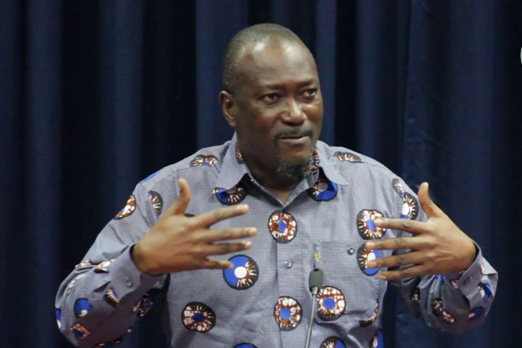
Executive Director of the Center for Democratic Governance-Ghana (CDD-Ghana), Prof Kwasi Prempeh has pointed out that a significant number of stakeholders are affiliated with the legal profession and the judicial service, making it imperative for them to have a stake in critical decisions such as appointment of justices to the Supreme Court.
He thus noted that the responsibility of appointing justices to the apex court should not rest exclusively with the judiciary and the presidency.
Prof Prempeh stressed the critical importance of upholding judicial independence and nurturing public trust in the courts to uphold public order and social peace.
Read also: Ambulance case judge, 4 others recommended for Supreme Court
His comments come after the Chief Justice, Gertrude Torkornoo asked President Akufo-Addo to nominate five judges to the Supreme Court, a request that has been criticised as a breach of the constitution.
Speaking to Samson Lardi Ayenini on 'The Law' on Joy News, Prof Prempeh said, “First, in the judiciary, for that matter, public confidence in the judiciary is a very critical factor for all of us as citizens because it affects the willingness to come to the court as opposed to turn to self-help or any other place to resolve disputes that confront us. Judicial independence and trust in the public's confidence in the court are critical for public order and social peace. We do not want people taking the law into their own hands, hence recourse to the court is what is usually recommended."
He highlighted that judges function within a legal framework and stressed the necessity of impartial adjudication in cases involving allegations of legal breaches.
Mr Prempeh emphasised the judiciary's mandate to fulfill this role independently.
He also underscored the importance of upholding the rule of law, emphasising that governance based on legal principles is essential.
“We all want to be governed by law. To be in a state where there is no lawlessness, where people do not just do as they please and we do not have trust in the court, we would have a very lawless society”.
On the appointment of justices to the Supreme Court, he said Parliament, whose members represent the masses, must play a crucial role in it.
"The legislature, being a representative and popularly elected body, is the appropriate entity to make decisions about the size of the court. We made an initial error by increasing the number of judges without legislative recourse. It is crucial to correct this and ensure that any changes to the Supreme Court's size are made through a transparent and inclusive legislative process."
Latest Stories
-
Power restoration fault suspected in Kumasi Central Market fire
2 hours -
The 7-foot giant of Ngleshie Amanfro: Seven-foot Ghanaian Ephraim Saawa dreams of joining the national basketball team
3 hours -
Government promises support for Kumasi Central Market fire victims
3 hours -
Vibes The Movie: Big Ghun’s Ghanaian film earns five nominations at 2026 REFFA
4 hours -
MamaCare CEO warns unresolved conflicts among health workers could undermine maternal and neonatal care
4 hours -
Health professionals urged to translate medical knowledge into practice to save mothers
4 hours -
Conflicts among care providers linked to maternal, neonatal deaths – Expert
6 hours -
GIS marks 10th TIME conference, champions improved teaching practices
6 hours -
BRICS Or Balance? What Ghana’s bid really means
6 hours -
GPRTU wants full TRAFFITECH-GH implementation to start in 2027
6 hours -
Mahama announces plans to import electric wheelchairs for PWDs
7 hours -
KGL U17 Colts 2026: Western beat Prempeh Elite Academy to set up final final with Greater Accra Region
7 hours -
Late Solanke strike salvages 10-man Spurs draw at Man United
7 hours -
Gender Ministry to monitor welfare of Nana Akua Addo’s children amid domestic violence case
7 hours -
Benedict Okyere Yeboah: Ghana’s football problem goes beyond sacking a coach
7 hours