


Audio By Carbonatix
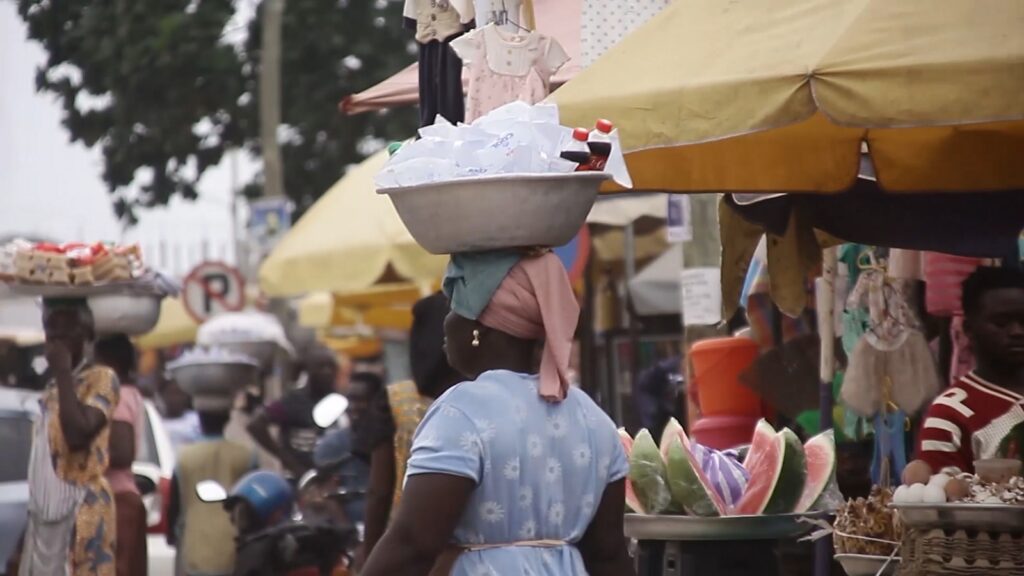
For millions of Ghanaians, sachet water, popularly known as “pure water”, is not a convenience. It is survival. From bustling markets in Accra to coastal fishing communities, it remains the most affordable and accessible source of drinking water, often selling for as little as 50 pesewas.
But as climate change places increasing pressure on groundwater systems and raises new risks around flooding and heat exposure, ensuring the safety of sachet water is becoming not just a regulatory issue but a question of local adaptation in how water is sourced, treated and stored.
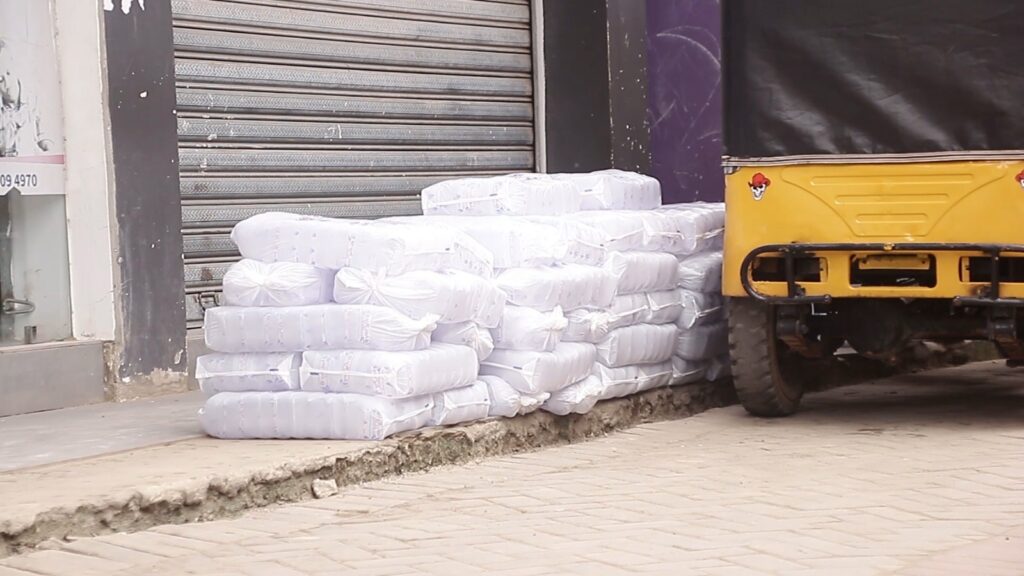
But how safe is the water inside the plastic seal?
And beyond initial approval, who ensures standards are consistently maintained?
According to Emmanuel Ansah, a PhD candidate in Environmental Sciences at the Institute for Environment and Sanitation Studies, the first misconception lies in the name itself.
“There is nothing like pure water,” he explains. “Water is a universal solvent. What we have is purified water and you cannot determine its safety by sight; it must be tested to meet physical, chemical and biological standards.”
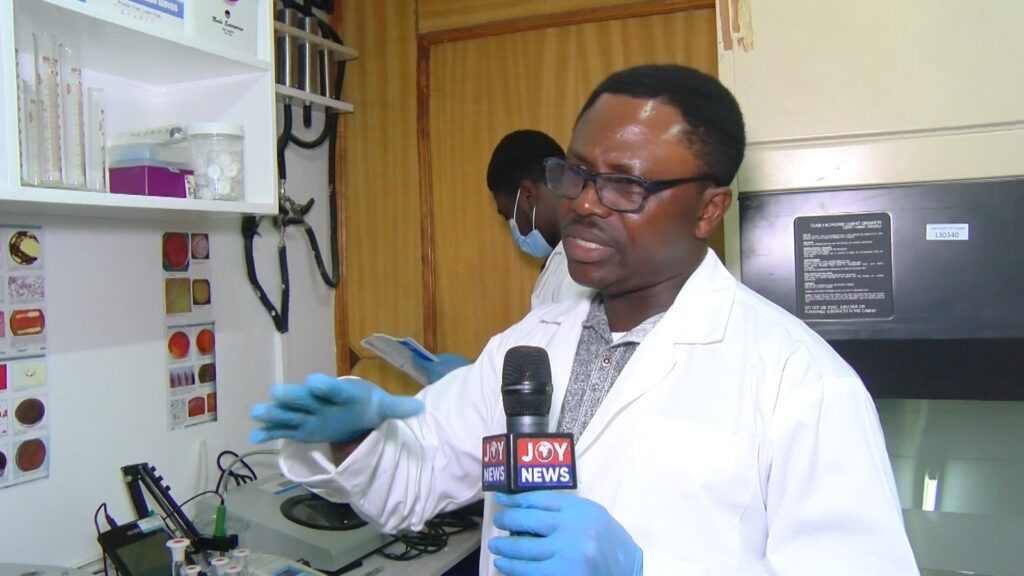
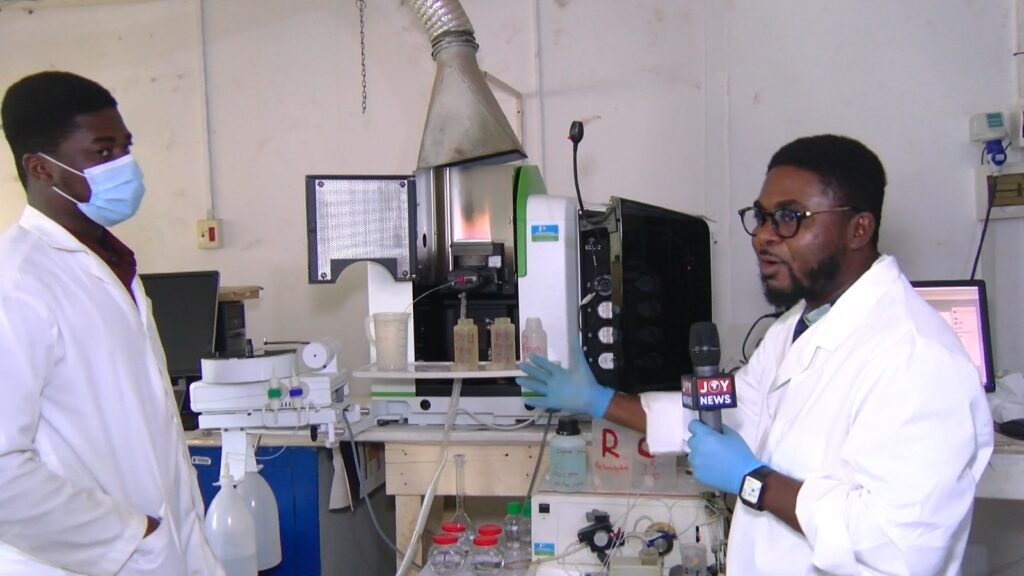
As part of this investigation, JoyNews observed laboratory testing procedures at the University of Ghana with Ansah. Samples of sachet water purchased in Accra met required safety standards.
However, he cautions that isolated testing does not tell the full story.
“What matters most is continuous monitoring across production sites and markets,” he says.
While producers may receive certification before entering the market, the bigger concern is what happens after approval.
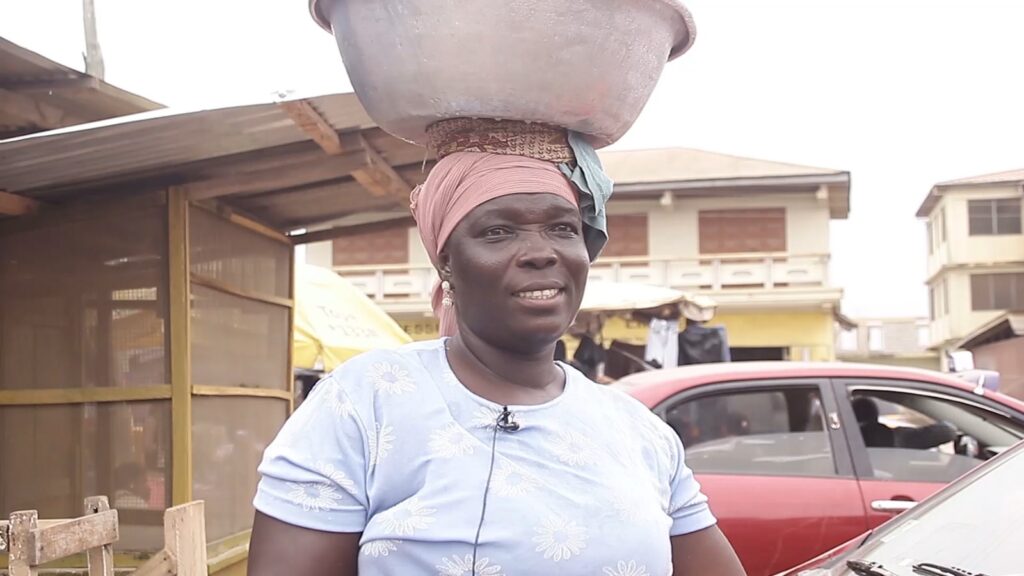
“They submit samples for clearance. But subsequently, who polices them? That is the critical question.”
On the streets, many consumers admit they do not check production details or regulatory markings before drinking sachet water.
“FDA has approved it. Who am I to say no?” one consumer told JoyNews.
Another said he consumes six to seven sachets daily without checking expiry dates.
For many, affordability and convenience outweigh caution.
Yet not all consumers are at ease.
Jessica, a long-time sachet water user, stopped drinking it after recurring throat infections in late 2024. Though no direct medical link was established, she eliminated sachet water as a precaution.
“Since I stopped, I can’t remember the last time I had that infection,” she says.
Her experience is not scientific proof but it reflects growing uncertainty among some consumers.
Mr Ansah warns that groundwater contamination remains a significant risk.
In some areas, boreholes used for sachet water production are located close to septic tanks, raising the likelihood of contamination through underground seepage.
His research has identified elevated nitrate levels, coliform presence and traces of E. coli in some groundwater samples, all indicators associated with faecal contamination.
“If a septic tank is failing and a borehole is nearby, there is likelihood of contamination,” he explains.
Climate variability is already complicating water safety in many communities. Flooding can submerge boreholes and allow contaminated surface water to infiltrate drinking sources, while rising temperatures affect storage conditions, especially when sachet water is exposed to direct sunlight along roadsides.
Research following flooding in parts of the Volta Region shows that submerged boreholes can experience altered water quality.
“Climate change can negatively impact sachet water production and storage,” Ansah notes.
To ensure balance, JoyNews formally requested interviews with the Food and Drugs Authority and the Ghana Standards Authority in the Western Region.
Despite repeated follow-ups over a three-month period, the FDA declined to grant an interview for this report. Attempts to secure an on-record response from the GSA were also unsuccessful.
Their absence leaves critical public interest questions unanswered:
- How often are production sites inspected after certification?
- Are unannounced inspections conducted?
- How frequently are market samples tested?
- What sanctions are applied for non-compliance?
Some retailers, speaking off-camera, said they have switched suppliers after customers complained about unusual taste or visible impurities.
Yet demand remains high.
For many Ghanaians, sachet water is not optional. It is essential.
Mr Ansah insists the solution is not alarm but enforcement.
He is calling for:
- Stronger post-certification surveillance
- Routine and unannounced inspections
- Market-shelf sampling and laboratory testing
- Stricter enforcement of borehole siting regulations
- Greater transparency on approved producers
“It is not enough to clear products once,” he says. “Compliance must be continuous.”
Consumers, too, have a role to play:
- Check expiry dates
- Observe storage conditions
- Avoid visibly contaminated sachets
- Report suspicious products
- Purchase from traceable brands
Sachet water is deeply embedded in Ghana’s public health ecosystem. For millions, switching to bottled water is financially unrealistic.
The question is not whether sachet water should exist.
The question is whether oversight systems are strong enough to protect those who depend on it every day.
Behind every sealed sachet lies a chain of production, storage, regulation and trust. In a country where groundwater faces increasing pressure from pollution, flooding and unregulated drilling, that trust cannot rely on initial approval alone.
It must be sustained through visible monitoring, consistent enforcement and public accountability.
Because for the millions who drink sachet water daily, safety should not be assumed.
It should be assured.
This is brought to you by JoyNews in partnership with the Climate and Development Knowledge Network (CDKN Ghana) and the Centre for Climate Change and Sustainability Studies at the University of Ghana, Legon, with funding from the CLARE R4I Opportunities Fund.
Latest Stories
-
Ghana seeks long-term mining investments that benefit local communities – Armah-Kofi Buah
20 minutes -
Ghana’s Ambassador to China, Kojo Bonsu, presents credentials to Nepalese President
33 minutes -
Fairtrade Africa’s Cocoa Hubs Project strengthens rural service centres in cocoa-growing communities
38 minutes -
SEC cautions investors against fraudulent investment schemes
40 minutes -
Land Ministry urges rCOMSDEP operators to reserve earnings for land reclamation
43 minutes -
Commercial drivers give authorities one week to clear traders from lorry terminals, bus stops
47 minutes -
Trump calls off livestream of Fort Hood attacker’s execution by firing squad
50 minutes -
Nana B denies claims that Kojo Bamba was his driver and bodyguard
1 hour -
Engage Now Africa to construct a 10-unit classroom block for struggling Navrongo Vocational Training Centre
1 hour -
One digital financial breach could expose linked accounts to fraud – Financial Crimes Manager
1 hour -
Ghana Russia Centre signs ICT cooperation agreement with Moscow University
2 hours -
The powerhouses of the village: Honouring Ghana’s rural women on International Rural Women’s Day
2 hours -
Vincent Assafuah petitions CHRAJ to investigate alleged irregularities in 2026 World Cup visa arrangements
2 hours -
12-year-old boy found dead in muddy pit at Opeikuma
2 hours -
GHS begins Yellow Fever vaccination campaign in three Upper West districts
2 hours