

Audio By Carbonatix
Poor countries need up to $300 billion, not the initial $100 billion per year by 2030, for clean energy and climate adaptation projects.
According to a UN report released earlier this month, there is a growing gap between the cost of climate adaptation in developing countries and the amount of public finance available for it.
The report estimates that developing countries need five to 10 times more funding than they currently have to manage climate impacts.
Developed countries are yet to deliver on their $100 billion annual commitment to help poorer countries pay for clean energy and climate adaptation projects. Most of the money that was disbursed went into climate change mitigation, not adaptation.
The Organization for economic cooperation and development in its current report estimates that total climate finance reached was $79.6 billion in 2019, which clearly meant developed countries missed the 2020 target.
The US president recently announced he would double the country's international climate finance commitment to $11.4 billion annually by 2024. Good news, but some experts say it isn't enough describing it as a mere promise.
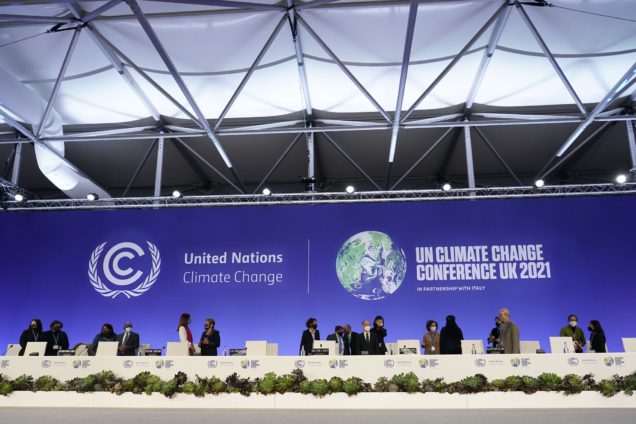
COP26 climate negotiations look at more profound ways of addressing the climate crisis. Poorer countries like Ghana look forward to advocating for sustainable funding for adaptation.
Vulnerable countries have called for 50-50 split between adaptation finance and mitigation.
A recent paper published in the journal Nature Climate Change highlights a general lack of data showing whether adaptation projects reduce risk.
A panel of over 100 scientists has undertaken massive peer-reviewed literature on adaptation to climate change.
Of more than 48,000 articles about adaptation, only about 1,700 documented projects that had actually been implemented. And only 58 of the 48,000 studies analyzed whether a given adaptation project or plan was working.
"I think climate change adaptation and mitigation projects implementation shouldn't be separated, they should go hand in hand. One shouldn't lose sight of the fact that climate action may be site-specific. Governments or communities should know which actions would be appropriate. There will be the need to prioritize," Senior Research Scientist at Forestry Research Institute of Ghana, Dr. Gloria Djaney Djagbletey said.
Latest Stories
-
Tyson Fury dominates Makhmudov, calls out Joshua next
7 minutes -
I have supported highway authority financially to fix roads in my constituency – A Plus
1 hour -
US, Iran fail to reach peace agreement after marathon talks in Pakistan
2 hours -
ECG kicks off Phase Two of transformer upgrades at Lashibi; brief outages expected
2 hours -
Port crises loom as 11,000 drivers threaten four-day strike
3 hours -
A source of excellence across generations – Vice President Opoku-Agyemang lauds Mfantsipim
4 hours -
(Photos) Mfantsipim School launches historic 150th anniversary
4 hours -
Knights and Ladies of Marshall group backs Catholic Bishops’ stance on anti-LGBTQ+
5 hours -
Bright Simons writes: All the Filla in the Ibrahim Mahama/E&P – Gold Fields Saga
6 hours -
Monetise Idiocy In Ghana
6 hours -
The Ghanaian prophet and the mysterious death of his scottish wife Charmain Speirs
6 hours -
Nearly 400 sentenced in Nigeria for links to militant Islamists
7 hours -
Ghana’s recovery supported by gold strength despite global oil price pressures – Standard Bank Research
7 hours -
Methodist Church hails Mfantsipim@150; calls for “fresh consecration” to excellence
7 hours -
‘Excellence is our inheritance’ – Nana Sam Brew-Butler hails Mfantsipim’s 150-year reign in leadership
7 hours