


Audio By Carbonatix
South Africa, which had one of the world's earliest and strictest lockdowns, is marking a significant shift in its fight against coronavirus, writes BBC Africa correspondent Andrew Harding.
It was hardly a "mission accomplished" moment.
South Africa's President Cyril Ramaphosa looked appropriately dour, and sounded appropriately cautious, as he appeared on national television this week to warn of the dangers of a second wave of infections and to urge the public against relaxing their guard against the virus.
And yet the president's key message was a simple, optimistic and impressive truth.
"We have succeeded in overcoming the worst phase of this epidemic," he declared.
As the infection rate here sinks below an important threshold of one new case per day per 100,000 people, South Africa is moving - with relief, and with some pride - into a new phase. What the president and his scientific advisers describe as "a new normal".

With almost all economic activity resuming, the nation's borders slowly opening, and one of the world's earliest and strictest lockdowns ending, this feels like a significant moment - an opportunity to take stock, even to celebrate, and to explore the ever-thorny issue of who, or what, should share most credit for containing Covid-19.
"I had visions of Italy… that we're not ready, that we're going to get overwhelmed," recalled Professor Salim Abdool Karim - chair of the government's Covid-19 advisory panel and the public face of the scientific community - thinking back to March, and to what he and the government publicly warned was an oncoming viral "storm".
Instead, very few hospitals were overwhelmed, and the official death toll of some 15,000 is significantly lower than even the most optimistic modelling predicted.
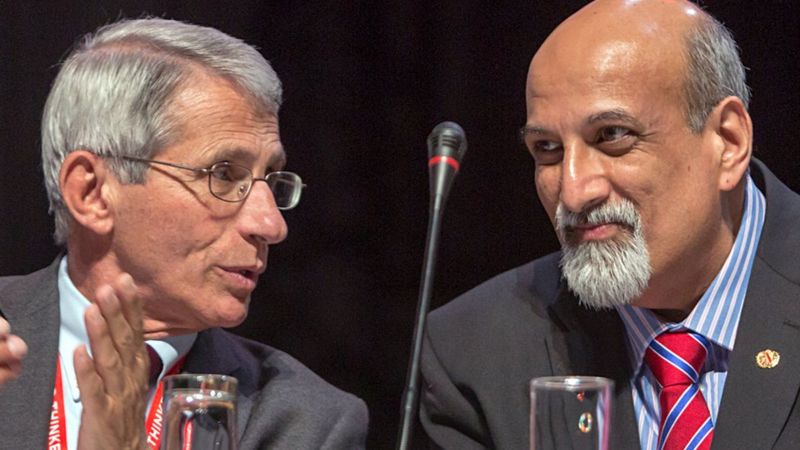
Speaking on an internet link from his office in Durban, Prof Karim does not disguise the relief he feels. But, like many scientists, his inclination is not to sit back and enjoy the good news, but rather to keep probing and testing hypotheses in order to better understand both Covid-19, and South Africa's response to it.
'Bad epidemic'
There is plenty of data to wade through now.
Much of it contradictory. Or rather, much of it still needing to be put in proper context.
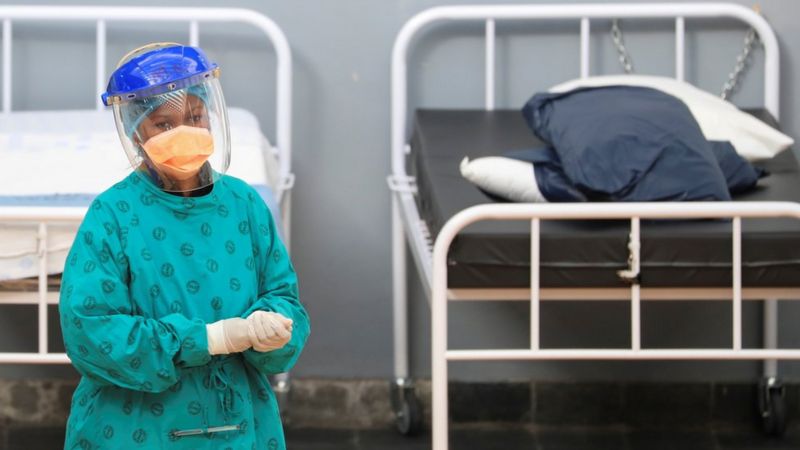
Take South Africa's long battle against HIV and tuberculosis. New evidence suggests TB patients are particularly vulnerable to Covid-19.
But, on the flip side, the systems put in place to cope with both pre-existing diseases, "assisted us and better prepared us to cope with Covid," said Prof Karim.
And while South Africa may have good reason to celebrate its successes, there is plenty to criticise too.
"We've had a pretty bad epidemic," said Prof Karim.
"At one stage we were the fifth worst in the world. I wouldn't call that something to be proud of.
I'd have been really proud if we'd been able to mitigate the impact to a much greater extent."
As we've reported here in recent months, there have been instances of appalling mismanagement, alarming allegations of corruption, and some grave errors in handling the outbreak.
I will leave the economic impact of the lockdown - and the legitimate debate, enriched by hindsight, about whether the government got the balance right - to another day.
Nine theories
But what of the reasons for South Africa's relative success in fighting the virus?
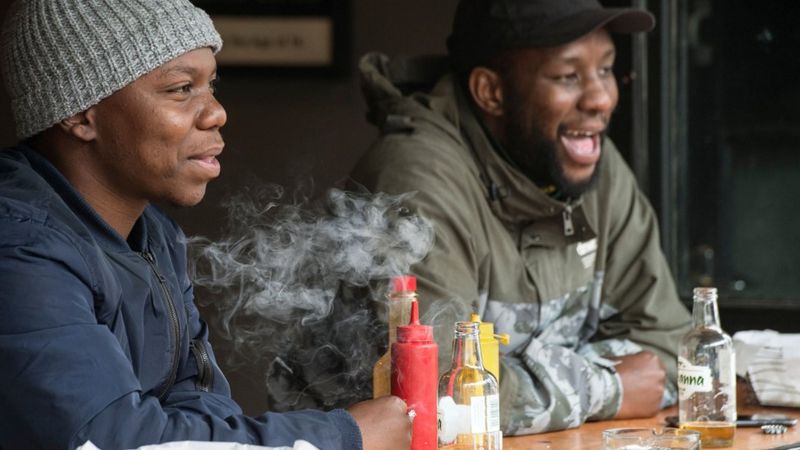
Prof Karim has drawn up a list of nine factors, or hypotheses, which he applies not just to South Africa, but to other countries - not least on this continent - which appear to have been spared the worst.
- His first point is under-reporting - a particular issue in less developed nations
- His second is under-testing because of limited capacity and resources
- The third - high on many experts' lists - is demographics, and the younger populations of many countries in Africa
- Next comes the issue of how the virus reached South Africa - via travellers who didn't tend to mingle with the population at large, enabling the authorities to stamp out the first wave of infections relatively effectively
- Fifth is the early lockdown implemented in South Africa, and in many other parts of the continent
- The sixth point - one I raised in a recent article - is the hypothesis of pre-existing immunity, because of prior exposure to the four common coronaviruses in circulation
- Seventh is the potential impact of warmer temperatures
- Eighth is the possible role of altitude on the virus
- And ninth involves the word "stochastically" - a reference to the unpredictable way this virus appears to spread, and the difficulty of predicting when individual infection peaks are likely to arrive.
Nine theories. But true to form, Prof Karim is not fully convinced by any of them, at least not without further proof.
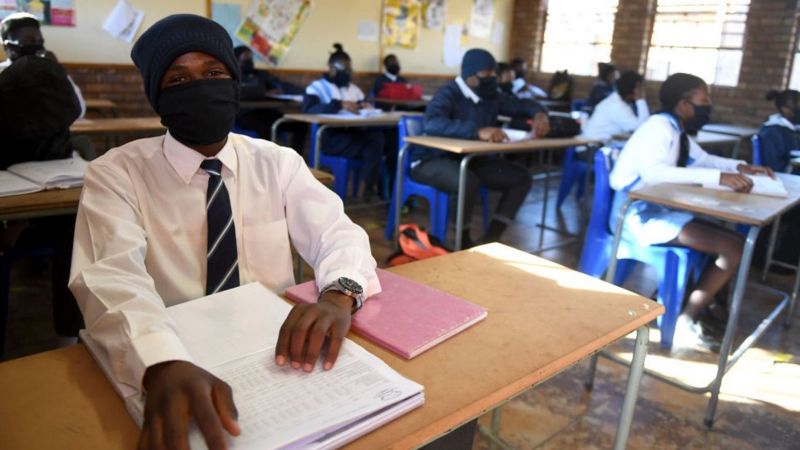
"I doubt that any one of these is a major contributor that explains the entire difference [of why some countries have done better than others]," he said.
"Even in combination, these would not explain the bulk of the difference we are seeing. It remains intriguing to me."
Latest Stories
-
Nchiraa Yam festival: Two killed, 14 injured as police restore calm
6 minutes -
I draw inspiration for my songs from Reggae music – Lyrical Joe
8 minutes -
AI must not replace human judgment in public spending – BoG Governor
11 minutes -
Ghana should withdraw from 2027 AFCON – Kojo Addae Mensah
20 minutes -
Team Ghana departs Accra for Angola ahead of Karting Africa Trophy
27 minutes -
AIT President Prof Clement Dzidonu urges lifelong learning as AI reshapes work and education
29 minutes -
FWSC to meet striking teacher unions on Tuesday
31 minutes -
NPP won’t force candidates to step down – Miracles Aboagye
44 minutes -
Black Stars: Building in the sinking sands
46 minutes -
Low inflation on paper, high cost of living: How Presidents Mahama and Trump are facing stark economic reality
54 minutes -
NPP will negotiate with popular non-politicians to secure winnable candidates – Miracles Aboagye
58 minutes -
Only 5% of Ghanaians can afford housing without support – Gov’t
58 minutes -
Nigeria launches rescue after military plane crashes with 32 aboard
1 hour -
GES digitalisation already exists; restore discontinued platforms – Adutwum spokesperson
1 hour -
Police launch manhunt for 7 after deadly Bunkprugu violence
1 hour