

Audio By Carbonatix
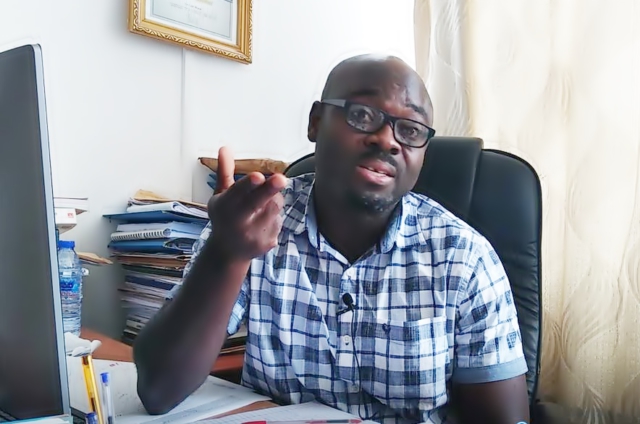
The cost of the Eurobond issued yesterday by government is relatively expensive compared to recent years, Economist and Finance Lecturer at the University of Ghana Business School, Dr. Lord Mensah has disclosed.
The country was successful in raising about $3 billion in debt instruments on the international capital market.
But the average cost of the bonds is a little above 8.0%.
Dr. Mensah told Joy Business the success of the bond doesn’t mean the country’s investment climate is the best, but rather because the government is desperate for money to finance the budget.
“If you look at the composition of the mixture [debt instrument] from the $3.0 billion bonds, you’ll realize that obviously because of covid-19 and the risk involved - as far as the investor funds are concerned - you are not going to get the same coupon rate as we did last year.”
“Last year, we raised a 7-year bond which was worth about 6.37% for the coupon rate, but then this time if you look at the mixture, 7-year bond is going for 7.75%; and I mean it signals were we are”, Dr. Mensah said.
He emphasized that it’s not only about raising the money, but it is about the cost of the debt which you [government] will pay a higher interest later.
The nation also raised a zero rated bond but the cost at the end of the tenure is about 5.0%.
“Somebody will talk about the 4-year zero coupon bond; it’s quite innovative in a way it will give us a breathing space, but in itself if you look at the amount that we are paying at the end of the fourth year relative to the beginning amount that we are raising, it gives you a return of about 5.0% which overall if you put all the bonds together we are doing around 8.0% for the $3.0 billion which has been broken on the average”, D. Mensah said
“So effectively, it is quite innovative way to approach the market. But in the end, the cost will still be high and because we are desperate for the money and in the end we needed the money in Ghana; and somebody will talk about investor appetite in our environment”, he noted.
“So I might see it to be more or less desperation for money, but then as the cost of bringing that money to Ghana...we don’t really care about it that much”, he concluded.
Ghana successfully raise $3bn Eurobond
Ghana successfully raised US$3 billion Eurobond from the international capital market, which was highly patronized.
The transaction comprised of four tranches; US$ 525 million 4-Year Zero Coupon, US$1 billion 7-year bond, US$1 billion bond and US$500 million 20-year.
The interest cost for the US$1 billion 7-year bond, US$1 billion bond and US$500 million 20-year were 7.75%, 8.625% and 8.875% respectively.
There was also the issuance of a Zero Coupon Bond.
Latest Stories
-
GAEC must retain nuclear scientists for Ghana’s nuclear ambitions – Minister
22 minutes -
Man reportedly mistaken for game and shot by hunter dead in forest
24 minutes -
19-year-old mason jailed 15 years for defiling seven-year-old pupil
29 minutes -
Ghana’s banking sector assets rise 20.47% to GH¢500.2bn – BoG Governor
33 minutes -
22 injured as Sprinter bus overturns at Sege after tyre burst
34 minutes -
UN housing expert urges Ghana to strengthen Rent Control Department amid housing affordability concerns
43 minutes -
Delta-BCI partnership reaches 166,000 people with breast cancer education
52 minutes -
Power restoration fault suspected in Kumasi Central Market fire
6 hours -
The 7-foot giant of Ngleshie Amanfro: Seven-foot Ghanaian Ephraim Saawa dreams of joining the national basketball team
7 hours -
Government promises support for Kumasi Central Market fire victims
7 hours -
Vibes The Movie: Big Ghun’s Ghanaian film earns five nominations at 2026 REFFA
7 hours -
‘I’m a fulfilled man’—Justice Korbieh on missing out on Supreme Court despite two nominations
7 hours -
MamaCare CEO warns unresolved conflicts among health workers could undermine maternal and neonatal care
8 hours -
Health professionals urged to translate medical knowledge into practice to save mothers
8 hours -
Retired judge Justice Francis Korbieh charges 1,568 new lawyers to uphold integrity
9 hours