

Audio By Carbonatix
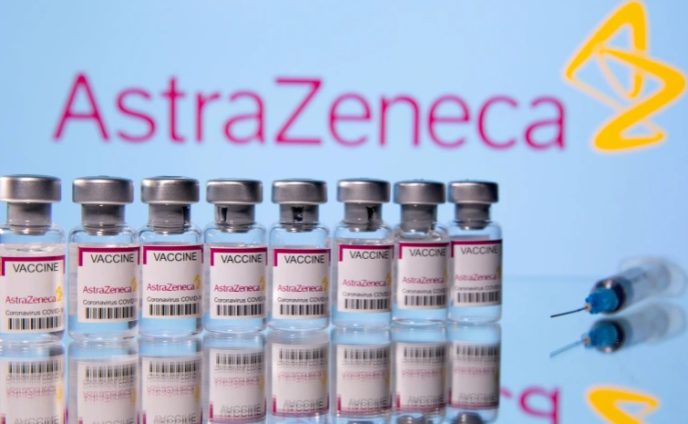
A new laboratory study by the University of Oxford has indicated that AstraZeneca’s Covid-19 Vaccine boosts levels of antibodies against the Omicron SARS-CoV-2 variant (B.1.1.529) significantly.
The University came to this conclusion following a study that analysed blood samples taken from individuals infected with Covid-19; those who had been vaccinated with a two-dose schedule and a third dose booster; and those who had reported previous infection from other Covid-19 variants of concern.
The study included samples from 41 individuals who had received three doses of Covid-19 AstraZeneca Vaccine.
It was observed that neutralisation titres for Omicron were boosted following a third dose with Covid-19 AstraZeneca Vaccine compared to titres after a second dose.
The levels seen after the third dose booster were higher than the neutralising antibodies found in individuals who had been previously infected with and recovered naturally from Covid-19 (Alpha, Beta, Delta variants and original strain).
AstraZeneca in a press statement noted that Sera obtained from individuals one month after receiving the third dose booster vaccination neutralised the Omicron variant to levels that were broadly similar to those observed one month after the second dose against the Delta variant.
"Two doses of Covid-19 Vaccine AstraZeneca have been associated with protection against the Delta variant in real world studies," the statement added.
The findings of the study can be accessed online on the bioRxiv pre print server.
Regius Professor of Medicine at the University of Oxford, UK, Professor Sir John Bell, and one of the study investigators, said: “It is very encouraging to see that current vaccines have the potential to protect against Omicron following a third dose booster. These results support the use of third dose boosters as part of national vaccine strategies, especially to limit the spread of variants of concern, including Omicron.”
Sir Mene Pangalos, who is the Executive Vice President of BioPharmaceuticals R&D at AstraZeneca noted the vaccines play a vital role in vaccination programmes globally.
“Covid-19 Vaccine AstraZeneca plays an important role in vaccination programmes around the world and these data give us confidence that the vaccine should be given as a third dose booster. It is also important to look beyond antibodies to better understand how vaccines offer protection against Omicron. As we better understand Omicron, we believe we will find that T-cell response provides durable protection against severe disease and hospitalisations.”
Meanwhile, data from another laboratory study supports Covid-19 Vaccine AstraZeneca’s effect against Omicron, with individuals vaccinated with two doses of AstraZeneca retaining neutralising activity against Omicron, although a decrease was seen compared to the original strain.
In other studies, Covid-19 Vaccine AstraZeneca has been shown to generate a diverse and durable T-cell response to multiple variants resulting in a broader response than antibodies alone, which could contribute to protection against the virus.
AstraZeneca is collecting real world evidence evaluating the effectiveness against the Omicron variant with academic groups in the southern African region.
AstraZeneca is also analysing blood samples from participants in the Company’s Phase II/III trial to evaluate neutralising activity when given as a third dose booster against Omicron for both Covid-19 Vaccine AstraZeneca and its investigational next generation Covid-19 vaccine, AZD2816.
Data from these studies are expected soon. Currently, available data against variants of concern, excluding Omicron, support the use of a third booster with Covid-19 Vaccine AstraZeneca as part of a homologous or heterologous schedule.
AstraZeneca vaccine
Covid-19 Vaccine AstraZeneca was co-invented by the University of Oxford and its spin-out company, Vaccitech. It uses a replication-deficient chimpanzee viral vector based on a weakened version of a common cold virus (adenovirus) that causes infections in chimpanzees and contains the genetic material of the SARS-CoV-2 virus spike protein.
After vaccination, the surface spike protein is produced, priming the immune system to attack the SARS-CoV-2 virus if it later infects the body.
The vaccine has been granted a conditional marketing authorisation or emergency use in more than 90 countries. It also has Emergency Use Listing from the World Health Organization, which accelerates the pathway to access in up to 142 countries through the COVAX Facility.
Under a sub-license agreement with AstraZeneca, the vaccine is manufactured and supplied by the Serum Institute of India under the name COVISHIELD.
Latest Stories
-
Tyson Fury dominates Makhmudov, calls out Joshua next
16 minutes -
I have supported highway authority financially to fix roads in my constituency – A Plus
1 hour -
US, Iran fail to reach peace agreement after marathon talks in Pakistan
2 hours -
ECG kicks off Phase Two of transformer upgrades at Lashibi; brief outages expected
2 hours -
Port crises loom as 11,000 drivers threaten four-day strike
3 hours -
A source of excellence across generations – Vice President Opoku-Agyemang lauds Mfantsipim
4 hours -
(Photos) Mfantsipim School launches historic 150th anniversary
4 hours -
Knights and Ladies of Marshall group backs Catholic Bishops’ stance on anti-LGBTQ+
5 hours -
Bright Simons writes: All the Filla in the Ibrahim Mahama/E&P – Gold Fields Saga
6 hours -
Monetise Idiocy In Ghana
6 hours -
The Ghanaian prophet and the mysterious death of his scottish wife Charmain Speirs
7 hours -
Nearly 400 sentenced in Nigeria for links to militant Islamists
7 hours -
Ghana’s recovery supported by gold strength despite global oil price pressures – Standard Bank Research
7 hours -
Methodist Church hails Mfantsipim@150; calls for “fresh consecration” to excellence
7 hours -
‘Excellence is our inheritance’ – Nana Sam Brew-Butler hails Mfantsipim’s 150-year reign in leadership
8 hours